All-In Summit: Gene therapy and a new era of medicine with Dr. Nicole Paulk
Ask about All-In Podcast
Episode Description
This talk was recorded live at the All-In Summit 2023 at Royce Hall on UCLA's campus in Los Angeles.
(0:00) Besties welcome Dr. Nicole Paulk to All-In Summit ‘23! (0:59) An introduction to Gene Therapy (2:18) Three eras of modern medicine (4:49) Living medicines (6:35) Congenital blindness and other rare diseases (9:37) Gene therapy applications for broad use, including cancer (12:00) Immunosurveillance and immunotherapy (14:44) Brain cancer test (16:34) DEC2 mutation to reduce the need for sleep (17:45) Gene therapy for people living on Mars (18:40) Bestie Q&A: FDA hurdles and aging as a disease state (21:16) Biotech’s valley of death (23:52) Night vision and other human enhancements (26:32) Fundraising
Follow Nicole: https://twitter.com/Nicole_Paulk
Follow the besties: https://twitter.com/chamath https://linktr.ee/calacanis https://twitter.com/DavidSacks https://twitter.com/friedberg
Follow the pod: https://twitter.com/theallinpod https://linktr.ee/allinpodcast
Intro Music Credit: https://rb.gy/tppkzl https://twitter.com/yung_spielburg
Intro Video Credit: https://twitter.com/TheZachEffect
Relevant links: https://twitter.com/SirenBio https://sirenbiotechnology.com/
Read the full transcriptHide the full transcript
- next up is Nicole Paul I'm really excited for this talk I think you guys will find a lot of optimism in where
- technology is playing out in um in biology and bioengineering to cure fundamental human disease
- for nearly 20 years she's been developing Next Generation aav platforms for Gene repair Gene transfer and Gene
- editing and chief directed Evolution for novel engineered capsids and comparative
- multiomic approaches to interrogate translational aav biology she's going to share a little bit about her work with
- her startup siren biotechnology which came out of stealth last year please join me in welcoming Dr Polk to the
- stage we'll let your winners ride Rain Man [Music] [Applause] we open source and they've just gone crazy
- [Music] all right quick show of hands how many of you have ever even heard of the
- phrase gene therapy or viral gene therapy before Oh My Gosh would you guys read in Wall Street Journal and The
- Economist all right pretty good usually it's like two hands um so who the heck am I why am I up here
- talking to you about this so like I said my name is Dr Nicole Paul come until like a hot minute ago I was a professor
- of viral gene therapy at UCSF in San Francisco and decided to spin out a company based off some work in my lab
- and I'm here to talk to you guys a little bit about using viruses as medicine so so what is gene therapy
- broadly speaking uh this is using viruses as medicines so historically we have used these to treat single Gene
- genetic disorders but we can use these much more broadly now and I'll share a little bit about that but historically
- we've used these when you were born either missing a gene in your genome or you had a mutation in a particular Gene
- in your genome and all you needed in order to be completely healthy was to have a functional copy of that Gene
- given back to you or to have um that the particular mutation in that Gene corrected and restored for you and
- we can do all of these with viruses and so if that sounds a little bit crazy and a little bit new and a little bit
- revolutionary it's because it is we're kind of quite literally living through um one of the most recent and kind of
- newest eras of modern medicine and so in order to talk about where we are we kind
- of need to understand where we came from so nearly every one of you in this room
- this first era of modern medicine started probably with your either your parents or your grandparents this is
- with chemical medicines this is when we realized that gosh every time I have a stomachache I can go eat this one
- particular Leaf from a tree and when I eat that leaf I feel much better and then the scientists realize
- well we don't have to eat the leaf we could isolate the chemical compound that comes from that leaf and then we could
- produce that in mass synthetically in large Vats in the lab and that way we don't have to all go outside and eat and
- eat leaves all the time um and so the Advent of chemical medicines and realizing that we could
- isolate these and synthesize these in Mass was an absolute transformation this is nearly every drug you've ever taken
- in your life these are all the pills you can go find at your local pharmacy uh particularly the ones that are over the
- counter and so this is the vast majority of medicines you've ever taken in your entire life
- and the way these chemical medicines work right you take that pillow you swallow it it goes into your stomach it
- gets dissolved by the acids in your stomach it then gets absorbed into the bloodstream in your GI tract and then
- goes throughout your entire body and it will bind to and affect kind of either the shape or the function or the ability
- of various proteins in your body in a way that's useful to reduce your symptoms and so then in the next kind of era of
- medicine we had the brilliant idea well let's just cut out the middle man let's not give you a chemical that alters the
- shape or function of a protein let's just give you the protein let's let's advance to protein medicines and let's
- now take a protein that has the particular shape in the function that you might need in order to provide some
- kind of therapeutic benefit for the disease state that you have and give you that as a drug and so that's kind of
- been the next kind of most recent wave of modern medicine and so this is things like enzyme treatments and antibody
- therapies many of you in the room have probably heard of the most successful drug of all time anyone know what it is
- anyone want to shout out a guess what's the most successful drug of all time that's raised the most money
- it's not Viagra guys Humira someone said it so this is an antibody that's used to treat a particular form
- of arthritis this antibody cells on average a little over 21 billion dollars worth of just
- that drug every single year and has been the most successful drug for the last 20
- years this is what we call a blockbuster this is what everyone is shooting for in
- their portfolio is a blockbuster drug and it's an antibody but now we're entering kind of this
- newest third modern uh form of medicine which is what we call living medicines this is using things like viruses
- bacteria cells things that are quote unquote alive that we can now use to go in and impart changes in your body why
- would we do that well both chemical medicines and protein medicines we typically either give orally or we give
- intravenously which means they're going to go throughout your entire body but in
- some cases we don't want a drug to go to your entire body like for example when you take chemo boy you feel like trash
- right it's because it's also affecting healthy cells in your body so sometimes we want the medicine to only go into a
- simple place in your body or a single place so that way you only experience the therapeutic effect in a single
- location the other really cool thing we can do with things like viruses and cells is we can engineer I know many of
- you here are like Tech or Tech adjacent we can engineer in logic circuits so we can add things like if then or and and
- all these types of kind of Boolean logic we can engineer those circuits into viruses and cells and have them perform
- those same types of decisions uh within your body like if you experience this release the drug If you experience this
- don't so you can engineer in these types of circuits in order to get this really
- really precise delivery of any particular medicine that you're interested in delivering and you can
- package almost anything in a virus and so a really common misconception is that all viruses are bad for you all
- viruses make you sick couldn't be farther from the truth the vast majority of viruses on the planet
- are very good at getting inside of you but very few of them make you sick I bet most of you can't name more than 20
- viruses and all the viruses you can name are viruses that make you sick right measles mumps small polio smallpox these
- types of things we only know of them because we study them because they make us sick but the vast majority of the
- viruses on the planet can actually kind of be considered our allies they're tools that we can use that don't make us
- sick but they're still very good at getting inside of us that we can use to deliver all kinds of medicines
- so all of this is talk much more fun to look at as an actual video of this in action and so what I'm going to show you
- on this screen is a patient from a clinical trial from a patient that has a rare form of
- inherited genetic blindness this is a disease called Libra's congenital amaurosis these patients are born
- basically medically blind they cannot see at Birth and you're going to see two videos the one on the left is going to
- be this patient pre-treatment attempting to navigate a maze you can see that maze
- on the floor at very very low light so the reason that this looks very yellow is because it's taken at one luminal
- unit or low light all of us have much poorer visual Acuity at low light than we do at highlight so it's not that this
- video is taken in 1985 it was just in very very low light that's why it looks yellow
- so I'm actually going to start that video and I'll kind of talk over this this patient while they're going so this
- patient's medically blind they cannot see the arrows on the ground that they're being told to navigate nor can
- they see the little obstacles that they're being told like you should step over so they're feeling for them with
- their feet just like you would if you were blind and you didn't have your walking stick you would just kind of
- feel in front of you to see what was there so that you wouldn't manage to trip and fall
- so I'm not actually going to show you this entire video because it took this poor patient 214 seconds to attempt this
- navigate this eight foot eight foot by eight foot maze and all this patient needed they were
- missing a single protein in the back of their eye all they needed was a single viral infusion for that virus to express
- a single protein that that patient was missing in their eye and this is that exact same patient
- again this was a 10 year old just one year after treatment they would have been able to do this within seven days
- though so they have absolutely perfect vision so we're able to see pure blindness
- this same young patient has now gone on to get their driver's license they are they are walking quite
- literally they are walking amongst us leading a completely normal life so this feels crazy and revolutionary like oh my
- gosh I hadn't heard about this when is this when is this coming for the rest of us and all of our indications
- soon where are we now this is a one-year-old Slide the next prospectus from Wells
- Fargo is expected to come out any day now I was hoping it would come out before this talk but it didn't but this
- is the annual prospectus they put out every year of kind of the advancement of these gene therapy companies they do
- this for every industry but this is for gene therapy so this is all of the logos
- of all of the companies that are working in gene therapy for various diseases the
- outer rings are kind of the earliest stages of development those phase one phase two trials and as you move towards
- the center towards the bullseye that's when you're FDA approved and you can sell your drug for hopefully 21 billion
- dollars a year and be a Blockbuster but as you can see right there is a wave of Gene therapies coming from so even those
- few of you who didn't raise your hand earlier that you had ever heard of gene therapy before I promise you in your
- lifetime no matter how old any of you are in this audience in your lifetime you are going to receive a viral gene
- therapy as medicine so there's a particular virus Dave mentioned it earlier that I like to work
- on this virus called aav and it's typically used like we were mentioning before to treat rare genetic disorders
- some of the disorders that we've been able to cure are the ones shown here on this slide
- and again we've typically only done rare single Gene disorders and in my lab at UCSF and now at the company we wanted to
- ask a little bit Bolder question typically we've only used these to treat rare genetic disorders could we use
- these to treat other indication spaces ones with many more patients where the need is much greater and the benefit to
- humanity would be much more so we wanted to ask a rather audacious question rather than having a virus that might
- cause cancer could you use a virus to cure cancer Could you actually use a virus as a medicine that could be used
- to treat cancer so we've been working on this for the last seven years to try to go against
- conventional gene therapy so every gene therapy on the planet all the ones on that Bullseye I just showed you on the
- last slide whether they're from Academia industry big Pharma doesn't matter every one of those is bespoke and
- personalized for a single indication so that virus that you make can only be used to treat that one disease and no
- other disease and every one of those viruses takes about 10 to 15 years to develop so this is very time intensive
- usually on average about two to three billion dollars so maybe not necessarily as expensive as the gentleman who just
- left the stage but a very very expensive technology nonetheless and typically treat very very small patient
- populations the definition of a rare disease in the United States is anything that occurs in fewer than 200 000
- patients a year but most of those Gene therapies are going after indications with like a hundred patients 200
- patients so very very rare disorders and so we wanted to go after something that would help much more of humanity
- and so we wanted to ask the question could we make a single gene therapy that could be used to treat millions of
- patients across a variety of indication spaces things like cancer where they're often very similar to one another
- could you make a universal gene therapy is that even a thing and so we wanted to kind of set out on a
- fairly audacious project to not only bring viral gene therapy to the oncology world but to blend it with one of the
- newest forms of oncology which is this idea or this concept of immunotherapy many of you have maybe even heard of
- this before there's a variety of different ways you can accomplish this they all essentially work the same way
- where they retrain your immune system to fight cancer and I'm using that word retrain very purposefully
- every single one of you in this audience has a tumor you've had a tumor every single day of your life
- it's usually a single cell you often have many of them throughout your body your immune system is doing what's
- called background cancer immunosurveillance your immune system is circulating throughout your body every
- single day and it's actually able to detect and find and sniff out where those tumors are and get rid of them why
- they are while they are still single cells how do they do this so that single tumor
- cell wherever it is in your body it sends out little chemical cues to the local environment as well as the immune
- system and the healthy cells that surround that tumor are also able to detect something's weird about that guy
- and they'll send a little message over to the immune system and they'll be like come over and do an investigation check
- him out what's up with him your immune system will come over sniff it out and be like yeah I agree
- something's up with him and they'll kill that cell and this is happening all the time
- throughout your entire body it's your immune system right now today your immune system knows how to fight
- cancer it's Exquisite at it so how in the heck do you ever get a baseball-sized tumor how does that
- happen it happens because that individual tumor cell through a variety of different mechanisms there are many
- ways this happens but typically somehow through one or two mechanisms it will end up basically randomly generating a
- mutation that will give it essentially an invisibility cloak that invisibility cloak makes it so that those neighboring
- healthy cells can't detect that something's up with it so they don't send a message to the immune system and
- because it's a little bit invisible your immune system also can't just like randomly swim by and detect it and see
- that something's wrong and so because it can't be seen it can't be destroyed and
- so then it starts to grow and become your big baseball size mass and then you become symptomatic right and then you go
- to the doctor but you can retrain your immune system to be able to see that invisible tumor
- and if you can do that with immunotherapy then now you've got a way to destroy a tumor that doesn't involve
- chemo that doesn't involve radiation but basically uses your own immune system to fight Cancers and so we wanted
- to blend the power of viral gene therapy and the Precision delivery and kind of those logic circuits around like do this
- when you experience this these types of things with immunotherapy to see if we couldn't do something
- important in the cancer space so we developed a platform a variety of different Universal Gene Therapies in my
- lab at UCSF and spun those out into the company and the name of the company is actually based off the mechanism of
- action here so we can take these viruses have them deliver a variety of different
- kind of cancer announcing payloads that will announce to immune system the cancer is here and so that way both the
- cancer cell as well as the neighboring cells will basically set off the fire alarm pull the fire in and let the
- immune system know this is where the tumor is come in and fight it and you'll have these three different waves of
- tumor killing that can happen both with your innate and your adaptive immune system
- so while we were still at UCSF we were like okay we have this really cool idea we want to try this but we're agnostic
- to any particular cancer type because again we weren't an oncology lab we were a viral gene therapy lab so we went over
- to our colleagues at the Cancer Center and we're like what's the gnarliest cancer what's the one that nothing works
- we love a challenge tell us something that we can work on that will be interesting and they said go after brain
- cancer so we decided we'd start collaborating with Folks at UCSF to determine a brain cancer kind of path
- but how do you test a drug in order to make sure it works on human brain cancer when you can't test it yet
- on humans because the FDA wants you to have a data package before you go up for your clinical trial
- so the way you test it is you actually make mice with human brain cancer so you can take brain cancer samples from
- humans from biopsies and resections Transplant those into mice they'll grow a mini human brain tumor you can come in
- and now treat them with your human drug not your mouse drug your human drug to test if it works and look to see whether
- or not you get a response and this is a quick little sample from three Mice from a treatment group where
- you can see uh those big colored blobs or the tumors and the brains of these myosis is live non-invasive
- bioluminescent Imaging where the control treated mice that receive either a control virus or just receive sterile
- saline have massive tumors these mice die versus the mice that have been treated with our virus where we can
- completely eliminate these tumors as you would imagine if you can eliminate the tumors with imaging that might just
- correspond to improvements and life expectancy so this is the one and only graph that I'm showing you very simple
- it's a survival curve the line is vertical you died the line is horizontal you lived so we can massively improve
- the lifespans of these animals and for all intents and purposes cure these mice of brain cancer and we're cueing up for
- a clinical trial in 2025. so we're excited to start our clinical trial in 2025 and very quickly I'm going
- to share with you guys maybe like 15 three little 15 second vignettes on what else could we do with viruses so we see
- a gentleman here sleeping how many of you are short on sleep every one of you raise your hands come
- on uh so there is a rare mutation that happens in patients these are people walking amongst us who have a mutation
- in a gene called dec2 these patients again single mutation single Gene these patients only need four hours of sleep a
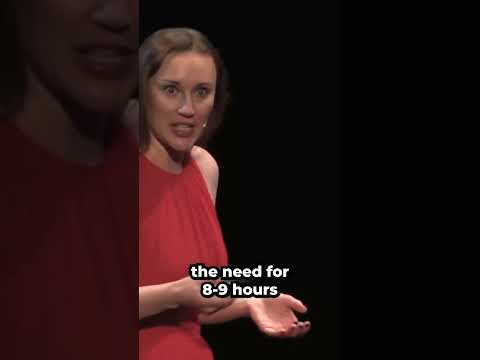
- night to be completely rested the same way that we have the need for eight to nine hours of sleep a night
- you interested in getting this gene therapy we could do this today we haven't yet but we could do this
- today another example most of us in the room pretty probably interested in longevity
- um we could use viruses to regenerate the tissue in your in all of your joints maybe get rid of things like cellulite
- viruses brain fog all these types of things this is probably a few more years out where we're probably five to ten
- years out on being ready to do this but this is absolutely coming in your lifetime you could get a Rejuvenation
- gene therapy you really want to talk far out we could talk about maybe 30 years from now we
- could absolutely engineer Humanity to withstand life in much more drastically harsh environments so we could alter
- your skin color to be able to reflect more UV light so you wouldn't get as much damage if perhaps say you were
- living on Mars we could engineer the cells in your immune or in your gut and the bacteria that live in your gut to be
- able to metabolize foods that are more easily grown on a martian environment and these types of things so really your
- imagination is the limit so could we enhance human potential we absolutely can it's just a matter of are you
- interested in when so happy to discuss the future foreign [Music] [Music] times yeah
- can you just um help everyone understand the timing and the regulatory hurdles um
- viral gene therapy had a moment where there were setbacks and just share that with everyone how
- that's affected how this technology has been held back how it's progressing now and what timelines generally look like
- for getting these uh these uh breakthroughs to Market absolutely so today if you were to start
- a brand new gene therapy company called siren biotechnology or anything else and
- you wanted to develop a viral gene therapy and you wanted to get to Clinic you're still probably looking for that
- first program in like a 10 to 15 year mark and it's not because it's going to take you that long to run the clinical
- trials it's not because it's going to take you that long to grow up the Vats of the drug it's it's mostly going to be
- a regulatory timeline so in between each one of these clinical trials even before
- you do your very first ones I mean we're ready today we could start our brain cancer clinical trial today but we're
- looking at 18 months of paperwork in order to file to do that first phase one and then you need to do your data
- readouts in between each one of those trials there's this kind of massive amount of paperwork that goes in front
- of the FDA that needs to be reviewed and there's back and forth and so the regulatory hurdles both from
- if you weren't even doing anything you know really drastic like those last three vignettes that I talked about is
- still going to be 10 to 15 years but if you wanted to propose something like the
- Sleep one that I mentioned that I think we'd all I'm certainly interested in um there you're probably looking at an
- ethical review board and whether or not they let you do something like that because that's not a disease so fun fact
- the FDA only lets you queue up clinical trials to test drugs that are for diseases but aging is not a disease
- state wanting to sleep fewer hours is not a disease State insomnia is but wanting to
- just sleep fewer hours and be fully rested is not a disease state so we kind of have to get to this moment where
- does the FDA start changing their definition of disease do we have a new regulatory body who will review these
- types of things that are more like augmentations and enhancements how are we going to Grapple with this as a
- society are we are we okay with this and let me just ask one more question it's a
- great it's a great question you pose because there is increasing consensus that maybe we
- should think about aging itself as a disease obviously and that there's a lot of approaches now to addressing that
- what about the other challenges to completing the research and the trials and scalability what are the bottlenecks
- we've talked about I've talked on our show about car T therapy and the challenge and getting manufacturing
- scaled up to treat enough patients each year even though the Technologies here it's FDA approved those drugs are in
- Market we just can't make enough what are the chat and I've heard a lot about uh lentovirus production and all these
- other kind of viral vectors being 18 month delay super bottleneck how bottleneck are we in being able to do
- the research that you guys are doing and ultimately to get these products to Market make enough of the stuff to treat
- patients so the single biggest bottleneck is actually not technological at all it's Financial it's access to
- Capital um right so these are like I said very very Capital intensive the average viral
- gene therapy is about two to three billion dollars that's about three times more than making one of those chemical
- medicines some of that has to do with time how long that process takes right every year your company is operating uh
- that GNA oh it's expensive um it adds up really fast and so some of this is just access to Capital and
- there's right the any company every one of us in this room this has a company there's depending on your sector there's
- a valley of death for some of you it's very very early stage for some of you it's a little bit more later stage but
- there's a valley of death where you just can't access Capital before you hit this
- like big de-risking milestone where the bigger checks will come in and private equity and those types of groups and
- crossover funds in your IPO so there's a value of death for many of these early stage companies where usually either
- after your seed stage or your series a but before you've got clinical trial readouts where people are very nervous
- to give you a really big check so that's certainly the biggest hurdle right now and why you see many companies going
- under across the biotech space regardless of if they're selling Gene therapies and then from the
- technological side it's still manufacturing is just like the drum beat being able to manufacture these things
- at scale continues to be a challenge we need folks who come from like the mechanical engineering and these types
- of backgrounds who don't historically necessarily think of Biotech as a place where they could apply their their
- knowledge and Technologies to please come over to biotech and help us make you know new generations of bioreactors
- and types of things that will allow us to produce these at scale cleanly cheaply and easily and it's just not
- intuitive making chemicals at scale is something that we've been doing for 40 years so we're really good at it genenta
- can make kilos of drugs in an afternoon with a robot but viruses are still something like if I queue up the biggest
- cdmo in the world catalent Pharma and ask them to make us a 5 000 liter bioreactor a virus they'll
- absolutely say yes but they won't even touch it for two and a half years um because I wanted to double click on
- the concept of making life better for people who aren't sick the Marty Seligman from
- the American Psychological Association actually posed this question 20 years ago and he said well we try to make all
- of psychology and Psychiatry is taking depressed people and anxious people and making them less depressed and anxious
- what about meaning and fulfillment for people who are content what about more joy and so when you look at the field
- and it's amazing the progress you're making and thank you for doing all that work aside from hey can we sleep less
- what else is you know do you do you talk about wow if we had the mandate to take
- healthy people and and give them a gift of augmenting them making them into superheroes almost when we're talking
- about like X-Men mutations here what are the fun things that you dream about that
- you could do for Humanity could we all just have Vision like Hawks or oh night vision is totally possible night vision
- yeah easy not literally without the goggles yeah easy I mean a world in which that's just
- an FDA like I need a I need the green light but no that's easy so okay that feels like Professor X kind
- of level I like it what else you got keep going um night vision would be possible the
- ability to metabolize um you know a food that grows perhaps in a different environment that not only
- you can't get any nutrients from but you can't even absorb it um so we could make
- it so that you could you know pretend pretend Soylent tasted good um you know uh you could eat anything
- and not only could it taste good to you but it could provide you all the nutrients that you need and be able to
- grow with you know much less much less water and in the types of environments that we'll have in in the future planets
- that you know given the climate change challenges that we all have um as far as other augmentations I mean
- there's there's all of the obvious Beauty applications uh that I think all of us are already doing uh now this we
- would just be doing this with a different modality right so removing you know there's a there's a gene therapy
- company in San Diego working on male pattern baldness uh there are folks working on you know all the wrinkles and
- cellulite and you know getting your hair color back and like all of the normal Beauty things that you would expect
- that's absolutely coming but as far as beyond the obvious Beauty things like what other types of augmentations I
- think the mental Health space is a huge one because it's it's usually a very very simple thing and it's complex but
- it's simple they're usually missing a single receptor or a single protein somewhere in their brain and if we were
- just able to restore that for them in just that location and not everywhere in their body
- um you could restore Joy you could restore happiness all of these types of things do you want to talk about the
- capital markets piece because you mentioned you need Capital yeah we're fundraising hi yeah and uh tomorrow
- maybe maybe you can help out here but you know the biotech Market's been decimated oh yeah since November of 21
- and it's really intricately linked to interest rates because of how far out you have to make a bet on a biotech
- company and so as a result the valuations have plummeted 80 90 percent in many cases a lot of stuff just not
- getting funded right now um maybe tomorrow you can share your point of view on where things are headed
- there and um Nicole maybe you can share a little bit about what the experience has been fundraising even though you
- have a great technology that's got some proof points how hard it is well I I have a I have a kind of a technical
- question but which is just you had to when you picked aav you had to make a decision about small
- edits and not large edits I guess right so just explain to these guys about what
- payloads are actually possible in AV and are you thinking about what happens if you actually have to go beyond four KB
- and how are you going to solve that so because a lot of the diseases that these guys will actually probably
- understand are not small Snips they're going to be large you know cut and paste two types of gene therapy
- there's Gene transfer gene therapy where we give you the whole Gene that you were
- missing like perhaps you were missing that portion of your chromosome at Birth so that's Gene transfer gene therapy
- we're literally transferring a functional copy of the gene back to you and then there's Gene editing gene
- therapy where we go in and actually correct a mutation in place uh within your genome and don't give you anything
- extra so every virus on the planet has a carrying capacity it has a size just like a sedan can't carry as much as a
- minivan and so aav viruses the viruses that I work on are amongst one of the smaller viruses so it can only package
- about 4.75 KB so the numbers of nucleotides that you can fit inside of it and different viruses have larger
- packaging capacities and can fit more studs that's 4700 letters of DNA and so different viruses will have different
- packaging capacities and so if you're doing Gene transfer gene therapy where you need to provide the entire copy of
- the gene you can only put in genes that will fit with all of the other regulatory elements for expression
- within that virus so of all protein coding genes since we're typically going after diseases that are in influencing a
- protein of all protein coding genes eighty percent of those genes can fit within my virus so actually the vast
- majority of genetic diseases can be treated with aav gene therapy with Gene transfer gene therapy with Gene editing
- gene therapy we can treat anything because now we're not size limited we only need to deliver either the knicker
- or the cutter right many of you have heard of things like crispr that's one of the many tools we can use to Nick or
- cut DNA and we can either make a Nick and have your body repair the mutation we can go in and make a Nick or a cut
- and we can cut something out that wasn't supposed to be there or we can go in and
- Nick or cut something in your genome cut something out and then put something that was meant to be there the whole
- time back in all three of those forms those Gene repairs and Gene edits are all kind of broadly classified as a lot
- of Gene editing gene therapy and all of those would fit within a lot of any virus there's a high percentage of
- disease I don't know the percentage you probably know which is really just like one point mutation right yeah huge
- transcribe AC or something is typically the biggest one right can you just explain to folks in when you think the
- tool chain will exist for us to do those single point edits and actually just today you can actually go in and
- accurately rewrite an a to a c okay today there's a yeah there's a few in yeah there yeah
- um guys we got to wrap and I want to really thank Dr Nicole Paulk for her amazing work
- um fantastic thank you so much thank you thank you thank you [Music] [Applause] [Music]
- rain man [Music] we open source it to the fans and they've just gone crazy [Music]
- I tried
Brief Summary
Dr. Nicole Paul discusses gene therapy advancements, challenges, and future potential in medicine, including treating cancer and enhancing human capabilities.
Key points
- The Era of Living Medicines. Dr. Nicole Paul discusses the shift towards using living organisms in medicine, including viruses.
- Gene Therapy's Future. Dr. Paul predicts that everyone will receive viral gene therapy in their lifetime.
- Revolutionizing Cancer Treatment. Exploring the potential of using viruses to treat cancer through gene therapy.
- Gene Therapy Breakthroughs. Patients with a mutation in the dec2 gene only need four hours of sleep to feel rested.
- Future of Human Augmentation. Discussing the potential to enhance human capabilities for survival in harsh environments.
- Regulatory Hurdles in Gene Therapy. Exploring the significant regulatory challenges faced in bringing gene therapies to market.
Episode highlights
- The Era of Living MedicinesDr. Nicole Paul discusses the shift towards using living organisms in medicine, including viruses.“We're kind of quite literally living through one of the newest eras of modern medicine.”2:12Sep 25, 2023
- Gene Therapy's FutureDr. Paul predicts that everyone will receive viral gene therapy in their lifetime.“You are going to receive a viral gene therapy as medicine in your lifetime.”9:32Sep 25, 2023
- Revolutionizing Cancer TreatmentExploring the potential of using viruses to treat cancer through gene therapy.“Could you actually use a virus as a medicine that could be used to treat cancer?”10:16Sep 25, 2023
- Gene Therapy BreakthroughsPatients with a mutation in the dec2 gene only need four hours of sleep to feel rested.“These patients only need four hours of sleep a night to be completely rested.”17:04Sep 25, 2023
- Future of Human AugmentationDiscussing the potential to enhance human capabilities for survival in harsh environments.“We could absolutely engineer Humanity to withstand life in much more drastically harsh environments.”17:49Sep 25, 2023
- Regulatory Hurdles in Gene TherapyExploring the significant regulatory challenges faced in bringing gene therapies to market.“The regulatory hurdles are mostly going to be a regulatory timeline.”19:31Sep 25, 2023
- The Valley of DeathThe financial challenges biotech companies face in securing funding for clinical trials.“The biggest hurdle right now is access to Capital.”21:53Sep 25, 2023
- Augmenting Human PotentialImagining a future where we can enhance human abilities and experiences.“What other types of augmentations could we do for Humanity?”26:10Sep 25, 2023