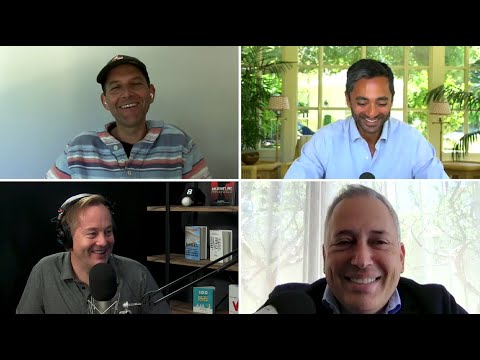
Bari Weiss | All-In Summit 2024
Ask about All-In Podcast
Episode Description
(0:00) The Besties welcome Bari Weiss (2:19) Defining the polarizing forces in American society (5:11) How institutions like the New York Times were captured by radicals, giving up "the heroin needle of prestige" (16:39) Avoiding audience capture while building The Free Press (22:09) Sacks's strategy to find reliable media sources (27:26) Ideological capture of medicine, building a new institution
Follow Bari Weiss: https://x.com/bariweiss
Follow the besties: https://x.com/chamath https://x.com/Jason https://x.com/DavidSacks https://x.com/friedberg
Follow on X: https://x.com/theallinpod
Follow on Instagram: https://www.instagram.com/theallinpod
Follow on TikTok: https://www.tiktok.com/@theallinpod
Follow on LinkedIn: https://www.linkedin.com/company/allinpod
Intro Music Credit: https://rb.gy/tppkzl https://x.com/yung_spielburg
Intro Video Credit: https://x.com/TheZachEffect
Read the full transcriptHide the full transcript
- a major resignation now an editor at the New York Times showing up for work as a
- Centrist that an American newspaper should not require bravery she's saying no one should be allowed to criticize me
- please welcome Barry Wise anyone that departs from wol Orthodoxy gets a lot more heat a new consensus has emerged in
- the Press but perhaps especially at this paper if you don't have the right views
- everything is caveat edited triple quadruple amount of times should it take courage to say that those who praise the
- pristine Subways of Russia are not journalists but propagandist should it take courage to just say in public I
- [Music] disagree join me in welcoming Barry Weiss to the [Applause] stage hi Barry
- Barry thanks for being here thanks for having me thanks for the cool weather really appreciate it yes um Barry made
- headlines in I'm going to give you a little introduction even though most everyone here knows who you are but you
- made headlines in 2020 when you left the New York Times criticizing it stance on
- free speech and diversity of thought and since then you've launched the Free Press congrats I know a lot of folks
- here are subscribers um and the the Free Press declares itself a a free press for free
- people honest independent and fearless I think we all respect and admire you for
- your fiercely independent thinking and direct and honest takes on current events and social issues we feel like
- you're a kindred kindred spirit yes a besty I wish um so this may be an audition let's see
- well I don't know if you guys can handle having a woman in I'm not sure no no we
- can just not sex so um look I want to start with a very broad General um question that you
- can take in any direction you want what's going on in America what are the two sides because it seems like a lot of
- what has as we've been hearing a lot about and I think we're going to hear more about throughout this
- conference there are polarizing forces at play and the PO the polls kind of get defined differently but is there a
- unifying thesis here um there's the notion of populists and elitists is are there elitists that say I'm an elitist
- there's uh corporate and government folks vers pocket square says you're El yes uh my pocket square keeps slipping
- um there's the conservatives versus the Liberals I mean what what what is the divide in the United States and what is
- causing the polarity what how would you think about the polarity that's emerged I think there's two ways broadly that I
- would answer that and obviously besties push back on me as I know David sack surely will um what one way to think
- about it and I think Martin gurri has written about this absolutely brilliantly in his book The Revolt of
- the public probably the most important book written in the last 25 years read it if you haven't strip press published
- it say it again Martin gur's book it's called the Revolt of the public and broadly would he prophesied without
- using the words Donald Trump or BLM or any of the phenomenon that have reshaped American political life over the past
- several decades is the sort of um call it the ren ades versus The Establishment or The Outsiders versus the Insiders if
- you want to understand how it can be that Dick Cheney and kamla Harris are on one side and Donald Trump and Tulsi
- Gabbert and Robert F Kennedy whatever you think of any of those people are on the other that's how you have to
- understand that I think another way that I've been thinking about a lot though is
- is sort of like there are three sides that I see that are emerging and I think the Free Press is trying to position
- itself in what I believe is the broad self-silencing majority piece of the pie which is to
- say there's a woke left there's increasingly a woke right and then there's the normal people and the normal
- PE I mean this is what people come up I went to a thing for my daughter's new preschool yesterday and there were some
- Free Press readers and they didn't come up to me to talk about any particular piece they just said thank you for being
- normal and normal was the adjective that almost all of them used and so I think that that's also something that's
- happening where you know I'm sure has has has already been discussed at this conference we have this Horseshoe in
- which the left the identitarian sort of anti-liberal left illiberal left sounds eerily similar at times to the
- illiberalism of the right and they sort of are in this dance with each other and
- the rest of us are feeling like when did everything get so crazy and is there a return to normaly and I'm not saying a
- return to normaly in the sense of like returning to some kind of like neoliberal consensus I just mean a
- return to the things that I think many of us still believe are just basic common sensical American values that
- right now feel Under Siege let's talk about the media's role in this you and I have been career journalists um editors
- and so when we were coming up they would take your piece whatever you wrote and just say well this is an opinion they'd
- strike it out and say who are you attributing this to there was a very thoughtful process and then something
- happened economically with link baiting and maybe trying to get more clicks and then this very strange thing happened
- when Donald Trump got elected that I think you and I both witnessed which was journalists who
- were you know thought of themselves as independent and storytellers who would just present the facts to an audience
- then saw themselves um as part of the resistance and that they had to stop this individual um because they believed
- he was Hitler and and the marketing when you went to the guardian or the Washington Post or the New York Times at
- the bottom of the New York at the bottom of a trump story would say if you want us to hold truth to power and stop Trump
- give us your credit card yeah and this seemed like just bizarre moment maybe you could just talk about that Paradigm
- shifting because it happened during the economic turmoil as well when journalism
- got gutted I think it's deeper than I think the the roots of this are deeper than Trump we actually have a piece
- we're running tomorrow afternoon called when we started lying that's sort of a view from someone that was in the Middle
- East Bureau of the AP and seeing the roots of this back in 20052 2006 and what that piece argues and I think it's
- exactly put is people don't really understand that the fundamental job description of mainstream journalism has
- changed it used to be that the job of Journalism and I still believe that this is the job is to hold up a mirror to the
- world as it actually is so people can make sensible rational decisions about where to send their kids to school about
- where to live about who to vote for about all of the things that are important in this life tell the story
- about reality as plainly and as truthfully as you can that is plainly no longer the goal I think of many main
- mainstream I should put in quotes American journalists the job description as they see it is to Usher You toward
- the correct political position that's it and once you begin to understand that things that seem crazy like wait how did
- they not tell me about the hunter lap Biden laptop story or why did they tell me that the thing that I saw with my own
- eyes which is the obvious mental decline of the president of the United States which is relevant to every single person
- in this country and in the world was a lie and once you start to understand that you understand the misconstrual of
- certain stories you understand the absolute silence around others and frankly that's why we're all here like
- it's given this tremendous opportunity for people who crave that thing that journalism used to do the truth can you
- well can you the truth yeah can you just double yeah the truth just double click
- into that like it's not like there's like some Grand cabal of people that decide let's obfuscate Biden fine let's
- Elevate this so what does it what does it actually mean day-to-day like how how is it happening okay is it the money is
- it the incentives what is happening there's a few things that happened the first as Jason was alluding to is that
- the economic model changed it used to be that if you ran a piece in the New York
- Times your fear was you were going to piss off The Advertiser that was running next to the story once the business
- model shifted you no longer were as concerned about although you still are to some extent about enraging you know
- Proctor and Gamble you're worried about enraging the reader right this is the phenomenon that so many people have
- talked about which is which is audience capture which is as you know the individual sub stalker is as susceptible
- to this as the New York Times none of us are free from that phenomenon either people respond to your article and say
- that was stupid or that pissed me off and then you feel pressure to change unsubscribe or unsubscribe no so think
- about this Accord and and I I think that these are public figures but um something like 95 to 98% of readers at
- the New York Times and I'm choosing that only CU it's the experience I know most
- intimately regard themselves as liberals or progressives so if you write and I'm
- thinking about my wife who writes about in her book how she after the violent rioting that happened in places like
- Kenosha she was a business reporter went and reported on those stories and found
- that the story was unbelievably complicated that many of these business owners were minority small business
- owners they did not have insurance they were absolutely devastated by what happened and you know what happened she
- brought was an excellent story back to her editors and they said let's wait until after the election to run this so
- that's the kind of thing that would happen a lot and no there's not like some secret cabal meeting that happens
- where it says let's make sure that we lie to our readers about Joe Biden's mental state it's the exact same
- phenomenon that everyone here feels in any Social Scene or company or institution that they're a part of which
- is that human beings are social animals and if you look at the kinds of people that work at the New York Times They
- went to the same 10 boarding schools or fancy schools and the same 10 colleges and they marinated in the same set of
- ideas and they want their kids to go to the same schools in Brooklyn Heights or the upper west side and that creates
- this very particular group thinking phenomenon let me add one thing which is that was always there the thing that I
- think has changed a lot in the past let's call it 20 years is that the very places that used to be feeders to the
- New York Times were no longer feeding in sort of your standard Center left liberal Democrat they were feeding in a
- kind of person who believed in something like Revolution and believed that their
- job was to Fu that inside the New York Times oh but how does that say more about what does that what do you mean
- well what I mean by that is that they did not you could look at the values of the New York Times and sorry okay wait
- just go back a step so the people in the New York Times are fancy basically is what you're saying I'm not saying their
- fanciness is sort of beside the point point is that there was an archetype yeah of course and then that archetype
- shifted right and is that because the feeder schools changed or is that because what they were taught at those
- schools changed it's because wokeness happened to American liberalism and the people that were speaking the language
- of progressivism all of a sudden transformed the notion of what let's say social justice was right all of a sudden
- social justice wasn't about doing good by the poor it was actually about a kind of neoism and a resegregate all of a
- sudden progressivism wasn't actually about human flourishing and progress it was about you know ensuring equality of
- outcome rather than equality of opportunity and I don't think that the sort of that transformation which some
- people have said oh wokeness has peaked it's over it cannot be overstated the thing that began at the margins and at
- the fr has moved into the center of American institutional life and that is the story
- of the transformation of the New York Times and it's the story of the transformation of Harvard and so many
- other places where people all of a sudden turned around and thought when did everything get so insane is it a
- story that ends in socialism as it has in past lives I think that you know I'm an optimist this is America and I think
- that there's an unbelievable push back to this phenomenon but the push back I believe we uh we we have Elon here this
- afternoon right the push back and this is where I guess I'm more of a radical than a reformer I think I began at the
- New York Times as a reformer believing that I could make a difference and I God Bless the people who are still trying to
- do that I think there's a role for both I think what has made me more of a radical not politically but just in
- terms of my posture has been that I've become someone who believes that the way to change those institutions is not to
- give money to those places or join the board of them or delude yourself with the idea that you can transform them
- from within it's to build new things and in building new things and creating competition it forces the other people
- to to to change J give a voice to the people if you if you wouldn't mind give a voice to the people that want to Buck
- the trend that want to be able to respond to the statement that they are morally bankrupt if they identify that
- this is not the right path what what's the conversation that and this is happening with everyone I know in
- schools in workplaces it's not just the institution of the New York Times it's all institutions okay it starts with
- something very simple give up the heroin needle of prestige rip it out of your arm
- immediately stop poisoning yourself your families and your children with the bankrupt notion that them getting into
- Harvard or Yale is more important than inculcating in them a sense of Love of family of country and of all of the
- things we used to think were normal that to that that isn't clapping cuz he went to Stanford
- but to me to me that it begins with that because I I find myself in these baffling conversations with people where
- they say thank you for what you do I'm so grateful for the Free Press I'm so grateful I'm like yeah and we're talking
- it's great I'm like where do your kids go to school and then and then they name a place that's like the center of the
- Mind virus and I'm like why would you do that well that Al Alca was all filled up
- yeah they reach their capacities up right so to me it's sort of the beginning of wisdom begins with that and
- with the confidence that Prestige and honor is not something that is granted to you
- by institutions that have allowed themselves to be corrupted by morally bankrupt people you you and your values
- they're lucky to have you right that's what I think like the fundamental posture needs to change let's um talk
- about the new stuff we're all building the go direct movement all these new brands you're one of them we're one of
- them I suppose are we going to talk about founder mode and are you guys going to explain to me what that is I
- mean cocaine I no in your no bar it's cocaine really yeah founder Mode's cocaine yeah it's good we have actually
- the good I've never done founder mode I can only guess but no my guy's got the best founder modes I put some in your
- green room thank you so much yeah yeah um if you need more let me know um so I want to I think I've been doing founder
- mode if founder mode means like working till you collapse every night for three no no that just means being committed
- and trying to build a business yeah we're talking about cocaine founder mode being a
- deal it's back um yeah but let's seriously talk about um it's so funny back baby it's back woo
- it's going to be a great show um so I want to talk to you about uh the new stuff that's being built um obviously
- you have your subscription based business doing wonderfully we've got the information we've got all in um and then
- you have you know everybody who got kicked off of um you know broadcast television um or what you know for
- whatever reasons they left Don Lemon Megan Kelly uh what's that Catherine harage yeah it's fantastic yeah so tons
- of long tail there but um this group is also susceptible to the same things as you pointed out and and perhaps in some
- ways more susceptible because they've got a less subscriber base less brand so Fox News is going to be fine New York
- Times is going to be fine but as we saw this past week uh the Russians put $10 million into a little slush fund and
- then gave it to start with no no I'm not talking to saxs I'm talking to uh to to
- Barry he's talking to sa through Barry thank God I'm not managing these people well no no I'm just curious what you're
- I mean these are obviously you know as the Russians would call them the usful idiots but they're they didn't even know
- they were getting millions of dollars they didn't ask where it was coming from um obviously you didn't take that money
- we didn't get offered that money unfortunately otherwise you would have taken it yeah we would have sec we would
- have secured that bag immediately free money from the Russi we're like the scene in The Matrix where
- Neo's dodging the bullets in one nicks's leg that's the Russian money cuz it was
- flying everywhere and Jal was trying to jump into the bullets and you know trying to collect them and it's like
- it's all we can do to just we wanted to get that uh that sweet sweet money but what was your your what's your take on
- this cuz you had some strong feelings when uh I think Tucker went um and did his what you thought was propaganda for
- Putin um and so let's talk about you know how susceptible in your mind um these voices are to being bought and
- paid for apparently to me it's less about allegedly being bought and paid for I think what it is is there's a
- really really understandable risk that once you sort of eject yourself from the Matrix or whatever the right metaphor is
- stop taking the blue the blue pale T it's like once you see one lie all of a sudden the it comes a world of lies and
- what's to stop you sort of from falling down the rabbit hole and I'll give you an example there's certain people I
- don't want to name them who like I so admired and I felt like they were really precient on stand on standing up against
- sort of the neo-racism from the left let's say and then all of a sudden I turn around and they're basically
- talking about how Bill Gates is like putting 5G chips in our brain and I think to myself how did that happen and
- I think the way that it happened is an really understandable human impulse which is these people lied to me about
- this thing therefore everything they say is untrue or these PE or or the Overton
- window has been narrowed so so tightly that I'm just going to fling it open to I don't know someone that says that
- Churchill is a villain and the Nazis may have had a point so that's what I think
- is is actually happening more broadly and I think the I feel often times at the Free Press like
- we're dancing on the edge of a knife which is to say on one side you have these institutions that have the poor
- gatekeeping but at least it's I mean they have gatekeeping they have fact Checkers they have this whole system
- right that's corrupt but at least it was supposed to work at one point and then you have kind of the Wild West world and
- the wild west world has everything and so you know can see Alex Jones right alongside you know a a fantastic
- journalist like Megan Kelly and how are you supposed to know who is who right and so that's the challenge I think of
- the new Wild West world and what we're desperately trying to do at the Free Press is to be the bridge and what I
- mean by that is to marry the standards that you would once expect from a place like the Washington Post or the New York
- Times in other words everything is rigorously fact checked when we get something wrong we publicly correct it
- like all of those old rules but Maring them to the sort of political freedom of the new world can you take us into an
- instance where a contributor because you have a lot of freelance contributors or
- just you know important people will want to publish now in the Free Press which I
- think is a really good sign for you um that you're doing something meaningful um that they submit something and you're
- like okay this is not actually reporting this is your opinion on a conspiracy and we need to maybe get some
- facts in here to boister this opinion of yours because I mean these dopes accepted $100,000 who never asked it so
- then people are going to take their opinion on Ukraine and and look at that as factual when they don't even question
- who gave them $100,000 an episode I mean you the these people are obviously idiots SLC corrupt what do you think I
- wish I had read more about this particular story well it's infuriating because if somebody were to drop
- $100,000 on you to publish the Free Press on another website you'd say where's the money coming from correct
- yeah I mean why are we getting free money yeah we don't get free money probably because I'm too stupid to get
- free money but no no it's the opposite you're too smart so they wouldn't offer it maybe I mean I the the scenario
- you're asking me to go into that happens every single day in other words we're in
- a really excellent position where we turn down the majority of things that are submitted to us and and I think the
- thing that's really heartening is what are readers reward is the very thing that we were founded to get in other
- words when I left the New York Times the Free Press Barry weiss subs.com and it began as a reactionary product honestly
- like now it's transformed itself but it began as me being so pissed that they were ignoring and lying about so much
- and those were the stories that I ran sort of headlong into mostly institutional capture in the areas of
- law and medicine and education but just to choose an example a few hours ago we you know we sent Leon Woodhouse an
- amazing reporter I saw as everyone here did that the Third Precinct in Minneapolis during the BLM protest and
- rioting burned to the ground and the cops abandoned that station and I wondered what do the cops in the third
- precinct what do the small business owners there what do they think about Tim Walls now that is a natural story
- that in a normal time the New York Times would report on immediately when he was
- chosen but they didn't and so we sent Lon and he interviewed two dozen police officers and small business owners and
- that is the kind of thing that our readers want they want new information soberly presented and brilliantly
- written they want really high quality things and to me that's one of the things about building the business has
- been the most heartening David saaks has not said a word well let me uh found let me I can
- actually let me let me uh agree with a few things you said um so first of all I agree with you that the mainstream media
- is not just biased it's just like all propaganda all the time and the turning point for me in realizing this was Co I
- think before covid I realized that yeah you know the media the MRE media is largely consists of liberals so they're
- going to have a liberal bias what we saw during covid was that they were even lying about science right it wasn't just
- politics it's like everything you know we were told that um the pandemic was a pandemic of the unvaccinated even though
- even if you got the what they were calling the vaccine it didn't actually stop the spread you go on and on that
- you know we had to basically do social distancing except when the Riots of 2020 happened then you're allowed to go
- outside and actually participate because it's a social justice cause so therefore
- the health changes I mean it was like on and on church but you can go to a protest right right so no surfing so it
- was like for me it became so obvious that uh that the media is just again it goes Way Beyond bias you know it's like
- it's just all wrong now at the same time I think that you do raise a good point which is once
- you're outside the world of The Prestige media yeah you are kind of on your own you're on you're on Independent
- platforms I use x to try and figure out you know who I should listen to and the way I do it is I compare who said what
- compared to what actually happened so like who ended up being right about the issues and then I will follow them more
- and I will def follow the people who are wrong it's really simple for example on
- the issue of Ukraine the number one quoted Source in the mainstream media is a think tank called The Institute for
- the study of War it's basically a a neocon funded Think Tank who are the relatives of Victoria new newand who is
- the architect of our policy in Ukraine everything they've written over the past two and a half years about Ukraine has
- been proven wrong they said that the summer counter offensive last summer was going to be a giant Victory it ended up
- being a disaster sorry these are her relatives yourself relatives and the the mainstream media the New York Times so
- on quotes isw it's if you go look at the the citations it is the single most sighted
- Authority by the mainstream media and they are consistently wrong who is right about the Sumer counter offensive well I
- was for example while we're handing out credit and I and I and I and I certainly didn't
- need to be paid by the Russians I just figured out what the truth was okay jcal uh so you know you you you bring up you
- bring up these you know these um stories about Russian influence or whatever the
- real influence operation in this country is by the mainstream media they're the ones who are spreading disinformation
- about the war in Ukraine and so many other issues on a scale that dwarfs what any of these like handful of podcasters
- that most people have never heard of uh can ever hope to accomplish so in any event I agree with you when's the
- foreign policy panel at this conference and can I join it well yeah we're going to do shimer and s m shimer and saxs on
- saxs on M shimer well look I would um well we're having yeah John Mir shimer and Jeffrey Sachs are speaking tomorrow
- so they're doing a Tay T but yeah if you want to stick around and we could have maybe you and John we can work that I
- have a I have a question you got you've got some time right now right now you me
- no no go go on last um last year this would be like a many hours conversation well last year one of the most popular
- things that come out of this was a talk about regulatory capture by Bill Gurley and you mentioned that the first thing
- Bill Gurley that's cheering for Bill and not regulatory capture cheering for bill um
- he's great but you said that when you left the times you threw yourself sort of like head first into the into the
- regulatory capture of the law and medicine and whatnot uh what did you learn I would say regulatory capture I
- would say ideological capture ideological capture okay so what did you learn I mean we've published so much on this
- but but basically the way in which institutions intended for one purpose have come to serve another another one
- or another God and you know in the case of medicine which I would think would be
- maybe the most alarming in the law um not actually intending I mean the purpose of medicine is to do no harm and
- yet all of a sudden in many hospitals and and medical schools across the country people were being told to do
- something very different to meet out care based on race to you know to shuffle young teenage girls especially
- toward irreversible changes in their bodies and and things of that nature so a lot of it
- comes back to the fundamental theme we we've been sort of been circling in this conversation which is that ideological
- change that's happened um and I think just to go back to where where we began this conversation it's like where did
- all this come from I I don't think it's possible to understand these changes and
- like the Rebel Alliance maybe that's risen up against it without talking about technology and and the reality
- that we like 20 years ago 30 years ago I would have just left the New York Times
- and and just maybe opened a diner done done something completely different this this would not have been available to me
- and it's kind of unbelievable what's what's been made Poss I by technology I mean I'm not
- someone who I've never managed a person in my life I never raised money in my life I never imagin I'd be an
- entrepreneur I can barely log into substack and now I have a company with 50 full-time employees it's unbelievable
- that's amazing yeah congratulations that's founder mode and I that's the real founder mode and and and I I would
- just add that you know what the truth is on any particular issue is not always obvious it's a process to figure it out
- and so we have to have these alternatives in order to debate the issues and then arrive at the truth and
- you again compare what people said to what actually happens and you try to figure out who you can trust and the
- good news is that today we have these Alternatives we have alternative media of which you're a major part all in PO
- is a major part and I think these alternatives are building in reaction to basically the corruption of the
- mainstream media which I think you're spot on about I think that the the challenge at least I'll say for the Free
- Press is there are a lot of people out there who their goal and they're doing it beautifully is to make a lot of money
- really quickly and to be very influential as oneman bands what we are trying to do is something much more
- long-term we are trying in an age where no one trusts institutions anymore and they only trust individuals and
- influencers to stealthily build an institution and what that requires is a kind of discipline to give up and we do
- a lot of things that would really stuff our pockets in the short term not the Russians but other things um for the
- sake of building what is to us the thing of the most value which is trust with the audience and they I believe see us
- doing that and see us publishing things that might enrage them that they might disagree with that might provoke them
- and we think that that's just a part of that that is fundamental to our mission it's great ladies and gentlemen Harry
- Weiss thank you [Music] [Applause]
Brief Summary
Barry Weiss discusses media bias, political polarization, and the need for independent journalism in America.
Key points
- Barry Weiss Joins the Stage. Barry Weiss, known for her bold views on free speech, takes the stage.
- The Shift in Journalism. A discussion on how journalism's role has transformed over the years.
- The Danger of Groupthink. Examining how groupthink affects journalism and public discourse.
- The Rise of Wokeness. Exploring how wokeness has shifted American liberalism and journalism.
- Building New Institutions. We discuss the need for new institutions to challenge the status quo.
- Navigating the New Media Landscape. The Free Press aims to bridge traditional journalism standards with the freedom of the new media world. "We're trying to marry the standards that you would once expect from a place like the Washington Post."
Episode highlights
- Barry Weiss Joins the StageBarry Weiss, known for her bold views on free speech, takes the stage.“Join me in welcoming Barry Weiss!”0:47Sep 19, 2024
- The Shift in JournalismA discussion on how journalism's role has transformed over the years.“The job of journalism is to hold up a mirror to the world.”6:53Sep 19, 2024
- The Danger of GroupthinkExamining how groupthink affects journalism and public discourse.“Human beings are social animals.”10:29Sep 19, 2024
- The Rise of WokenessExploring how wokeness has shifted American liberalism and journalism.“Wokeness has moved into the center of American institutional life.”12:33Sep 19, 2024
- Building New InstitutionsWe discuss the need for new institutions to challenge the status quo.“To change those institutions, build new things.”13:40Sep 19, 2024
- Navigating the New Media LandscapeThe Free Press aims to bridge traditional journalism standards with the freedom of the new media world. "We're trying to marry the standards that you would once expect from a place like the Washington Post."20:46Sep 19, 2024
- The Challenge of TrustIn an age of distrust, building an institution that values trust with the audience is paramount. "What we are trying to do is something much more long-term."30:41Sep 19, 2024