Daniel Ek: Life After Spotify, Broken Healthcare Incentives, Catching Disease Early & AI's Potential
Ask about All-In Podcast
Episode Description
(0:00) Daniel Ek joins the Besties! (1:14) Starting Spotify: Beating piracy and betting his own money on the record labels (6:10) Neko Health: The Spotify playbook for healthcare, the $499 body scan, and why US healthcare waits until you're sick (36:04) AI: Tech's failure to sell the upside, open vs. closed models, and regulating compute (44:24) Back to Spotify: Podcasting's open standards and the Stardoll origin story
Thanks to our partners for making this possible!
As wealth grows, complexity compounds. Between investments, tax strategy and estate planning, coordinating it all can feel like a full-time job. Creative Planning can help with the heavy lifting. https://ad.doubleclick.net/ddm/trackclk/N2598215.3565131ALLIN/B36182939.452362736;dc_trk_aid=646454825;dc_trk_cid=260464105;dc_lat=;dc_rdid=;tag_for_child_directed_treatment=;tfua=;ltd=;dc_tdv=1
Starting a business? Northwest Registered Agent gives you everything you need to build a complete Business Identity including free tools and built-in privacy. Get more at https://www.northwestregisteredagent.com/ALLINFREE
Follow the besties: https://x.com/chamath https://x.com/Jason https://x.com/DavidSacks https://x.com/friedberg
Follow on X: https://x.com/theallinpod
Follow on Instagram: https://www.instagram.com/theallinpod
Follow on TikTok: https://www.tiktok.com/@allin
Follow on LinkedIn: https://www.linkedin.com/company/allinpod
Intro Music Credit: https://rb.gy/tppkzl https://x.com/yung_spielburg
Intro Video Credit: https://x.com/TheZachEffect
Read the full transcriptHide the full transcript
- All right, everybody. Welcome back to the AllIn interview show where we the All-In podcast dedicate an hour to just
- some of the great uh thinkers, creators of our time. And today will be no different. Daniel Ek is with us. you
- know him the co-founder of Spotify which he started 20 years ago and he ran it for those two decades to an
- extraordinary uh state of affairs today well over 700 million active users over 300 million premium subscribers but on
- January 1st this year he uh shifted and became the executive chairman with me and David Freeberg Okay, Daniel Mack.
- How are you, sir? Welcome to the program. >> Well, thank you so much for having me.
- It's good to be on. >> Yeah, it's good to see you. Uh we've known each other for 20 years. I
- remember the first uh Shaq, your partner, leaned into me at a internet summit or something and said, "Hey,
- check this out." And he showed me Spotify. But this was at a time when uh nobody had a subscription service. So,
- we're going to talk today about your new startup, which is incredible in the healthcare space. But take us back to
- the launch of Spotify and and how that crazy idea got started and then uh how hard it was to break through with the
- music industry which are also known as the hardest partners in the world. >> As your wealth grows, have you noticed
- how much more complex things get between investments, tax strategy, and estate planning? Managing it all is a full-time
- job that you didn't ask for. Creative Planning can help. Their coordinated team of investment managers, CPAs, and
- affiliated estate attorneys can do much of the heavy lifting so you don't have to. Creative Planning, where wealth
- works together. Go to creativeplanning.com/allin. >> Yeah. Well, uh, I I usually start off by
- sort of saying whenever anyone asks me about the story, it's like, well, I had hair when I began this and by the end of
- this, I obviously, uh, ended up being bald. So, uh, you you can see that it wasn't an easy journey. All jokes aside,
- I mean, just to kind of set the scene, I mean, I started Spotify in 2006. I was 23 at the time. Um, and the world looked
- a little bit different. So this is pre uh iPhone pre uh I mean Facebook existed but it was college only YouTube uh
- didn't exist. Uh so just like that kind of dates me but this is before all the things we now take for granted and um
- and and the world at that time uh and the music industry at that time was in freefall because music piracy was kind
- of rampant. So we had Napster, we had Kazah, we had all these things. And there was an organization called the
- RIAA that went around and actually sued individual consumers in the US for illegally downloading music. And so I
- was sitting in Sweden and I was thinking to myself, you know, this is this is wild and this is crazy. There's no way
- to put the Genie back in the bottle. And me and my co-founder Martin um we were kind of sitting and spitballing startup
- ideas at the time and and you know Martin asked me like well you know if you could do anything you'd like to do
- what would you do and I said well you know my real passion is music but that that seems like a really stupid idea and
- he's like well why is that a stupid idea and I kind of told him about you know it's really hard because you have to do
- all these deals with the record companies you have to then figure out how to do licensing copyright and you
- have to do all of these different things. And he said, "Well, what if you did this?" And then he kept asking these
- what if questions and eventually I ran out of reasons to say it. So I said, "Well, I guess you could do something
- and if you did something, it would feel like you had all the world's music at your fingertips." And he's like, "Well,
- that sounds pretty good." And I said, "Well, okay. Well, let's give it a a try." Um, we started trying to license
- music. Um, originally the idea was to try to go global from day one and everyone was just laughing at at us uh
- when we were originally saying that. Um, but I I sort of lucked out because it turned out that one of the worst music
- markets in the world was my home country, Sweden. And part of the reason why it was one of the worst music
- markets was because we had super fast broadband already from the early 2000s. So we were kind of living in the future
- where people had such quick uh bandwidth connections that they could download pretty much whatever they wanted. So
- they were were doing it and iTunes actually wasn't even available uh in the marketplace that there was literally no
- legal options. So I think the music industry had lost like 80% or something of its revenues. And so it was like uh
- it it was kind of this crazy uh you know coincidence and kind of all of these things the conflicts of events where we
- figured out you know that uh me and my partner we we basically took all of our own money that we had made from prior
- startups and we said to the record labels what if we would guarantee you that basically you'd keep your bonus for
- the next year and you make your budget for the next year. you know, if if this really is as bad as you think it is,
- then you just shut it down after a year, but you still made the bonus. Um, and if
- this actually works, you win uh as well. So, you win no ma matter what. And they're like, "Okay, well, this seems
- kind of like an interesting idea." Um, and they eventually after a few years of negotiation agreed to it. We launched in
- late 2008. Um, and it instantly became a huge hit. We then took it to the UK, um,
- and made it a huge hit there. And then in 2011, 15 years ago now, uh we launched in the
- US. Um and uh yeah, I mean, and the rest is sort of a history. >> I mean, isn't that amazing, Freeberg?
- Five years in the laboratory just to get to the to the to the US market is quite
- a uh quite a journey. That's a lot of pain and suffering. >> Yeah. But but you know, you know, the
- crazy thing is uh I'm on the same journey now again. >> Yeah. Here we are. Neco actually uh as
- crazy as it is uh we started the company um eight years ago in 2018 um and we started it in Sweden um in
- 2023. So it took us 5 years to develop the product um tried out in Sweden and then once we proven it in Sweden we took
- it to the UK and did it there. Um and then from there on now we're launching in the US. So, it's exact Spotify
- playbook again, but this time in healthcare. >> One of the afflictions of great entrepreneurs is you're entrepreneurial,
- right? I mean, you just can't stop. >> Or maybe I just have a high uh pain tolerance. I'm not sure which one.
- >> Yeah. Once things got smooth, you had to get back into it. But at what point did
- you start thinking about doing other things? Daniel, were you like actively angel investing at Spotify over the
- years as CEO? business is building, hundreds of millions of users, public successful, things are growing nicely.
- You've got a great leadership team. We've obviously met a lot of your team over the years. How did you start to do
- these other projects? I know you've got a few others and and focus on Neko. >> Yeah, it it's kind of crazy. I I had
- forgotten about it but but uh my team now showed me very recently like I I apparently did this launch with the FT
- interview in I think 2012 or 2013 or something just after the US uh launch of Spotify uh where I was talking about
- healthcare uh already back then. So uh I've been thinking about healthcare specifically for a very very long time.
- Um, and it's just been, you know, I I I think a lot of people just talk about sort of all the stuff that's going bad
- in the world, but my view is that actually most things are going pretty well and uh it's kind of up and to the
- right on the technology curve and all the things that we're getting, but I try to focus on the problems that aren't
- going that well. Um, you know, one of those happens to be healthcare. So, I've been kind of interested about this as
- like, you know, how is it that we're spending more and more money on healthcare but getting worse and worse
- outcomes? Um, and what can we do about it? And so, that really kind of got me into the space. I think healthcare is
- kind of unique and kind of special. Um, I honestly didn't have any money until Spotify went public. So, I wasn't a
- prolific angel investor. >> What year was that? >> That was 2018. We went public, right?
- Yeah. >> Yeah. So, um, I probably started doing a little bit of investing in 2018, but I I
- had no money before then. So, you know, it was literally just kind of allin focus on Spotify for I guess uh you
- know, the better part of 12, 13 years before I made any investing in in anything else. And then uh you know you
- and I we were talking about it um at this dinner like a week ago or something but um you know I I then tried to do a
- little bit of investing. I'd actually already started um uh Neco at that time and I kind of just realized that I loved
- building way more than I loved investing and and so right now >> came to the same conclusion. It's so
- painful to watch companies you invest in. >> Well, this was our whole dinner conversation the other day
- >> get mismanaged and you can't do it. You you spend time on boards. It's why I don't join boards anymore. You're
- sitting on a board. You advise a CEO and they don't listen to you and you pull your hair out like I would have done
- something different. Why didn't you do this? And you know, and if they are listening to you and you're effectively
- instructing them on what to do, it also doesn't work because they're not leading. And so I I became pretty
- committed to this idea like you find amazing entrepreneur, founder, CEOs, give them money and never look at it
- again and you'll be fine. generally better than not. And then, you know, the flip side is if that's really what
- you're passionate about and you're you have the activity or the agency, it's to step in and do it yourself.
- >> Yeah. The more instruction they need, probably the less chance they're going to succeed.
- >> Yeah. >> So, Daniel, maybe you could just give us the overview on Neko, kind of what the
- >> Yeah. And how you and how you came to that idea, right? Yeah. How did you come
- to the this specific idea? >> I started researching the space uh a very very long time ago. Maybe just as a
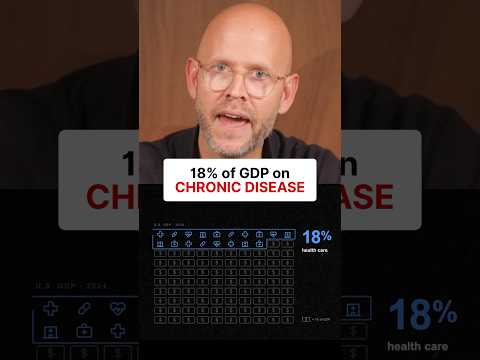
- quick primer for the audience, the US is spending 18% of its GDP on healthcare. It's the single largest line item uh in
- the budget uh right now. And if you take heart disease alone, um it's in the hundreds of billions of
- dollars that are being spent on that disease group alone in the US alone. I mean, it's just insane. It's larger than
- Fortune 10 companies revenues uh just one disease group. So it's it's a gigantic uh problem um as I mentioned
- and so I started looking into everything from like you know drugs to um you know
- can you make more efficient drugs is it about cancers and and basically started like targeting like what are the the
- real reasons why it looks that way and I think the the the real conclusion ended
- up being there's lots of reasons not one um you know we see um but we see a few really big ones um um cardiology or
- cardio uh heart health um is a major one. Uh we see um skin cancer, melanomas being another big one. So there there's
- a few sort of major uh groups of illnesses that is over representative. Uh but the major one is really chronic
- disease um overall. And the crazy thing about chronic disease when you read about it is that if you discover these
- things early, they're totally preventable. and uh the cost of dealing with them is very small and the
- suffering for the person um you know uh uh that are having it in their family and community is very small too. So the
- key thing is if you discover things early um you're actually good and so then the question is well why don't we
- discover things early and it it happens to be that we don't have enough data. Everyone in the entire healthcare
- industry is in agreement that we have to take healthcare from reactive to preventative health and uh but then you
- know there uh now all the disagreement starts which is how do you do that and and uh our view uh my co-founder Yalmer
- and I um our view is is really that it all starts with having better data. If you have better data, you're going to uh
- be able to discover things much more easily. And that in it in itself then leads to to uh have a chance of
- discovering those things much earlier which then creates this virtuous flywheel of then changing healthcare.
- >> So predictive data that allows you to be predictive about future adverse health
- outcomes and course correct ahead of time. Yeah, that's that's the holy grail uh is to get to that point and and and
- essentially our view is that the way you get there is that you need a lot more data than you have today both uh from
- each modality that you gather data but also across multiple modalities and you need it longitudinally. So you need it
- over time. So if you if you had a lot more data and you had it uh over time uh you'd be able to have a lot um higher
- likelihood of doing those kind of predictive analysis. And then what we then said was well well okay how do we
- do that? And it so happened to be that if you think about really what's happened in the last 20 years one of the
- biggest innovations of course is the smartphones and we've had more and more sensors packed into those smartphones.
- So there's more and more sheep sensors and sheep electronics that's available to us. So our view was like okay well we
- should be able to utilize this to build a lot more sensors than what's been able
- to be built before. And then the other thing um you know we started pre the LLMs and everything u like that but it
- was then called machine learning but today we talk about it as AI uh we should have a lot better intelligence.
- So if we have all of these massive data sets, uh we should be able to make really good predictions about it. And
- obviously again similar to that, this is exactly what we learned with Spotify too. The more data we're able to gather,
- the better predictions we're able to give you about what song to play next. Um and so this is exactly the the the
- same thing that you now need to do in healthcare, but obviously it's across multiple modalities and now across
- longitudinal data sets as well. Is there evidence today that some of this early observational data can affect ultimate
- health outcomes? I mean, I can see this working for metabolic conditions, things
- related like exercise depletion rates and blood sugar and sleep, but ultimately the correction there is
- typically diet, exercise. What are some other examples of major diseases that we
- can kind of identify ahead of the curve course correct >> and maybe just explaining what Nikico is
- for people who don't know. >> Yeah. Yeah. Uh may maybe I'll start there and then we can get into it. So in
- a very simple way uh the experience of Neco today and and in Gen 2 is it's $499.
- Uh it is a um reinvented healthcare experience from the ground up vertically integrated. We do everything from
- building our own facilities to having our own nurses and doctors on staff to building our own um diagnostic equipment
- to doing everything on our own on the software side. Um so it's it's it's really kind of an end toend solution
- that we've designed from the ground up and we designed it with the goal of creating the most valuable hour you can
- invest in your health. That's the mission that we have. Um and that's what we're coming to work to do. Um you know
- every day of the the the uh every day um really at work the experience is really
- you come in um the first thing you typically tend to do is that you draw blood um from us. So we then u measure
- 53 blood markers. You then go through our skin rig where we have a camera system that takes over 6,000 super high-
- res images across your u body where we index every mole and lesion and um all of the possible rashes and rednesses you
- may have um as well. Uh that gets indexed. We then look into your heart and blood circulation. and we look at
- grip strength. All the sort of traditional markers that we have very good scientific evidence are a valuable
- indicator as you think about sort of health. Um then at the end of this visit that lasts for about an hour uh you get
- uninterrupted time with the clinician and you go through all of the results including the blood works during that
- hour. So you have a complete set where you can go through your values within that hour with your doctor and uh the
- doctor will answer any questions you may have uh but you will also uh with that clinician sit down and go through
- results um you know uh about things you may even want to improve as well when it
- comes to your health. So that's the that's the experience that we're launching with today uh in New York in
- the US uh and obviously we'll we'll launch in many more places across the United States over the next uh coming
- months >> and just the identification of things ahead of the curve cuz I I've heard of
- other there was a one medical there was forward I mean there were a few other kind of attempts at making these
- integrated centers where you go in and get preventative checkups with their own instrumentation and and I think I've
- heard the thesis a little bit before what have you identified that maybe is novel Daniel that we that we haven't
- seen in the past. >> I think first and foremost the important thing to mention is as I mentioned we
- started this in 2018. So this company's been around for 8 years. We've done more
- than 100,000 scans already. So we actually publish data uh every year. Uh so we've just published our third year
- data uh survey uh where we go through the health outcomes uh that we have across our members and around 1% of our
- members have a serious underlying medical situation that is undiagnosed that we discover. Um, so you know again
- the the good news is many of our members are healthy and we're just talking about
- improving their current health status and as you correctly pointed out a lot of that ends up coming around stress,
- around diet, around sleep uh and those things. Um but um the most encouraging thing we're finding now as we've done
- these studies for three years in a row is that uh the people with the worst health status are the ones that are
- improving the most. So it turns out that this ability of of having a clear visual
- understanding of where you are in your health journey currently today and having a clinician that sits down with
- you explaining uh the the the situation and possible remedies to that is a huge u benefactor for getting people to start
- improving things around lifestyle. So we've seen members that have gone from year where they've been smoking to not
- smoking as part of then having to do this neco and prioritizing their health. Um we've obviously seen people with
- severe medical uh underlying illnesses that have gone from discovering those and then treating them and having much
- better overall health um as a result. So it's really kind of all across uh the basis but I'll give you a very concrete
- example. So um take dermatology as a great example. The average person um at NECO today has 950
- moles. It's pretty crazy. >> The average person has 950 moles. >> Yes. >> That's insane.
- >> Some percentage you can't tell I guess is the punch line here. They're like not
- detectable by the >> uh well if you really went through your skin you you'd be surprised how many
- you'd find. I mean it's a big dispersion. Some have you know many many thousands. Some of them have
- >> seems like a perfect AI application for AI obviously. Yeah. >> Exactly. So if you think about it across
- a normal doctor's visit, how likely is it that uh that doctor will check out all the 950 moles that you may have. Uh
- it's not going to happen. So normally what happens in a normal doctor visit would be you may say look uh I have a
- mole or the doctor sees hey let's take a look at that mole. It looks a little bit
- funky. Then they bring out their their tool where they inspect it. Um uh they usually these days have a software that
- checks against whether uh this mole they take a camera across many different um frequencies to then discover both the
- the size of this mole but also the texture of the mole and so on and so forth. We literally do that. Um, and we
- first have an AI system that flag uh possible risk factors and then we have a human clinician that then uh goes
- through and reviews those as well. And should we even at that point find something, we then have expert
- dermatologists on staff, multiple of them that then also reviews that result. So that's just one indicator of like
- what happens in one visit. But let's now presume the scenario that we'd have multiple visits and maybe one year it's
- actually we don't discover anything but because we've cataloged and indexed every single one we can actually now in
- a longitudinal base look at them uh from one year to the next year. So it may be
- growing abnormally. These are things that if you think about it um even the best doctors in the world can't possibly
- remember how your mole may have looked like from one year to another. So again, back to your point, this is a perfect
- application of AI, right? Um, but we look at this as like this is a perfect application of how health care should
- look like. It should seamlessly be both uh AI and amazing clinicians uh in a great packaged experience. So that's
- essentially what we're trying to do uh with with Neko. >> That's great. And are you actively
- running it as CEO, Daniel, or >> are you operating part-time? Yeah. No. So, similar to Spotify these days where
- I have uh two great CEOs, uh I have an amazing co-founder and partner Yalmer who's really the brainchild uh of Neko
- and he's the one who's doing most of the work even though I'm sitting here and taking most of the credits at this
- point. But yeah, he he's the real brain. >> Great. >> You know what I'm struck by? The cost of
- this is so cheap. $499. You also have function health and superpower, two other great services about 350 400. They
- just do blood work. But if we look at the spending right it's right now it's healthcare number two uh social security
- number one and and fast your favorite coming up is the interest payments frame burger will overtake our healthcare
- spend you could actually have folks come to this every year or every other year for four or every American four or
- eight% of the cost of the total we spend on health care and I'm I'm curious is this something you expect people to do
- yearly or something every other year and what impact do you think an investment of every American getting this done
- every year or every other year or maybe every three years even which would be down to 2% of our budget what impact
- would that have on the forwardlooking budget and and the forward-looking spend if you and have you done those kind of
- calculations >> yeah I mean look um we we obviously have a view uh but I think it's too early to
- say so I don't I don't want to sit here and say that we know conclusively what will happen but I think that the the
- what we do recommend our members is to try to do this on an annual basis. And the way I kind of make this analogy is
- uh most of us today uh are trying to go to a dentist on a yearly basis. For some
- reason, we don't do an annual health checkup most of us on an annual basis. So for me, this this should be as as
- regular as going to the dentist or doing anything else like and it should be an amazing experience. This should be um
- you know again as I said what we're really doing as a mission here is is trying to create the most valuable hour
- you can invest in your health and and you know we know a lot of people are busy so we want to be brutally efficient
- with people's time so you can actually if you don't have any questions and you're just interested in really doing
- the test results you could probably get by in 30 40 minutes uh and and do it. So, we're not talking about a lot of
- time uh to do that. And obviously uh $500 is still a lot of money for people, but I do think it's a great investment
- if you can afford it um to do. >> Starting a business usually means juggling a bunch of different services
- just to look legit. Not anymore. With Northwest Registered Agent, you get a complete business identity all in one
- place. a business address, domain, website, phone number, and more with privacy protection built in from day
- one. Don't spend hundreds or thousands on services you can get from Northwest for free. Visit northwestregistered
- agent.com/allinfree and start using free resources to build your business today.
- >> That $500, you lose money on every visit or break even and then like there's some
- profit that comes from maybe the upsells. take us through the economic model here and then how that will work
- with the insurance industrial complex as uh dysfunctional as it is here in America.
- >> Yeah. Well, um so the benefit of of being vertically integrated is that we've been able to build um you know
- everything ourselves which means we can also cut costs uh in a pretty dramatic way. So within that uh $500 a year um we
- are um the unit economics are positive and uh we have clinics today that are profitable that we're operating uh
- already today. So so we think this is a good price point uh to enter in because it's a great value uh for people. Uh but
- because we do all the things ourselves, we're able to still make this um you know economically viable for us to to
- create a great business and to be able to grow and invest in that business so that we can spread it to more places as
- well. >> So Daniel, are you focused exclusively on this project? You have other stuff
- you're working on. >> I'm not exclusively focused on it, but it's obviously one of the things that is
- taking a lot of my time and rightfully so. It's one of the biggest problems in the world. Um but uh I'm still spending
- time with Spotify. I'm exact share um there. Uh so that's uh still, you know, uh my baby uh even though I'm not um
- involved in it on an everyday basis. And we have a few other companies um with Prima Materia which is company I I
- created together with Shaq that mentioned earlier uh where we're trying to really do um you know what I
- mentioned before which is like how do we how do we pay it forward and kind of almost be like the greatest co-founder
- you could possibly find. That's that's what the ambition of Primo Material >> the healthcare thing really perplexes
- me. I kind of look at the the biggest issues for affordability for people in the US right now. It's, you know, buying
- a home, dealing with your educational costs, and then healthcare cost is what the top three. I feel like we can solve
- education costs and we can solve home costs with certain market incentives that have been distorted. But health
- care is much more complex. As you look at the US system beyond just kind of preventative care, the cost for
- servicing patients in a hospital, like why is it $15,000 to get stitches at an ER? You know, why
- is it $20,000 to get a drug that costs 30 bucks to make? You know, why when the doctor is making 200 grand a year does
- the doctor seeing me for 8 minutes cost my insurance company $6,000? I mean, what is going on from your view that
- extends beyond like get in front of all of the catchup problems and so on, but what's structurally going on with the
- health care system in the US? And if you were emperor of the US for a day and you
- got to say you could do anything you wanted, what are the top kind of three things that were missing that maybe NECO
- doesn't necessarily address today, but are kind of things that you would recommend we fix? Well, I I mean again
- I'm I'm definitely not an expert on the US health care system, but for me it is like the show me the outcome, I'll show
- you the incentive. Um it's it's one of those classical problems. And if you really really think about it at the
- moment, the entire system u is predicated on and and the health care system was built around a time when we
- were dealing with um infectious disease. That was how the health care system was
- built uh and and dealt with. So all the incentives are really around that which means we're fixing you acutely when
- there's massive amounts of symptoms. So uh where we have to go is we have to go to the health care system being
- preventative. That means it has to be way more long-term today. So I'll I'll just mention one of the problems that
- exists is uh because normally your healthcare is tied to your employment in in one shape or form and because the
- average uh tenure of your employment is not that very long. It means that you may have only two three years uh at one
- employer um and then you switch and when you switch you switch insurers too. So one of the questions then if you're that
- insurer should you invest in something where the payback time may be 10 or 15 or 20 years um to do that. Uh those are
- just some of those sort of incentive things. Uh like what how do we how do we look at the ROI of some investments that
- may be 10 15 20 years into the future and who takes those investments. These are not easy um things to answer and I
- don't um claim to have all the answers to them. But one of the things we're trying to do with that is we're just
- trying to bring the cost down so that the ROI doesn't have to be that we we have to invest or the insurance industry
- have to invest or employers have to invest millions of dollars speculatively hoping to get it back in 20 years time
- with very little data. So our view is like if if we lower it so it may may not be a million dollars. it may be, you
- know, I make it up tens of thousands of dollars. Um, even if that payback time was 10 or 20 years, I I I think that
- there would be a higher propensity and likelihood for a pickup on that. And then the second thing we're trying to do
- obviously is we're trying to add more data uh to the system. And if we had more data, then uh it's much more likely
- with these multimodal longitudinal data sets to be able to kind of actually see well what's the efficacy of the these
- things over time. This is also part of the reason by the way why we are investing in in in releasing our data
- every year of what we're finding u so that people can see okay well what happens um both on an aggregate neco
- population which is also super cool because normally in healthcare systems you they're very country specific right
- like and and so this is one of the few healthcare companies that are are it's not global but at least multi-country
- systems straight straight away. Um, so that's also super interesting. Like what are we finding in the UK that may or may
- be similar or dissimilar to the US? That's going to be super >> What did you find between Stockholm and
- the UK? I mean, I can take some guesses, but I'm guessing people in Sweden were much more fit. In the UK, you probably
- had more cardiovascular disease and diabetes. Yeah. And those are the two I believe, you tell me if I'm right,
- Freedberg. Aren't those like the two biggest uh spends in terms of health care spending? Is I think diabetes is
- number one. I could be wrong, but cardiovascular diabetes seems to be the big two. So, what did you learn between
- the two populations? >> Well, I I mean it's really early and it's still on relatively small base.
- It's 100,000 scans as I mentioned before. Um but I I so I I don't know that I think we're ready to speak about
- sort of population level um health outcomes, but as we grow in NECO, I I think we will. and and that's going to
- be super cool. And then you know we're we're already today doing um lots of clinical trials. We've done four
- already. We have two underway. We have another four we're going. So we're partnering with the research community
- as well deeply uh around these data sets that we already have today and that we will gather uh more on to tomorrow too.
- And I think my my point with all of this is really just to say look we actually it's for for for people in tech the
- amount of data that exists in the health care system is actually not as the data
- sets are not that large. That's the crazy part. Um, and so, you know, uh, I I think it's a pretty safe set that if
- we can 10x or 100x the amount of data that comes available, we're going to be able to draw super interesting, um,
- conclusions about that. Not just Neco, but the whole healthcare system. >> That's really the bet we're making.
- >> Putting putting the wearables in there is going to be really interesting with
- the auras, the Whoops, the Fitbits. You start Apple watches, you start correlating that data with the blood
- work. I noticed Whoop offering labs now through Quest and I I don't think maybe you can uh sync you know your uh Boro
- Whoop with some of those but we don't I've never seen any data you know we have sleep we have recovery we have
- heart rate you know but I don't think anybody's put the blood work together with that
- >> and then your system I mean this could really >> change everything in terms of healthcare
- if we can correlate that maybe you could speak to the impact you think wearables
- are going to have and do you think you partner with them or you just have a a Neco wearable you eventually just make
- part of the subscription at $9.95 because it does seem like there's these are commodified for the basic 80% of it
- I'm sure. >> Yeah. >> So what are your thoughts there? >> Well already today we we do allow you to
- import your Apple health data. So if you do have uh wearable data we will take that. Um so anyone who um and a lot of
- the big uh aura u whoop etc do um allow you to write a lot of that to Apple health uh as well. That's just one one
- sort of example of that. So yeah we would we would love to have of course more data um um because that enables us
- to again when the clinician sits down with you to be able to give you a much more 360 perspective about your current
- health status. So that's one of the things that we encourage. But I do want to say also that I think that this is
- just like the the the service that we're launching today. It is very rare in itself that um you know when you create
- a diagnostic product normal the normal way of doing that in this space is you create a spend x amount of years doing
- R&D uh for that thing then you literally spend the next 10 years selling exactly
- that thing. And with Neco within this three year what we launched and now launching in the US we're on gen two so
- we've already uh upgraded our uh diagnostic infrastructure and so I think what you should expect with Neco is that
- we're launching with one thing today but we're going to keep adding more and more
- and more value and we're going to keep adding more and more um you know valuable um diagnostics that we can find
- and we can put in at u uh the price point. Um, you know, so so, so that's kind of the goal. So this is just the
- beginning and and the goal is obviously to make this even more valuable so that we can deliver against our mission of
- having the most valuable hour you can spend on your health. >> Daniel, do you want to take a step back
- and talk about what's going on broadly in the tech industry right now and AI? You know, what's your view on pacing the
- >> hear these questions? Yes. >> Do we do we need to pace the frontier? I'm struck by the fact that if if we
- kind of look at the the the world um and and certainly over the last few years I
- I kind of always say you know uh we're walking into uh COVID and every one of us became a viologist. We were all of
- the sudden uh supply chain experts uh after the first uh you know uh oil tanker in the Horus Strait got stuck
- somewhere. Um, you know, uh, and then with Ukraine war broken out, we were all military experts and military. Are
- >> you talking about the allin podcast right now? >> Uh, you know, we're just talking in So,
- >> it's actually the we renamed it the all-in laboratory pod. It's the allin lab because we are just
- >> we're we're just a lab. We need to be regulated because our opinions are so dangerous, Daniel, that maybe Spotify's
- podcasting could regulate us because our opinions are crazy. Yeah. And and my my point is just like
- everyone expresses these things with such extreme confidence and it turns out most of the time we ended up being
- completely wrong even the biggest experts. So I'm not sure I have much value to add except to say that I
- believe that we're still in the innings where we can alter the impact uh for how
- to use these technologies. Um and um you know my view is that the uh every great
- technology um has extreme positives and extreme negatives and is really up to us
- now to steer this towards the outcome that we want. Um I think it's great that the debates are being had but honestly I
- have no sort of strong opinion one way or the other if we should pace it or if we should not. I I I just know that if I
- look at healthcare and I look at what we're doing at Spotify, like it is truly amazing. I mean, I the the perfect music
- product um is one that um you know, I I I've described this many times and I think we're getting closer to it now,
- which is which is awesome is right now, you know, you can put together a better playlist yourself than what the system
- could do. Um, but I think in the future, uh, downrightly we can soundtrack every
- moment of your life in an amazing way, uh, where you just feel more. Like the the power of great music is that you
- will feel more. If you're happy, you'll feel happier. If you're, you know, uh, um, wallowing and feeling sad, you know,
- you'll feel feel even more uh, sad in that moment. And, you know, that that's thanks to AI. And then if I look at, you
- know, the example we talked about with dermatology, like you know, 950 moles, being able to track them over time,
- keeping you safe, like these are positive, amazing examples with AI. And yet we talk about this thing as as we we
- we tend to amplify that, but I want to see more positive examples of AI. Uh I I think we as an industry have done a
- terrible disservice of not talking about all the really really um crazy positive
- stuff that we can use AI for that actually greatly benefits everyone >> and in that sense do you also think
- about the benefit and the value of open-source AI open weight models >> where absolutely I think you can now
- look at like a 13 cent per million token output cost versus $30 >> that's an incred incredible difference
- that unleashes this technology across a broad spectrum of businesses and individuals that there is no you know
- concentration of value or wealth amongst a handful of businesses or individuals that if we can really make these open
- weights and open source models proliferate but obviously this regulatory conversation
- may restrict the expansion of open source and open weight models and if you have a view on kind of the importance
- there. >> I think technology has always gone between open and closed, right? Like we
- had uh Windows versus Linux in the first iteration, you know, um iOS versus Android, like we we've seen this play
- out so many times and where we tend to net out is we tend to have both. Um and you know to the extent that I have a
- view about it I've very positively advocated for open source models uh before and I will keep on doing that
- because I think that that brings a lot of innovation that will be uh really helpful for the ecosystem um as well. So
- I completely agree with you Dave that um I think that you know if you if you look
- at these now and certainly what we're seeing um you know at at let's take Spotify as an example we're we're
- obviously using a lot of the frontier models but we we have a bunch of fine-tuned um models ourselves too um
- and we tend to do both and that is actually making us more innovative and that's actually allowing us to do
- certain things that we couldn't do uh with the frontier models either because of cost and efficiency reasons or
- sometimes because we just couldn't tune them the way we would want it. And so I I I personally think it's like uh it's
- going to be both. Um but one of the things I heard that that is a perspective I haven't heard before that
- maybe I would encourage people not that I am sort of an expert on all these things but I I'm I'm surprised that
- people haven't talked about sort of the amount of compute. So if you think about
- it is for me this isn't about just the intelligence itself of a single model but it's still you know of the basis of
- you know the amount of compute you're doing can indicate something right like so if if I'm using a 100,000 GPUs for
- something uh that's probably going to be uh a lot more powerful than if I'm running an open-source model on my home
- PC. it it it's probably very unlikely that I'm going to be able to do an enormous cyber thing. Certainly, if if
- if the companies have mythos class models to to try to um you know, protect themselves that I should be able to with
- an open source model on my home PC do a lot of damage. So you know I I I I just find it to be a fascinating thing to
- just think about if there's a way of um of of looking at the amount of compute as well and and as one sort of factor in
- that >> right assuming assuming model equivalency compute as a key metric of defensibility and that's really where we
- can start to build guard rails around who can have access to the most compute and how do you get certified for compute
- as opposed to certified for software. >> Wasn't that the original like two years
- ago? One of the original concepts of limiting this was how many teraflops or how many GPUs.
- >> No, what they did that that was how they wrote the regulatory laws around regulating models, right? So they
- basically set a model that was trained on x number of teraflops and it was like this was like a California
- >> this is static like >> California genius assembly got together and said we figured it out. We know how
- to classify you know scary models and bad models. >> How many Ethernet cables are in your
- data center as a proxy for how powerful >> how many watts of power went into making
- this model. But I do think your point of compute as a roadblock is probably a good one. This is what it used to be.
- You you remember when Cray supercomputers came out >> and there was a limited access and they
- were considered like a security risk and you had to get approved in order to get
- access to a Cray supercomput because you could use them to design nuclear weapons
- and you could use them to crack codes and do all the things that people worried about.
- >> Yeah. To today a Cray supercomputer I think is less power than a washing machine or something some some product
- we probably have in our kitchen. It is a really great point actually, Daniel, because if you've got strong
- compute installed as a defense capability, assuming model equivalency, you're going to be hugely advantaged.
- >> I haven't seen it in the debate at least. And and I'm surprised, but maybe it's something I'm missing. So,
- >> hey, before we let you go, I guess two questions for you. Take them whichever
- order you want. What's the strategy strategy and how does Spotify look at something we care about deeply
- podcasting which is you know built on open standards and you guys have become a major player in it and open standards
- are kind of moving one direction and Spotify has got a lot of proprietary stuff I've talked to you about this and
- some of your team members like hey can we keep supporting the open source part and then the second piece people don't
- know this but there was this incredible company Stardal it was one of the first companies in Stockholm Sweden to ever
- get funding from American VCs. You were the CTO, if I remember, or the intern for a couple years.
- >> Uh, well, I was the intern, CTO, whatever. >> This people don't know this was an
- incredibly innovative company in terms of, >> you know, many variables like digital
- goods and subscriptions and all that stuff. So, maybe take us through either both of those questions because that's
- just, you know, two personal things that I would love to hear about if we were at
- dinner. Yeah, I mean look again as I said I think the the open and closed uh are going to be two things that are
- going to exist um side by side. So the interesting thing about Spotify today is like on the one hand of course uh we're
- a huge platform in podcasting and we have a destination that are certain things that uh we're doing that uh
- general podcast may or may not be doing. um you know, one of those will be how we're handling comments and so on that
- are specific to the platform, but we actually do have uh tools. So, what a lot of people don't know is that we also
- through our platform aggregate and distribute podcast onto a lot of the other podcasting platforms. So, there's
- a bunch of podcasters that are using our tools to then distribute to some of the
- other platforms, too. And we're obviously doing that through open standards. So I don't think the answer
- for us is like um one way or the other. We think both can coexist but obviously if you're if you want to innovate within
- a standard then the key is to uh have other people agree to that standard and that can sometimes take you longer. So
- it might be harder to innovate innovate. Um so Spotify's approach has been let's
- support both um in Canada. >> Um >> so that's that and then >> but then there's two features I'm just
- wanted to make sure I ask you about. There's one for going live. So this is part of the new standard. So having that
- on our page. Uh so when we go live, it actually respects the RSS feed and sends that note out. And then there's another
- one called value and donations where the person who has like, you know, if they happen to be doing donations on whatever
- platform or they do them through PayPal, those two the like podcast OGs in the underground really want Spotify to
- support. So, I'm just doing my job in representing as a 17-year podcaster. Please add those two or support those
- two if you think it's worthy of doing. >> All right. Well, it it's no longer my decision alone, I should say. But I will
- certainly bring >> right to the chairman while I got them on the line. >> Yeah, of course. Of course. But tell us
- about >> I I'll definitely bring the feature request to the team. >> Tell us about Stardall while you wrap up
- here. What'd you learn there when you were 20 years old, 21, 22, whatever it was at Stardall? Yeah.
- >> Yeah. You know, it it was a great experience. It was it's kind of a, you know, uh it brings me back memory lane.
- You know, I um I did start all just before I started Spotify. Um so there was a entrepreneur called Matias who uh
- was kind of one of the OG entrepreneurs um in the Swedish ecosystem. He had been
- around since the dotcom bubble and he had um it was originally the site called Paper Doll heaven in Turo, Finland. uh
- out of all places by this old uh lady and her son and um uh Index Ventures had invested in in it and taking kind of a
- majority stake to help uh doing this because they had no idea of scaling this site and actually um you know um and and
- and Index and Matias kind of came in with with the idea of rebranding it and building it into Startle. And so they
- came to me one day and they they sort of um asked around for people who knew tech
- and could be technical enough to help build it. And I had already decided I wanted to go build Spotify, but u Danny
- Rhymer um is is very good at convincing uh people to do things. Um and so as a favor to him and sort of me hoping that
- he would come and fund Spotify uh which by the way didn't end up happening. Um but um um you know I um uh I kind of
- said okay fine I'll help you for I think it was 6 to 12 months something like that.
- >> Um but so I went over to Finland and I checked it out and it was kind of wild
- and crazy because I I think the average page load time at that time was like 4 minutes. So it took four minutes to
- render a s simple page. So it was basically the server was completely breaking down by it seems. I was like
- holy this is crazy. I wonder how much more traffic you could do if you actually made this work um like in a
- snappy way. And so we basically rearchitected the website. I hired an entirely new technical team um and um
- brought it down to under a second of load time and obviously the traffic exploded. Seoia invested
- >> um you know and uh I said okay well I've done my part thank you and then I went
- off and built Spotify. It's amazing these origin stories like what happened right before the thing is always
- interesting to me. Listen Daniel continued success. If people want to try Nico Ne ko
- >> where can they go? >> So we are uh launch the first one at 300 Lafayette. So go uh sign up on
- nikohalth.com um weight list and we'll try to get to you as soon as possible. >> And this is in New York 300 Lafayette
- Street. only in New York so far, but we're expanding quickly both the number of venues we have in in New York. Uh
- we're launching in Florida as well in Miami and we're launching in DC and we're going to try to launch all over
- the US um in the coming 12 to 24 months. >> Yeah, it's great. Right on Street. That's a uh back in the day when Pseudo
- had their big studios, they were right around the corner from you. Wow, talk about memory lane. All right, continued
- success. Everybody, go to nikohhealth.com and sign up for the weight list. I'll see you next time. Bye-bye.
- >> I'm going all in.
Brief Summary
Daniel Ek discusses Spotify's origins and his new healthcare startup Neko, focusing on preventative care and innovative health solutions.
Key points
- Daniel Ek's Journey with Spotify. Daniel Ek shares the ups and downs of launching Spotify, from its inception to its success.
- The Launch of Neko. Daniel discusses his new healthcare startup, Neko, and its innovative approach to health.
- AI in Healthcare. AI is revolutionizing healthcare by tracking moles over time for better diagnosis.
- The Cost of Health Checks. Annual health check-ups should be as common as dental visits, yet they aren't.
- Healthcare Affordability. Healthcare costs are a major issue, with many questioning the system's structure.
- The Role of Wearables. Integrating wearables with health data could change healthcare dynamics significantly.
Episode highlights
- Daniel Ek's Journey with SpotifyDaniel Ek shares the ups and downs of launching Spotify, from its inception to its success.“I started Spotify in 2006. I was 23 at the time.”2:21Sep 28, 2026
- The Launch of NekoDaniel discusses his new healthcare startup, Neko, and its innovative approach to health.“It's exact Spotify playbook again, but this time in healthcare.”6:46Sep 28, 2026
- AI in HealthcareAI is revolutionizing healthcare by tracking moles over time for better diagnosis.“This is a perfect application of how health care should look like.”22:01Sep 28, 2026
- The Cost of Health ChecksAnnual health check-ups should be as common as dental visits, yet they aren't.“Most of us today are trying to go to a dentist on a yearly basis.”23:57Sep 28, 2026
- Healthcare AffordabilityHealthcare costs are a major issue, with many questioning the system's structure.“Why is it $15,000 to get stitches at an ER?”28:01Sep 28, 2026
- The Role of WearablesIntegrating wearables with health data could change healthcare dynamics significantly.“Putting the wearables in there is going to be really interesting.”33:26Sep 28, 2026
- The Future of NekoNeko aims to provide a comprehensive health experience by integrating AI and clinicians.“We're going to keep adding more and more value.”35:33Sep 28, 2026
- The Cost of AI ModelsA discussion on the significant cost difference between open-source and proprietary AI models.“That's an incredible difference.”39:42Sep 28, 2026