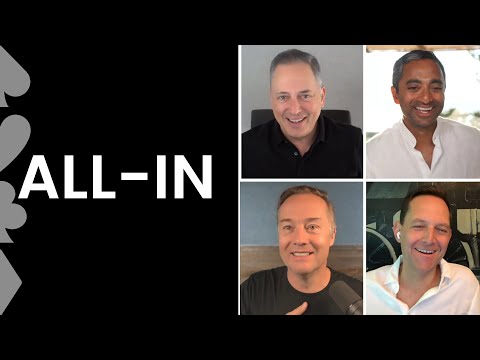
E27: The Great Inflation Debate, Amazon gets spicy on Twitter, rethinking supply chains & more
Ask about All-In Podcast
Episode Description
Sacks' Inflation Deck: https://docs.google.com/presentation/d/1vBeh__Kyf57jfhWPOQXaU64VdLaowQBAHwXjBzuVSPs/edit?usp=sharing
Follow the besties: https://twitter.com/chamath https://linktr.ee/calacanis https://twitter.com/DavidSacks https://twitter.com/friedberg
Follow the pod: https://twitter.com/theallinpod https://linktr.ee/allinpodcast
Intro Music Credit: https://rb.gy/tppkzl https://twitter.com/yung_spielburg
Referenced in the show: Tweets https://twitter.com/davehclark/status/1375045409542823939 https://twitter.com/BernieSanders/status/1374901873484967938 https://twitter.com/Mat_Yarger/status/1374212541367345155 https://twitter.com/Mat_Yarger/status/1375163739759116297 https://twitter.com/Jason/status/1375488265915002883 https://twitter.com/chamath/status/1375244032230625281 https://twitter.com/DavidSacks/status/1375283834711777282 https://twitter.com/chamath/status/1375484528559448064
Bitclout https://rb.gy/sjtjzy
Show Notes: 0:00 Besties get ready to rumble & discuss recent Twitter polls 7:25 Debating inflation, Sacks presents his deck 37:20 Amazon social team goes on the offensive, Facebook's regulatory capture play around content moderation 48:42 Suez Canal, rethinking our centralized infrastructure & supply chain risk management, infrastructure bill concerns 1:00:18 Microsoft in talks to buy Discord for $10B, Sacks on SaaS exits from Yammer experience 1:02:49 Poker talk, going to the movies, Disneyland, EU incompetence
Read the full transcriptHide the full transcript
- hey everybody hey everybody welcome to the all in podcast with us today again the queen of quinoa david friedberg david sacks the rain man himself
- and of course the dictator here chamoth and let's get ready it's it's time off and saks here it comes everybody
- saks is ready in the red representing richard nixon ronald reagan and rich people everywhere dave in the rain man sacks somebody's got a new corner representing
- lbj underserved the forgotten the underdogs the woke left chamoth papa and they've just gone crazy with them
- and and i will also be representing john f kennedy who said arising who said a rising
- tide lifts all boat and maybe even some bill clinton bill clinton bill clinton i was gonna say don't forget the championship for the champion of the left and the right yeah
- bill clinton did a great job he ended he ended the welfare state all right so here we go folks um
- in in show housekeeping we do need to point out that uh we we've been running some polls
- the fans of the show have been running polls and i i don't even know why i'm bringing this up because i got barbecued in them but we have three balls we need to share with the audience from twitter the
- first is if you could have just one of the all in pod besties to mentor you and your startup growth who would it be and why looks like rain man you ran away with that one with 39 percent the
- dictator with 34 queen of quinoa coming in at 17 and uber's their fourth investor came in with the
- measly eight percent i will tell you this is this is why 83 of startups fail they choose the wrong
- mentor perfect so i was i was proud to win this one but the truth is so tremoth was slightly ahead
- and then i put my thumb on the scale by retweeting the poll because obviously my followers are more likely to vote for me so then i shot ahead and i kept real quiet because i didn't want your mom
- retweeting it to his 1.2 million followers and if he had done that he probably would have blown me out of the water but i kept real quiet until the time elapsed and then i and then i shared it
- with the group no nobody keeps a track of uh followers but uh it's actually closer to 1.5
- the only person who knows your follower account better than you is phil hellmuth actually every
- morning phil hellmuth subscribe uh subtracts his number of subscribers from yours to know the net
- all right second poll came up thanks matt for this by the way matt yarger no friend of mine all right
- per request let's do another poll and see the other side of the story if you could have just one of the all-impod besties moderate your podcast who would you choose and it turns out the dictator 31
- to my point six percent a full one percent more than me i came in second world's best wingman
- and rain man twenty-one percent queen of kings sixteen percent and then most importantly which
- bestie would you want in your on your side in a bar fight i would say smooth velvety voice that
- uh that ran away for him here hmm thank you yes i think i think that you know i think the audience
- is just trying to hurt jason i think they're just trying to hurt jason that was it that was it
- jason has heard he's inadequate by more than one percent for a long time i mean people usually it's measured in inches not percentages somebody was dunking on me on twitter and they're like you're the poorest of all your friends i was like that's the strategy
- always have more powerful and richer friends than you then you don't have to worry about picking up the check okay uh and then there was another interesting ai breakthrough this week
- wait wait wait did you talk about the bar fight what was the bomb curious the bar fight one hold on you're right i didn't get to that one uh the bar fight was oh here we go for some reason these
- morons seem to think that your stick legs are going to help them in a fight bro that's a bad
- i honestly i i need to correct this like that was maybe bad lighting or a bad camera
- no stop guys guys guys guys honestly come on they are not as skinny as people seem to be railing and
- honestly i'm i'm happy to you know if if there's a standard way of measuring okay you know what jason if there's a standard way if somebody can tell us what is the standard way of measuring leg circumference i'm happy to submit my my my measurements i don't think
- they're that skinny they're really really anorexic it's super disturbing thank you
- you got a lot going on up top i'm very proud of you but below the belt it's not true bro i work on my legs a lot you know it's it's it's keep working it's legs and abs to keep your back straight i'll
- tell you guys one thing this this uh podcast will win in a poll is the hosts talk about themselves
- more than any other podcast on the internet if we need to talk about each other in order to make
- fun of each other yeah this should be called the naval gaze podcast all right here we go so uh besties that you most want in a fight queen of quinoa coming in dead last yeah i'm coming in
- at 17 rain man 32 percent and chamath i guess that thirst trap you tweeted got you 39 in that bowl
- the other thing these polls take me is is why democracy doesn't work but go on i can i can hold my own in a physical altercation i because i think
- saks is going to be under the table calling 9-1-1 and freeburg is going to try to talk it out and get just absolutely sucker-punched like guys we don't really need to fight
- jason jason is the one that would smash the beer bottle create a shiv and say let's go i i would
- i would have jason uh i would i would actually pick jason his number and if you were going to be in a bar jason certainly touts his taekwondo skills on more than one occasion he's claimed
- to be an expert in taekwondo can we pull up the video isn't there a video of you
- now where's the video of jason pushing hellmuth fake news video if you want to see jason
- and a grown man another grown 50 year old overweight man fighting we have video yeah
- well that that one i don't know if we should show but nick you should definitely insert the image of jaecal trying to do the taekwondo kick and it looks like he's about to have a herniated groin
- yeah i was from my 20s all right let's start jason what do you got what do we got this week i guess the topic we should get right to is inflation um this is a topic we've been talking
- about a whole bunch uh because we're printing a ton of money everybody seems to think the hedge against inflation is to buy bitcoin or do you put your
- money into equities and are we actually going to see things other than homes and education
- massively inflate we've seen some anecdotal evidence of this tesla increased the price
- of their cars used cars have gone up in price which is a function of the lack of production
- of some cars during the pandemic so there might be a multitude of factors there but just putting
- it out there are we going to go are we going to face inflation that you know goods and services are going to just go through the roof and cost or do we have enough efficiency in the system that
- the average consumer is not going to see massive inflation on the products and services they buy coming out of the point is is it the real issue that chamas says inflation is good and he because
- it creates equality and he thinks 1979 was a great year i think we should go straight to that all
- right let's go let's go give a general discussion let's let's go i think we should go to chamoth to
- explain his tweet storm and then i'll respond okay so i think david you got unnecessarily emotional
- and personal that was not again these these were things that i've learned from someone who i will say without betraying him um is an extremely well-respected person at an extremely well-known
- institution that basically has helped make a lot of sort of you know capital allocators very smart
- about things and has made people a lot of money so i was relaying what i learned through him so
- let me just relay that again and i'll just start with this whenever you have a dollar of income
- you can do one of two things with that income you either consume things right so you buy or
- you can save and you can put it into investments for the future right so consumption and investment
- the reality is that most people so the lower 60 of the income distribution essentially spends
- above their income right the lowest actually spends at so a dollar earned is a dollar spent and then the middle two because they have access to credit a dollar earned they
- spend about you know uh percentage points more than that when you get to the richest
- uh 20 of the population they're actually able to save and they save about 13 cents
- of every dollar and they're able to invest in the future so consumption and investment the reality is inflation comes through a volume of activity right so you as a rich person can go and buy one
- 100 000 necklace at tiffany's it doesn't move the needle for inflation but when you know 200 000
- people buy a thousand dollar television that's felt in the economy it moves so inflation comes
- because of gross tonnage of volume so you need consumption and by definition what that does is
- it pushes consumption into those you know that 60 to 80 percent of people that are not the top 20
- so what it means is that you know you have a volume game of people buying things and when
- they buy more of those things inflation goes up how do they buy more things they have more income
- because their propensity is to consume so then you have to ask yourself where is this incremental uh
- income coming from and all he has observed which i think is very credible is we had the supernatural
- event in the pandemic we've now started to print trillions of dollars of incremental consumption
- and that's going to start to lead to the most simple ways in which consumption manifests in inflation which is via commodity prices what does that mean let me say it simply a rich person
- lives in a well-insulated house drives an electric car and eats fish a less rich person
- lives in a poorly insulated house lives you know drives a an suv and eats beef beef versus fish as a simple example it consumes 20 30 50 100 times more input costs
- to generate that same pound of protein than a fish does it's just an example of showing how income
- distributions and the effects and the consumption patterns of large swaths of people drive different
- consumption behaviors which drive inflation so all he was trying to represent to me was that idea
- which is that we have printed trillions of dollars we are creating artificial levels of consumption
- that consumption will actually drive up commodity prices commodity prices will actually drive up
- inflation then what he told me was the best analogy again it's not perfect but it rhymes
- to the history is what actually happened in the 1970s which is that by having this sort of
- boundary condition you have to ask yourself what will happen if inflation rips higher and you know
- starting in the late 60s through the 70s that's kind of what you had a same kind of boundary can
- forget the way in which the money got to people you know in this case it was a government check
- but in the late 60s and early 70s we had similar kinds of programs we had head start we have uh you know americorps we had food stamps act we had the social security act
- all of these things were transfer payments and when you put that much money into the hands of a large swath of people consumption went up commodity prices went up inflation went up
- it peaked in 1979 but it also happened that when that happened the gap between the rich
- and the poor was the lowest it had ever been and so i thought that that was a really interesting thing to observe okay sex you uh were triggered you were triggered by this
- well i wasn't triggered i just said it was jamal's worst take ever and then uh david but
- david it wasn't like it wasn't my take you were triggered it wasn't my takeaway no no okay well let me let me explain let me explain what's wrong with the take i created a powerpoint
- i pulled at your moth no it's not boring and and chamoth has done it too so don't don't even go there but i'm gonna do email you guys come and hit me up in the second half no no free bird
- we're gonna keep the freedberg index high so go ahead sacks take us through the powerpoint what is it what do you want i'll i'll keep this quick okay so i've called the powerpoint jamas horseback ever
- david david it says right at the top of the disclaimer here is something i learned today why isn't it well you said you responded to me then saying that i didn't like facts so
- that was your response so i am proving i'm going to show you some facts okay so first of all let's
- ask the question was 1979 a good year i don't think you can just cherry pick this one number the the ginny index and say that this was some sort of great year 1979 a severe recession begins
- which ultimately leads to negative 0.3 gd growth in 1980. the word stagflation misery index become
- household terms we had unemployment of six percent on its way to seven point two percent in 1980 we
- had a 13.3 percent inflation rate the prime rate for 30-year mortgage was eleven point two percent
- good luck trying to buy a house we had long lines of the gas pump there was an oil embargo do you guys remember the gas pump lines i wasn't born yet but go on yeah it was crazy and then you
- know jimmy carter declares a national crisis in confidence this was the so-called malay speech he was well on his way to becoming a one-term president so what this shows is
- david that you know david hold on no no let me just do the takeaway so the takeaway is that
- you know the ginny index says 1979 was a great year and you know the the issue is the reason
- it wasn't is because it's a lot easier to make everyone equally poor than ever than equally rich when the economy does poorly guess what the gap shrinks um then margaret thatcher had a great
- line about this so long as the gap is smaller they would rather have the poor be poorer that's a great video everyone should watch on her last speech to parliament chamath posted this chart
- showing this is the the percentage of wealth held by the top point one percent chamath we'll go to you next to explain one two and three but let me just point out
- look at when else the genie index was plummeting the 1930s the great depression did a great job
- creating relative equality by making everyone poor so my point is yeah i understand there are these
- equalities but you know what creates inequality economic booms that's what creates inequality
- what we should care about is not just inequality but economic growth real wage growth poverty
- how many people are below the poverty line and concentrations of power so that's what we should be looking at not just this gini coefficient let me stop there i've got other sides but i'll stop
- there and let you respond sex go back one slide um the the the three points there were just uh
- interesting to me number one was uh lbj and the war on poverty and all those social programs
- number two and you spoke about this but i don't think you're doing a full accurate assessment what carter's what carter's biggest mistake was was he stopped the transfer payments because lbj
- started them nixon continued them carter stopped them and i think it's important to frame
- explain what transfer payments are for people who don't understand well it's basically like you know there there are all kinds of ways to get money into the hands of individuals you know we
- we now talk about universal basic income that's a way of transferring money from the government and
- from systemic holders of capital to individuals um food stamps was a way the social security was a
- way um there's all kinds of different ways welfare was away until clinton disassembled that so i i
- think that what we'll never know is what would have happened if carter hadn't actually stopped
- those balance of payments and the the key point is about what happened then afterwards in three
- so you had this basically stopping by carter he didn't get to he didn't get to reap any of
- the benefits of it reagan comes in and says you know what we're going to simplify the tax code we're going to defund all kinds of stuff including for example all the mental health
- defunding that he had already done in california that spewed people with mental health disease onto the streets of san francisco and los angeles and that sort of continued and then the real
- cataclysmic change on top of all of this which sealed the fate of that trendline happened
- in point number three which is when george george bush in 2001 had this really seminal decision
- which is he had the ability to block china from entering the wto and instead he left them in and
- he traded that for a vote on the security council and when you think about what really happened there you unleashed one billion people willing to do anything at a cheaper faster and better
- rate you ushered in globalization you ushered in the gutting of the middle class of america
- and you transferred all that wealth creation that could have happened in a more inefficient but in a in a balanced way that could have benefited americans and you ship
- them abroad to china so i think it's just interesting to note that basically since 1979
- we've all been singing from the same playbook and and i think that maybe what we need to do
- is figure out whether we need to come back to this idea of shifting the balance of payments
- back into the hands of individual consumers and all i'm saying is without making a judgment is when you look at what um biden has done in just in the first 60 days
- 1.9 trillion dollars of uh stimulus and a proposed three trillion dollar stimulus package we're just
- you know we're not even infrastructure packaged we're not even three months into his presidency and you forecast that forward it feels like we're entering an era of spend spend spin
- and that was an opinion of mine which i believe is actually fairly accurate i do think it will drive inflation i do think it'll drive commodity prices and i think
- on balance i do think it will suppress the wealth creation of the rich and i do think it will give
- folks that don't necessarily have investments the ability to make more unreal income which they will
- spend well okay just just quickly so i'm going to begin by agreeing with the the part of chamath's response that i agree with which is uh what happened around 2000 2001 which killed wage growth
- for the average worker chamath is right about that but it was it wasn't just george w bush it was a
- bipartisan disaster in 2000 bill clinton pushes congress to approve the u.s china trade agreement
- and gave them full access to the wto this was basically temporary mfn and look at what he
- said he said economically this agreement is the equivalent of a one-way street it requires china to open its markets to us in new ways and it turned out to be a one-way street the other way
- and then he also said that for the first time our companies will be able to sell and distribute products in china made by workers here in america without being forced to relocate manufacturing to
- china will be able to export products without exporting jobs well gee the exact opposite happened so and then and then what happens in 2001 is bush makes this situation permanent he
- grants permanent what's called permanent normal trade relations which basically mfn status
- in perpetuity to china granting them full access to our markets and chamath is right
- that that devastated the average worker because all of a sudden they're being forced to compete with you know foreign labor that's potentially making two dollars a day and is not subject to
- the same labor laws and environmental laws as workers in the u.s are so i agree with tremoth
- about what happened then but but i got to go back and clean up this view of what happened between
- 1980 and 2000 because that's where i think we have this this disagreement let's talk
- about the china thing for a second yeah we made a mistake there we got hood winked
- we don't have access to their market i think it would be good to pause for a second and say okay we tried this experiment for 20 years there was some good that came out of it our companies were
- able to grow and become the dominant players in the world like apple uh but an amazon right
- we did capture a lot of this value and a lot of people came out of poverty in china i guess on
- the margins that's a good thing we can all agree but it's a communist country and we basically enabled a communist country to become essentially you know uh our counterparty in running the planet
- and in our leadership positions on the planet what do we do now in terms of unwinding this is there a way to roll this back or do we just mute it from this point forward and how does
- it become a two-way street or is that just not even possible as we've seen with the nba and some other companies twitter google just not being allowed to even operate in china who's we
- america the united states the united states i mean citizens u.s companies global companies i mean yeah you know i think that the the challenge is your your framework right guys i think i think
- there's one big thing you're forgetting in 2001 which is i think that bush actually traded away
- access to the wto so that they could guarantee china's vote when he wanted to go to war with iraq which happened in 2003 okay well two dumb decisions that got worse by being put
- together all i'm saying is it was a trade it was a trade he traded he traded access to he traded
- access to the wto in return for their support for a u.n resolution to go to war with iraq
- look i you know you chamath you said that i was defending the republican point of view i'm not i'll be the first to say that george w bush was his presidency was a disaster i think it'll
- go down as one of the worst he got us into all these stupid foreign wars in the middle east he
- began them i think the decisions with china were a mistake um so i certainly don't want
- to defend that and by the same token i think the clinton years were generally great years in america so this is not a partisan free analysis on my part what do you think though about the
- china concept here and how we would go forward and what's what's the path forward with china
- i i i mean again like i think it comes down to your objective and who are you solving for um
- and uh who should we solve for democracy the human species well i mean i feel like they're mentally
- the point of view that you know one government is innately better than another is being tested and proven right and wrong every day right now and um and i'm not sure that it's fair to say
- that just because the form of government that the you know that the chinese have kind of um adopted
- and used to govern their their their country and their people uh is innately wrong um there's
- certainly things that are innately wrong in many democracies and that are innately wrong in many uh non-democratic republics and so i'm not sure it's fair to just say that um you know that that's
- really the objective is let's get rid of that communism i mean that was an easy kind of simple you know check that you could use a few decades ago as a way to kind of rally everyone emotionally
- towards some cause but um i i think there's a lot of businesses today that operate effectively in
- their own kind of geopolitical cloud and it's a little bit um of a kind of misstatement to think
- that an american company is an american company it's not that american quote-unquote american companies solely build their stuff and sell their stuff in the united states many americorps
- american companies build stuff overseas and sell stuff overseas and global is uh globalization as
- much as we might want to kind of poo poo the effects it's had on the average quote-unquote american worker it really has transformed the way businesses operate with respect to
- politics and countries there's a oh god what's the book i can't remember the book but there's a book
- that speaks to how a lot of large multinational corporations today effectively have to operate
- as if they were countries into and unto themselves and so they have competing interests with respect to what the average american or the american government or the american people might have
- even though they might be quote unquote american companies and there might be some intricate tie and so i'm not sure it's as simple as we have to quote unquote defeat china we are so
- intricately tied to the uh to the economy of china to the workers of china and vice versa
- um and i think that it's a much more complicated thing than you know here's our three-point checklist for how do we quote unquote beat china and that's that's why it's hard and that's why
- i think a lot of smart people have you know kind of taken on and been challenged by and failed at
- trying to resolve a path forward where there's this quote-unquote looming enemy that is going to become the global economic power which strips the american uh uh people of their influence
- around the world and you know that may be kind of the inevitability of the 21st century i don't think that there's a dark inevitability if but i don't know if there's a simple easy answer and i
- don't know if from a from a business point of view let's say i'm a company i'm not sure i necessarily
- feel the effects of one quote-unquote country affecting you know having more influence globally
- with other countries than others it turns out a lot of businesses have greater influence than a lot of governments um and so you know one way to kind of think about the evolution of globalization
- and maybe even with respect to kind of the notion of what we've been talking about decentralization is that maybe governments themselves become less important uh in the 21st century
- and it's the kind of decentralized online movements and businesses and and you know other kind of entities that perhaps are not as regulated and controlled and owned by governments
- and you know maybe the big failure of the 21st century will be governments we'll see
- chamath yeah that's on uh sorry that was a bit esoteric but um no no i think it's yeah it is
- the thing the thing that you're not willing to acknowledge is that even when gdp shrinks it's like a it's a it's it's shrinking from a base where there's substantive growth year over year
- like you know our the gdp in 1969 when lbj was president was less than a trillion dollars and the gdp now is like 23 and a half trillion dollars and so it's been nothing essentially
- but a straight line up and so you know this idea that we the inflation causes you know
- the only way that we close the wealth cap is by making everybody poor is not true some people
- may be getting less rich at the same rate so they feel poorer but the idea that you actually become poor is just not true it's a feeling that you have but it's not rooted in fact
- so when you look at the wealth gap are you concerned about the gap or are you concerned with
- you know the status of the folks on the bottom and how much their lot in life has gotten better
- yeah i mean i'm concerned with both um actually there i have a slide on this too i would buy
- this argument and i've heard this argument from before from people not as smart as david i would buy this argument if gdp did something other than go up in an absolute straight [ __ ] line
- no it doesn't it doesn't well hold on let me i'm going to show let me show gdp in a second the first thing i want to discover is that part of the problem with the genie index is it doesn't fully
- account for government transfers this is something i didn't fully know until i researched it um after your tweet stormtroom but basically only two percent of the population so the publicly reported
- stats are that 13.5 of the us population lives in poverty once you actually take into account
- all these programs and transfer payments uh it's more like two percent you can see this on this chart in the left here that the green represents the transfer payments by the way i'm not against
- transfer payments i think we need a social safety net i want the social safety net to be
- as effective as possible i don't want it to trap people in government dependency i want it to work
- i wanted to get people out of poverty and into the opportunity economy but i absolutely believe
- we need a social safety net and we need these transfer payments and you can see that the green bars there make a huge difference in reducing poverty the genie index doesn't really take that
- into account well how do you fund this these types of transfer payments the more of a of a stronger
- economy that you have the more that you have a government the more that you have an economic boom the more that you see real wage growth and the ability to fund these programs let's go back
- to let's just look at gdp for a second so if you go back to let's go back to this period
- 82 to 2 000 i call this the reagan clinton boom i see this is a bipartisan a relatively
- bipartisan period where under reagan and clinton you had gdp growth of almost four percent
- compared to the usual two two and a half percent by the way this is why reagan and clinton left office with huge approval numbers despite scandals remember reagan had iran contra
- clinton had lewinsky none of that mattered really in the eyes of the american people because the economy was so strong and you can see that here and by the way it hasn't been this strong in the
- 2000s we've never really gotten back to this type of economy um you know since since uh you know
- 2009. is that because of the economic boom of the pc and internet eras what would we attribute to
- the technology boom has a huge impact but let me just describe what started it okay what's what happened in 1981 reagan's inaugurated as president in january of 1981 he cuts the top
- marginal income tax rate from 70 to 50 percent and i'd say equally important you had paul
- volcker at the fed he breaks inflation he jacks up interest rates causes a very severe recession
- in 1982 but it broke the back of hyperinflation and we it ushered in decades of declining interest
- rates you can see that on this chart here interest rates have more or less been in the decline since paul volcker was at the fed what does this do it made the the um it reduced the the the risk-free
- rate of return which leads to more investment in um in everything in everything it leads to
- more investment it caught caused a rally in the bond market and the stock market and by the way
- no one remembers mod in a modern area i'm sorry sex but like most interest rates for buying a home mortgage rates were over six and a half percent for most of the um yeah it was 15. the last
- couple of decades yeah yeah good luck good luck buying a home in the 1970s david like david david
- can you like can you actually be intellectually honest and overlay aggregate actual gdp on this
- chart because what you'll see is it goes up and to the right independent of all of this [ __ ]
- no they're that's not true you can't it's absolutely true and i'll just can i share my screen gdp growth rate versus no threat forget growth rate what is the actual
- number right we're talking about the real number not the percentage growth because i was actually about to ask the real numbers this is great i know this is talking about change in gdp i know
- i'm talking about grade 2 mathematics here guys the absolute number the absolute number keeps going up and to the right because no it doesn't these these these dots that are below
- zero are recessions right right but they're in which gdp is restricted those are changes from the year before so when you're compounding naturally no no no no the green and red bars at
- the very bottom are changes from the year before but these are absolute percentage changes in gdp
- i know so the recession a recession is defined as two quarters of negative growth so gdp can go down
- david can i just show you the aggregate gdp growth from 1960 to 2000 and you can just look at this
- and tell me what's what what is wrong with the trading economics website that that everybody
- else would use yeah i mean i i think one of the things that i have as a question for everybody
- is is there a is there a major difference between uh two percent two and a half percent three
- percent growth in terms of how we all experience our lives and what are we optimizing there for
- are we optimizing for consistency or are we opt and you know no recessions well this is what's interesting so do you see this chart right here it's perfectly consistent with the exception this
- is the aggregate gdp okay it started off at less than a trillion in 1950 something
- it was about you know a trillion dollars at 1968 and it's about 23 trillion dollars now
- this is the aggregate of what has happened in the american economy over the last 70 years compounding interest is an amazing thing now exactly right now this has happened in democratic
- presidencies republican presidencies when rates were at 16 percent when rates were at zero percent
- so all i'm saying is we have a natural tendency and inertia to move forward the rate of change
- we can debate and obviously it has ebbed and flowed over years but the fact that it's towards
- moving forward and downhill with increasing momentum is undeniable and so again i would
- ask when we think about the fact that the natural tendency is that the next five or ten year period
- in aggregate will become bigger and better there'll be more of the pie to share
- why is inflation a bad thing because all it does is depress financial assets it drives up earnings
- and income which drives up consumption of the lower three or four quartiles of the
- lower three quartiles of the earnings population i just don't see why it's such a bad thing
- i think i think mild mild inflation you know in the two to four percent range is is fine and it's probably better it's certainly better i would say than
- two to four percent deflation but when you start to get runaway inflation like we did in the 1970s
- it massively increases interest rates and that makes it harder for people to buy houses
- and borrow money and invest money because now the risk-free rate of return is higher and uh and
- that's that's not only if i know but that only applies to the top quartile of the population the bottom three quartiles don't give a [ __ ] about what you just said because they don't do it
- um i don't think people want to have to spend 600 on a loaf of bread you know that's it look you
- look at venezuela you look at weimar germany you do not want inflation to get out of control and
- it can spiral out of control because once people start to expect is that realistic though that it will spiral out of control given technological advances efficiency i mean what you backtrack
- you are bringing up i think the the really brilliant point which is could it really even happen today because if you think about where we allocate our time and attention and consumption
- half of it by definition are things that are just so naturally deflationary we're all you know we're we're on youtube you know facebook tick tock all the time those are
- naturally deflationary sinks of time and energy and effort and money right so today to jason's
- point like i think that that's actually true i don't think that it's even possible to actually have hyper inflation anymore where do we have hyperinflation nfts bitcoin equities
- and financial assets financial assets and homes right i mean and that's a highly regulated and
- i guess healthcare and uh educate higher education those but pretty much anything
- that the government's involved in basically well the government's not involved in nfts and bitcoin
- those are the anti-government portfolio but but by the way healthcare inflation really started in obama because of obamacare yeah anything that the government's involved in in flights
- yeah because if the government's paying the bill why won't you raise prices there's there's no competitive market there's one customer charge whatever you want et cetera so to so trump to be
- clear i inflation is not my number one concern right now i'm just saying that it would not be
- a good thing to let it get out of control that's all uh but it's not it's not the biggest concern on my list your main concern is dunking on chamath for that tweet storm no no i'm not dunking on him
- i'm he he dunked on me saying that he basically turned into a bunch of 15 year old girls who
- said something and got misinterpreted on social media and now we have to work in no no no no no no you i'll tell you and you the audience are the beneficiaries no i i'll tell you i'll tell you my
- my main concern is this idea that economic booms are not a good thing because you know god forbid
- the people at the top might get richer um that's the problem give it to that then yeah i don't know if you guys have been following um what's happening with uh the head of operations at or i
- guess he's the head of warehouses at amazon amazon is standing up to elizabeth warren on twitter
- they're mixing it up did you guys see these tweets let's pull up no what let's go what you haven't seen these no jamaat didn't you donate like some ridiculous amount of money
- to elizabeth warren's campaign no 25k just a little tasty poo it was a little teaser bet and
- i and i didn't like what i saw so i had to shut it down i shut it down on the turn the flop was nice
- you limped in you limped in with seven four i limped in with seven four off suit i put a little
- teaser bet out there i didn't like what i saw and so i folded basically amazon is finally saying
- hey we're just gonna st we're gonna stand up when elizabeth warren or bernie sanders kind of attack
- us and attack bezos and they just said listen you guys set the minimum wage do your job we moved
- the minimum wage at amazon to 15 an hour we made our decision get back to work and set the federal
- minimum wage of 15 an hour and stop telling us we don't pay our taxes because you make the tax law so essentially this dovetails with the hearing i don't know if you guys watched any of the hearing
- with zuckerberg and everybody but basically they were all it seems like big tech is just
- putting their foot down and saying just tell us what you want us to do because we're doing it we're giving people yes zuckerberg what zuckerberg and dorsey basically said is
- that if you don't like that kind of speech then why don't you prohibit it instead of telling us
- to do it you can't and you won't because you know it's it's it's a violation the first amendment
- so that yeah they were kind of pushing back on them saying listen if if you have such a problem with it pass a law yeah and this guy dave clark you guys know dave clark at amazon nope so
- this is the guy who's been mixing it up and if the audience is listening you can see a bunch of this uh on the youtube channel because we will put in oh wow he's like the number two guy there he
- he runs all he runs the entire retail business i guess yeah so now amazon is on a full court press
- to engage with let's call it the socialist left um i guess they call themselves democratic
- socialists because they don't want to be called socialists and they're saying like listen we give people health care we give them 15 bucks an hour and if you want to tour the facilities
- toilet philly but nobody is peeing in bottles and then of course the press and a couple of people
- showed bottles with pee in them that drivers can't stop to even go to the bathroom which i think is a
- tragedy and horrible people should not have to pee in bottles i mean they asked me about on cnbc
- today i was like this is a serious question like of course nobody should be peeing in bottles but if you look at this exchange i think we're kind of hitting the end of this debate which is everybody
- kind of agrees we should have health care for everybody in the country we should have a 15 minimum wage why are we dunking and fighting with each other when we've got this adversary which is
- or two adversaries with russia and china we have these two crazy adversaries who want to build authoritarian countries and control the economy and eventually control the planet why are
- americans fighting with each other over these issues i mean this is this is just incredible i just want to read it bernie sanders says i look forward to meeting with amazon workers in alabama
- on friday all i want to know is why the richest man in the world jeff bezos is spending millions
- trying to prevent workers from organizing a union so they can negotiate for better wages benefits and working conditions to which he replies all we want to know is why the senator is one of the most
- powerful pauls and politicians in vermont for 30 plus years and their minimum wage is still
- only 11.75 amazon's minimum wage is 15 plus great healthcare from day one the senator
- should save his finger wagging lecture until after he actually delivers in his own backyard to your point it is getting to a point now where folks are like all right guys
- so step up and change the laws and change the incentives and i think that that's going to be
- really important saxi you had something that you uh you were really miffed by uh what zuck said or
- something uh at the thing about well well i wha what zuck was trying to do in that hearing uh
- the the sir techery guy what's his name ben thompson uh strategically i think it's true
- no no no no no it's strategy no strategy he literally said it he came to the poker game
- that we do at the d conference uh or the recoil conference whatever it's called code conference and he said it's structured right it's strategy first it's the worst name that was ever created
- strategy yeah anyway it's 100 bucks a year he's got like 10 000 people paying for it it's crazy
- obviously what what that makes me the way he okay great so the way thank you for that thank you for that clarification what what ben thompson
- wrote the way he describes zuck's statement is that zuck was pulling up the latter uh on all
- the other social networking sites that might come afterwards and it was look it was one of those tactical maneuvers that's in facebook's sort of narrow self-interest but it's so
- obviously in their self-interest that you know people slam them for that it's just too machiavellian and basically what zuckerberg said is listen we now have over 30 000 people doing
- content moderation you guys should check you you the the lawmakers should change section 230
- to say that you know you the social media sites only get section 230 protection the liability
- shield if you engage in this kind of content moderation but if you're a site that doesn't
- then you don't get protection well what's what's zuckerberg trying to do you know small startups can't hire 30 000 people to do content moderation so this is like classic regulatory capture but
- done brazenly in the open at a congressional hearing i think you're right i think it kind of makes a lot of sense from him that the the game theory is pretty obvious which is like okay
- make it now impossible for anybody to compete with us and uh you basically lock us in forever it's it's pretty pretty brilliant the question is what do you think the odds are the politicians
- fault for this i think they're they're forcing their hand now so they don't have to take choice
- yeah well i mean the democrats on that committee have basically been saying that disinformation is a huge problem and you the social media sites need to correct it you need to control it
- and so zuckerberg comes along and says okay great no problem we've hired 30 000 content moderators we're going to do what you said in fact we're going to hire more and by the way if you
- really want to get tough about this why don't you modify section 230 to require it well how many other startups can ever hire that number of content moderators this is creating a moat
- that will basically protect zuck and facebook forever right capture yep and the other crazy thing in this was the this stupid format they come up with where they give each person who's you
- know a senator or a congressman who's or congress person who's doing the questioning they give them five minutes so they're like i only want a yes no answer and you're like i'm going to ask you the
- most challenging problem in the world i need you to answer yes or no binary one or zero and it's like well that's not kind of how a nuanced issue works like section 230 this is going to take some
- time can i get one minute to answer the question two minutes to answer the question and so jack and
- zuckerberg and everybody just kind of threw their hands up they're like i can't answer this in a yes no can you ask me give me 30 seconds to answer these questions it was pretty ridiculous and then
- they were trying to get them all to say that their platforms were used for the january 6th
- insurgency and i don't agree with zuck on much but he was like no i think the people who were involved in january 6 were responsible for it so whether that's the president or the people
- who broke into the capital they're the ones who are actually responsible for this you guys didn't
- yes so no i well i i i read i read some summaries of it and i think dorsey actually did a did a
- great job and i i like i liked his performance and let me read you a quote um salana tweeted this so
- but he said jack said i don't think these decisions should be made by private companies or the government which is why we're suggesting a protocol approach to help
- the people make the decisions themselves that was jack dorsey now that almost sounds like me
- if he just changed the word protocol to first amendment case law so i don't want these companies
- or the senate judiciary committee you know censoring people i want to use a revered external
- standard which is the first amendment case law that's been developed over the last two centuries so jack wants to use a protocol okay but fine but he's on the right track here which is he's saying
- look we don't want to be in the business of having this power to decide who's gonna have access
- to you know to the town square and that's a step in the right direction but he's also got a project there to turn social networks into open standards so in other words the way we can all anybody can
- make an email client because email is an open standard anybody can build a web page or a browser because html is an open standard he wants to do that and he's working on that inside of twitter
- where anybody is going to be able to take their tweets and they're going to be decentralized
- there's going to be no central server and you're going to be able to bring your own algorithm so if you feel the algorithm is causing you to see extreme views you can
- say i want mine to only lean towards i want this one that leads towards positivity and kindness
- right and somebody can make a third party there's an algorithm that gets rid of jerks you guys probably saw this week but uh a deal was announced an investment was announced
- andreessen sequoia myself and a few others we did this thing called bitclout oh i heard about this yeah so what is it just to give you a sense of it it's like hearing about it separately from a bunch of people yeah so i mean like the in a nutshell
- you know what these guys did was they said okay well you know we're just going to take you know this entire blockchain concept and we're going to fork it and we're going to create this
- thing where folks can um essentially have one blockchain they can you know have content around
- it and then identify sort of people and nodes and all of a sudden like we all have this currency
- that sits on top of this bitcloud currency and why that's interesting is their first
- app that they built on top of this was basically a kind of a clone of twitter just kind of as a
- proof of concept app and i think jason it's moving to a place where now people with reputation and
- people with trust can actually signal that they have it and then that's a probably a better way
- over time for for for folks like us to figure out um what is valuable and not valuable what
- is trustworthy or not irrespective of whichever end of the spectrum it's coming in off of and then
- if there is disinformation you know that person's quote unquote bit clout stock right that their token will fall in value um they'll probably be a lot of interesting apps that
- are built on top of this i was really drawn to the general idea of the project and i think that's
- what andreessen and sequoia probably felt as well so you know there are these interesting solutions there's bitcloud there's jason what you said this open source project at twitter it's all it's all
- going to be really interesting but i think if we can get to a way where we can quantify reputation and trust that's the another way of around working around the pulling up the ladder effect of
- of what facebook and twitter effectively told congress this week um i want to talk to you guys about what the hell what the hell is going on in the suez canal and what does this mean
- i mean uh freeburg what the [ __ ] is this this is unbelievable you know it's so
- random um and unfortunate but this this ship that weighs 200 000 metric tons uh that's taller it's longer than the empire state building is tall going through the suez canal
- which i think you know there's about a hundred ships a day go through the suez canal and it's you know the suez canal uh really is um uh you know kind of an amazing engineering accomplishment
- that uh connects the uh mediterranean sea to the red sea it basically allows ships from asia to
- not have to go all the way around africa to get to europe and the ship goes into the suez canal
- and it had a blackout its power went out and so it just kept cruising without being able to control the steering because there's like friggin power steering on these massive ships you know like they
- don't have like a wire connected to the rudder and so um you know no backup battery supply i guess
- no one knows but like the power went out and the total blackout on the ship they couldn't get the power back on and the thing just keeps cruising and cruising and cruising and it cruises right
- into the side which is this big sand barrier on either side of the suez canal and it gets lodged
- in the sand barrier on the side now when you have 200 000 metric tons moving at a few miles an hour
- that's an incredible amount of momentum of energy and so it when it lodges in the side that's you
- know it's lodged in there now acceleration yeah it's actually math times velocity but yeah you're
- close and so um the thing just uh basically got lodged in there and they can't get it out and now
- they think it's going to take another week or two before they'll be able to kind of dig all around the sand and tugboat the thing out of there um but i think what's interesting so 10
- of global trade moves through the suez canal and about 100 of these massive ships a day
- you know move through this canal but it really highlights the fragility of our global supply
- chain similar to kind of the experience i think we had during the covet pandemic when all of a sudden things like toilet paper were less available to us but you know a small power outage on a boat
- on a ship you know uh in the middle of um of the suez canal can suddenly block up so much of global
- trade and cause you know massive fluctuations and commodity prices and availability of supplies and products for businesses around the world there's going to be rippling economic effects
- for a period of time it's unclear how significant they're going to be but you know i really do think
- that um taking note of the fragility of our of our supply chain in this particular context is worth taking a step back and you know i i spent a lot of my personal in my work time
- uh obviously off the podcast thinking about kind of our systems of industry and you know the global
- industrial revolutions were really predicated on this notion of centralization you know we took
- a lot of our production systems and we centralized them and created automated repeatable tasks
- and that reduced the cost and allowed us per unit of production to basically make things much more
- affordably but the problem with centralization generally speaking in supply chains is exactly this which is you you have a supply chain um that is much more delicate and it is much more
- i mean think about the difference in power right if the power goes out at a power plant all the homes that are connected to it lose power versus if every home had their own power generator
- or solar cells they could continue to support themselves and in a similar context so much and this goes back to our conversation earlier about globalization so much of our global supply chain
- for industry has become centralized by finding the lowest cost possible but it loses all of its
- durability and so the 21st century and especially leading into this infrastructure bill that we're
- going to be talking about or that's going to be talked about for for a long time now for months to come presents an opportunity for us to think about durability in industry and durability and
- supply chains that i think is really profound and allows us to shift the balance of um
- of power but also shift the scent uh the the sources of production of all the things we consume
- as a species uh in a much more distributed way and that can be done using green technology using you
- know 3d printing using biomanufacturing you know using um solar there's a lot of vertical farming
- vertical yeah whatever um i i'll disagree with you on that one and we'll talk about that separately but i would argue like so much of of industry has been centralized because remember when the
- industrial revolutions took hold the only skill set we had as a species was mechanical engineering
- and in the years that followed we developed skills in chemical engineering and ultimately in software
- and hardware engineering and now more recently in biochemical engineering where we can use biological systems to make stuff and the advent of those technology capabilities i think really gives
- us the opportunity today to reinvent these supply chains and so the suez canal i hope is a little
- bit of a wake-up call and i hope leads into some of the thinking around the infrastructure build proposals where we're about building durability in the supply chain and in that process by the way
- creating manufacturing jobs um you know in a more distributed way let me build on uh what you're
- saying so for all the people listening that really really care about um electrification and electric
- cars and there's a bunch of tesla bulls here you know tesla uses a specific kind of battery called nca and uh there's you know other forms of batteries but for the most part and tesla in
- china uses this lfp chemistry but the point is uh there's a lot of very very valuable nickel
- that goes into making lithium-ion batteries and so if you believe in electrification and you believe
- in you know zero emissions and you believe in using these batteries you need to believe in nickel which is a tough business okay you're you're grabbing you know rock out of the ground
- and you're leeching this this extremely important metal out of it so just a a little while ago
- there is a huge nickel manufacturer uh called uh noralisk nickel right and they have these uh two
- russian nickel mines and just very recently they flooded and uh the plug which had been erected
- for localizing the flooding was washed away not for the first time not for the second time
- but for the third time and people now think that getting all this water out of the mine
- may take at least a year okay so what why should we care well right now if you think about all
- the batteries that were forecasted to make in order to sort of eliminate climate change and you know do all these good things and for you know tesla to to make their you know beautiful
- cars or whomever that you know um they need nickel and right now we have we have a deficit of nickel
- that's going to emerge now in less than a year and we have we have about a 37 to 40 percent shortage
- of what we need so it's like you have all these grandiose visions of how the world should work
- and an electric failure in a barge shuts down the global supply chain for weeks blood in the nickel
- a flood in a nickel mine is going to cause the price of a tesla to basically double and shouldn't people at some point ask ourselves is this really what efficiency is supposed to feel
- like on the ground and it may not be right and so maybe again going back to the first conversation
- a little bit more inefficiency a little bit more inflation a little bit more redundancy will allow
- us to be resilient and maybe that's what we really want we don't well i mean you could ask the people in texas what they want after they lost their power and they have one light snow storm and
- the whole city is destroyed i mean there really is there is something to having the redundancy
- in your home and the supply chain and obviously drugs which we witnessed during the pandemic right
- with the infrastructure we were so we were so concerned about short-term profit maximization
- that we offshored our entire pharmaceutical production and ppe manufacturing to china which
- then said that they might ration it to us based on you know geopolitical concerns no thank you so yeah that that is that is that is pennywise and pound foolish the absolute definition is
- the is the infrastructure bill um going to fix it freeburg you have a rundown of the infrastructure bill you know there isn't a good cl there isn't good clarity on this my concern is um that there's
- going to be lots of uh push for things like roads and you know stuff that doesn't create ongoing
- jobs that so much money is going to go into basically a disguised stimulus package versus
- you know the ideal kind of infrastructure program set is to enable industry so if you go back and
- you think about like the manhattan project and the apollo mission you know those were very expensive government programs that have a very specific mandate but because there were big investments and
- difficult problems they unlocked a lot of industry um that followed that initial development cycle
- and i think that that is kind of a good guideline for us to think about with respect to what we might hope for an infrastructure bill to do which is to create unlock for industry
- as opposed to plowing money into short-term service contracts with a bunch of guys who are going to make a ton of money building roads and it doesn't really change the industry very much and
- so i'm concerned it's going to be a giveaway of money that's going to create a short-term stimulus but doesn't really create long-term effects in the industry but we'll see what kind of comes
- out as they get more clarity on this there's certainly a big push for quote-unquote green but i'm not sure the people that are quote-unquote green advisors in this in this
- context are going to be thinking about this you know this next century of opportunity you know yeah so so we'll see america is going to have to have a real come to jesus if they actually
- really give a [ __ ] about climate change um i'll give you an i'll give you a different example like
- again to to really electrify you have to pull metals out of the ground that is a dirty business okay and there are impacts to the environment even if you're the best
- at it and right now in in the western hemisphere it takes 20 years to green light a mine
- 20 years our shortages start in the next year in china they have you know no issues whatsoever
- right let's just say so maybe it takes them seven to ten years to get to get a project greenlit now i'm not advocating that we become china but uh i think that it's really important for us to
- realize that like you know uh if we're gonna really take this seriously uh you can't have
- progress being hijacked by things that may not matter as much in the grand scheme of things like
- there is the opportunity for example to build a massive set of copper and nickel mines in the
- western hemisphere but the minute that they get greenlit they get there's an injunction that's filed by an ngo that'll say oh you know we have to think about the land grouse and it's
- like like what the [ __ ] is the land grouse uh and at some point you have to figure out whether
- you actually want your kids to have asthma or not and whether they can suck up you know pm 2.5 and
- pm10 for the rest of their lives or you care more about the land grouse and this is going to come
- come to a head and hopefully the infrastructure bill paves the way for these decisions because i
- think as a country we're going to have to decide because many other countries in order to have
- clean air and drinkable water are going to basically prioritize humans over the land grows
- yeah i mean it reminds me of the nuclear discussion we had earlier in this podcast of like we can't even put a new nuclear power plant in this country without it taking decades and any
- uh any any interesting updates on the business side i saw uh is microsoft really about to buy discord for 10 billion dollars yeah if you look at that compared to you know the slack acquisition is
- slack got bought for 28 billion with was it 800 million in revenue yearly revenue at the time
- and discord has 150 million and they're going for 10. that's unbelievable it's it's an even higher
- multiple how do you feel about your summer sale for 1.2 billion at this point it doesn't mean well
- it was it was in hindsight it was probably cheap it made the market yeah yeah yeah well i mean
- back in 2012 we we really thought back in 2012 that one to two billion was like the best case
- scenario yeah the upper bound of what a sas exit would look like we just never realized how big
- the market could get and now obviously you have slack at close to 30 billion you have docusign ipo at 40 billion you have zoom at over 100 billion and so the markets just ended up so much bigger
- than we ever thought and we were the optimists we were the ones building companies in sas back then and so the cloud has just been so i mean and you see this now with you know the numbers that azure
- and uh google cloud and aws keep reporting where they're at like tens of billions of revenue
- and they're still growing like 40 50 a year so the cloud is just so much bigger than what we
- all thought and what came before so that's what i mean so i've just decided to stop trying to find
- new ideas and just i mean you think like a new thesis and just keep investing in this that's
- why i'm kind of all in on on sas right now do you think microsoft is doing this to compete
- with slack or they're doing it to just really take over gaming do you have any insights sex
- i think probably it's probably an element of both where uh they do like one of their few
- consumer business lines that's done really well is xbox and gaming and they bought minecraft and so
- i think they can get some value out of it there but i i have to believe that this is competitively driven they got to be worried about slack i mean the crown jewel at microsoft is the office suite
- the reason they bought yammer is to accelerate the transition of office into cloud social and
- mobile and uh and it did help do that and they got to be worried about salesforce now buying slack i
- mean that is benioff has been wanting to go after office for a long time and this is his way to do
- it yeah all right uh there you have it folks uh another all-in podcast is in the can let me just
- ask a question are people making summer plans and fall plans based on the how much i'm making
- i'm making tonight plans i can't wait to get you victims into the into the poker room sacks i want you to fly in come and play we need help we need we need a
- full bestie victim well sacks what's your plan tonight like are you going to some fancy like
- pasta restaurant with your wife are you doing popping bottles with yeah yeah who are you hanging out with tonight so what are you doing yeah what are you doing these
- are sometimes i'm not hanging with the kids it's friday night do you know their names yeah exactly
- come to the poker game tell us your kids middle names actually that's a good one
- who knows i went to the movies last night um i was i took uh my 11 year old out she went
- she was uh uh she wanted to get a shake shack so i took her to shake shack and the movie theater was there and it was open and i was like oh let's go check it out of what's going on at the movie
- theater and terminator 2 was playing 15 minutes later great film incredible film holds up and
- amazing to see on the big screen we walk in i kid you not you know 100 seed theater with these beautiful big chairs nobody there and they were so sorry did you rent the whole thing
- no it just happens to be that they're open for business they space people out and you know it was
- five dollars a ticket to see i'm taking my uh i'm taking my daughters to the movies this afternoon
- first time they've ever been to the movies they're uh you know three and a half and and two
- i am so excited to take them to a movie theater so we rented the whole theater for 99 it's the best deal in town what uh what movie are you seeing uh trolls you can choose a movie that's the cool
- thing there's like a list of like 50 films and you can pick a film so i got like a little kids film for them and they get to go see a movie theater and have popcorn and have the experience that'd
- be awesome and you can have other friends there yeah you can have up to 20 people so you rent the whole theater for 99 bucks and you you can kind of if you want to come see trolls chime
- off just cruise up i'll send you a ticket oh my god that's the coolest [ __ ] thing because kong is happening and i'm renting a theater for it so if everybody wants to bring their kids
- um it's a great my kids would never sleep after seeing that no it's not for three to five year olds but you know 10 year olds yes it's a hundred bucks this is an amc theater 99 bucks it's awesome
- for amc yeah but the the cinepolis i think charges 200 and that's the like really high-end theater
- where you can press a button and the waiter comes and the waiter was like thanks for coming we really appreciate it like you're one of the first guests no way there is no way yeah it was
- kind of like an emotional moment for me to take my daughter again because that's what we would do every friday yeah you know school there's no way movie theaters go out of business i mean they're
- just it's such like like a traditional experience it's so american it's just what tmc's trading at
- hmm yeah i wonder if amc would be an interesting i um jax is sitting this conversation out he's
- like i got my movie theater downstairs the the usher is on standby ready to let me in how many seats are you like oh you can only rent a 20-seat theater i have a 40-cent theater
- how many theaters are do you have built in your various homes yeah do you only have one
- theater for home sacks is it one theater per home no he's got a multiplex in each in case people want to watch they meet at the popcorn stand i'm i'm excited to go back to the movies
- how excited are you guys to go to disneyland i i want to take my kids to disneyland yeah i can't wait okay by the way how right how right were we i think it was like two or three
- pods ago we were saying that kova would be over by memorial day memorial day and even in california gavin newsom basically is finally capitulated to logic and everybody can get
- a shot now as of april uh 15th yeah which means which means by may 15th everybody who wants to get
- vaccinated all it took was a recall in 2.2 million it took the recall and and shame and shaming him
- and berating him on twitter constantly i mean peter pham was tweeting out like every day the the
- growing uh inventories of vaccine and all the open appointments we all were and it's like ridiculous
- we kept at mentioning him five million shots on shelves in in a pandemic i mean you don't need to
- be freeberg to understand how vaccines work each person's a blocker right yeah and the other thing
- the other thing that got newsom to move was that biden gave that press conference in which he moved
- up the date and so then that prompted newsome to move up his date and the same thing happened like
- a month ago when uh when biden gave that that speech where he uh said he gave that may first
- date as a date everyone should get vaccinated so frankly it'd be nice if we had a governor who would just do the right thing without the constant threat of recall and tweet shaming and you know
- and and and the president dragging him you know into the future but um but what should we do with
- all i'm curious what you guys think of what we should do with all this extra supply i had an interesting idea for the economy if you come to america and you've tested that you don't have
- covet right you take a test on the before you get there if you come to america we will give you the vaccine at the airport i think here's what we're going to do from now on how great with that
- you're going to have you're going to have three little chips a week and you get to put a chip in a jar and then you can suggest one of your ideas but then once you hit three we're done okay
- the economy yeah vaccine tourism like formalized vaccine towards if you come to america for
- vacation complementary vaccines on the way in i mean we're already at the point everyone's
- look i mean look effectively affected no i think effectively we're going to have that it won't be at the airport but i mean the all the restrictions are coming off in every state by mid-april now
- most people can't afford an international plane ticket you know they're not like going to come to the u.s to to get a shot i uh i would like to advocate that we take these extra vaccines and
- we ship them to the developing world yeah they should go south of the border for sure for sure
- yeah and by the way we're doing a much better job vaccinating people than europe i mean it's unbelievable but covet is spiking in europe right now because they've been so incompetent at getting
- people vaccinated well their issue was they didn't want to shock water ends shockingly incompetent
- canadians and the europeans said we want you to prove to us the vaccine works before we put our order in i don't think that jason i think i think jason like i think that like sometimes
- i think over the last 40 years there's been two polar opposites of governing people one is what
- i would call the autocrat and the other is what i would call kindergarten soccer where when the ball
- no matter where the ball is on the on the soccer field every player on every team is surrounded
- and so as a result no progress is here progress is bursty and unpredictable and sometimes not great
- but it can happen and this is where like you know so like i mean we are i'm i'm still shocked at
- the lack of scientific rigor and understanding by these people and so how could you have an entire
- western set of countries who are theoretically not stupid be in this situation in april of 2021
- knowing what we know yeah well how's how's brexit how's brexit looking now because britain is like it's almost fully vaccinated their covenant numbers are coming way down and then the british variant the british variant that started in the uk is spreading
- like wildfire across europe because they're too bureaucratic to get everyone vaccinated so i mean
- britain is looking really good by comparison right now and they opted out of kindergarten soccer
- yeah and by the way this is just to tie back to the infrastructure for a second i don't have a problem with infrastructure if the investments can be spent wisely
- but how much of us trust the government to spend the money wisely as opposed to on pork barrel
- spending and wasteful projects and taking too long we have the bay bridge in san francisco the
- original bay bridge took two years to build and then the the repair of it took 17 years
- where they did like the the upgraded version and that's the problem we have is that nobody really trusts our government anymore to allocate this money wisely uh just to give people an idea doses
- administered per 100 people 39 well now 40 for the u.s and israel 114 obviously there's two doe shots
- uh and uh spain 14 italy 14 canada 12. mexico 4. my mom who's almost 80 just got her first shot
- which i think is inexcusable justin trudeau if you're listening disaster i just i just
- think that's unacceptable unacceptable she's 79 years old it's unacceptable oh god i mean
- literally these politicians these politicians and bureaucrats designed this complicated system to prove that they're helping people it's just like new south wales it's just all they do is go in
- the way equity that's the way all you do is get in the way the red the red light should go off and you should run far away from whatever comes after we're going to solve an equity
- problem let's go for efficiency let's let's go yeah all right everybody we'll see you all next
- time on the online podcast love you guys love you best dc tonight see you tonight tonight
- bring us some of that bring us some of that saks crafty poo money come on yeah buy it come on we
- won't play pll we'll keep it to hold them yeah we know if you fly up if you fly up for the evening
- you're going to be just fully committed you know you're going to be playing right hold them only yeah you're right i'll i'll come in tilted because i'll be a negative jet fuel yes
- just go for a coin toss how about if we cover it we'll just do a flip and we'll cover it
- we'll cover your jet fuel wait that's not a no i didn't hear enough that's not a somebody slow someone said text and tell her to kick him out of the house tonight
- and they've just gone crazy besties your feet you
Brief Summary
The hosts discuss inflation, economic inequality, and the fragility of supply chains, referencing historical events and current market trends.
Key points
- Poll Results Reveal Podcast Dynamics. The hosts discuss recent polls about who would be the best mentor and ally in a bar fight, revealing their competitive nature.
- Bar Fight Rankings. The hosts rank each other on who would be the best ally in a bar fight, leading to humorous banter.
- Inflation Debate Heats Up. A deep dive into inflation and its effects on the economy, with Chamath arguing inflation can create equality.
- Economic Growth Debate. A discussion on GDP growth and its implications for wealth distribution.
- Amazon's Response to Criticism. Amazon stands up to political criticism while advocating for its wage policies.
- The Suez Canal Incident. A massive ship gets lodged in the Suez Canal, blocking global trade.
Episode highlights
- Poll Results Reveal Podcast DynamicsThe hosts discuss recent polls about who would be the best mentor and ally in a bar fight, revealing their competitive nature.“83% of startups fail because they choose the wrong mentor.”2:20Mar 26, 2021
- Bar Fight RankingsThe hosts rank each other on who would be the best ally in a bar fight, leading to humorous banter.“I would have Jason in a bar fight.”6:40Mar 26, 2021
- Inflation Debate Heats UpA deep dive into inflation and its effects on the economy, with Chamath arguing inflation can create equality.“Inflation comes through a volume of activity.”8:11Mar 26, 2021
- Economic Growth DebateA discussion on GDP growth and its implications for wealth distribution.“The idea that we close the wealth cap by making everybody poor is not true.”27:31Mar 26, 2021
- Amazon's Response to CriticismAmazon stands up to political criticism while advocating for its wage policies.“Nobody should be peeing in bottles.”39:51Mar 26, 2021
- The Suez Canal IncidentA massive ship gets lodged in the Suez Canal, blocking global trade.“A small power outage on a boat can block up global trade.”50:56Mar 26, 2021
- Nickel Supply Chain CrisisFlooding in a nickel mine threatens electric vehicle production and raises prices.“A flood in a nickel mine is going to cause the price of a Tesla to double.”55:52Mar 26, 2021
- Renting a Movie TheaterRenting a whole theater for just $99 is an exciting deal for families!“It's the best deal in town!”1:04:35Mar 26, 2021