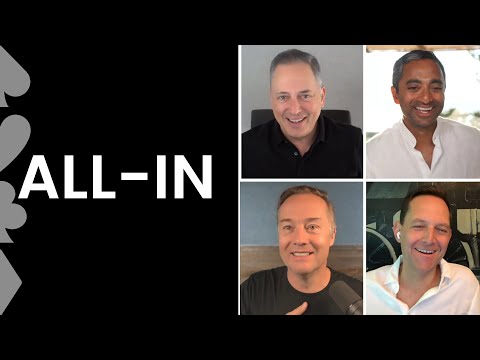
Exiled Iranian Prince Reza Pahlavi: Transition Plan and the Fight for Iran's Freedom
Ask about All-In Podcast
Episode Description
(0:00) Jason intros Prince Reza Pahlavi (1:09) Pahlavi's take on the war and vision for Iran's future, Democracy, and return (8:53) Trump's surrender conditions, core principles, role in transition and potential leadership (17:14) Thoughts on the people and the spirit of Iran (21:33) Shervin Pishevar joins: thoughts on the current regime killing 40k+ protestors, future of the Middle East (33:59) Future leader and government of Iran, plan for transition
Follow Reza Pahlavi: https://x.com/PahlaviReza
Follow Shervin: https://x.com/shervin
Follow the besties: https://x.com/chamath https://x.com/Jason https://x.com/DavidSacks https://x.com/friedberg
Follow on X: https://x.com/theallinpod
Follow on Instagram: https://www.instagram.com/theallinpod
Follow on TikTok: https://www.tiktok.com/@theallinpod
Follow on LinkedIn: https://www.linkedin.com/company/allinpod
Intro Music Credit: https://rb.gy/tppkzl https://x.com/yung_spielburg
Intro Video Credit: https://x.com/TheZachEffect
Read the full transcriptHide the full transcript
- All right, everybody. Welcome back to part two of the All-In podcast, episode 263. We promised you a part two because
- we are very lucky that my dear friend Shvvin Pishavar was able to set up a very important historic interview for us
- today. None other than Prince Resa Pavi is here and we have a limited amount of time with you uh Reza. And uh may I call
- you Resa or should I call you Prince Resa? >> Sorry. Thank you. >> Uh, >> thank you for having me on your program.
- >> It It's great to have you and this is a moment I think you've been waiting 47
- close to 50 years for which is we are at this moment in time looking at potentially the people of Iran being
- free. You left the country and when you were 17 years old to become a pilot and now you are looking to help your people
- with a transition post this military activity this operation essentially a war that's going on right
- now that we all hope gets resolved quickly. I think people would love to know what
- is your vision for Iran post this uh military action. >> Well, thank you again for the
- opportunity. Before I get into that, I wanted to simply uh stress the importance of this intervention that to
- us was like a rescue mission. It was literally an a humanitarian intervention to protect more lives that would
- otherwise be lost under this extremely brutal and repressive regime that as you know has massacred as of late uh tens of
- thousands of innocent and unarmed citizens in order to equalize the playing field. This was a much needed uh
- intervention that a lot of Iranians asked for and fortunately it did happen. But what's the next step? Where are we
- headed to? The most obvious question will be once the regime collapses how do we manage the transition. I've stepped
- in to lead this transition with the help of many of my compatriots from various sectors. We believe that a stable
- transition will lead to a address the immediate needs of the country but then set the country on a path of
- redevelopment and reconstruction which is of course something that we were always hoping for that could not have
- happened under this corrupt mafiaike regime. Iran should have been had it not been for the revolution today's South
- Korea of the region. Instead, it has become the North Korea of the region. Why? Not because our people are not
- gifted or talented or capable, not because we lack uh natural resources. It's simply because of a corrupt bad
- management and a regime that basically took our country hostage, used it as a launching pad to export an ideology. And
- that's why we are here today. A different Iran, a democratic secular Iran will first and foremost bring about
- the opportunities to our nation. But it will open Iran for business again. Iran is one of the most untapped
- economic opportunities of the 21st century. And it could tremendously uh change the shape of our world in terms
- of what would be beneficial to the Iranian people of course but also from the vantage point of a country like the
- United States and billions of dollars that will be generated as a result of doing business in Iran. We figure about
- 1 trillion in the first 10 years to the US market but also billions of dollars that will be invested into Iran and
- everything that we need to have done in order to rebuild our country. These are crazy opportunities that uh we can look
- forward to. And it all starts with uh moving towards this recovery and transition. And when your father was in
- charge, it was a monarchy turned into a dictatorship. And to be clear, the hope now is to evolve into a democracy with
- free elections for the people. Average age of people in Iran now early 30s, 31, 32 years old. What would that look like?
- what is a possible timeline and you are uh have said on other programs and on your YouTube channel which I suggest
- everybody go search for and follow right now because you're speaking directly to
- the people on X and on your YouTube channel. What is what is the condition on the ground from the people you're
- talking to? You said you've been talking to uh people in the military, civilians
- and other leadership. They're ready to move on. What's the timeline and what are they telling you is happening on the
- ground today as we sit here? >> Well, I think that now the playing field has been equalized, meaning that the
- people could finally, of course, awaiting the end of this campaign have a better opportunity to re-engage the
- streets and take over uh their homeland. uh of course part of the equation is how
- much implosion from within the regime and how much defections from the regime in the sense of joining with the people
- this time and not be an instrument that will halt the people's progress but instead help the people in that
- transition meaning uh whether people are in the military or security forces as well as the civilian bureaucracy unlike
- what happened after the fall of Saddam Hussein and debatification the scenario of change in Iran is totally different
- and let's not forget Iran is a multiple century old nation state. It's a country
- that is extremely unified and united for this common purpose. Under this tent, we
- have diverse uh groups that are joining in this national campaign. People who are on the right, the center, the left,
- monarchists, Republicans, ethnic groups, religious groups, every sector of society is engaged. I have had
- tremendous amount of support coming from inside Iran. We have the support of the
- uh intelligencia. We have the support of universities. We have the support of the
- working class. We have the support of uh the diaspora that can bring a lot to this equation. I think this is a good
- recipe that will allow us to manage this transition but set the country to clean
- up, be ready for business and create the opportunities that will finally impact first and foremost Iranians who have
- been starving as a result of this regime's corruption, but have a true opportunity to get back on track and
- improve their livelihood. And I think it's also good for those who partner with us in this process because there's
- a lot to be uh done that will be win-win as opposed to be lose-lose to the benefit of this corrupt regime. That has
- been the story of the past almost five decades. So the difference lies about this change and how crucial it is. And
- of course the reason we want to have a secular democracy, the final form to be determined by the people of Iran through
- pre-elections and a constitutional process. But most importantly is that under equality and the rule of law, all
- the opportunities that has been denied our nation as a result of his discrimination, as a result of uh pretty
- much disenfring the majority of Iranians, now it creates a true opportunity. And as I said earlier, I
- think Iranians are quite gifted. As much as it is attractive to uh an entrepreneurs in the outside world
- looking in, there are so many gifted and talented young Iranians who will have a
- fair chance this time, a true chance for being uh using all their creativity and
- genius uh to bring our country back online. This will be an excellent fantastic partnership that we're looking
- forward to. >> So you've spoken about wanting to be on the ground there. What conditions and
- what timeline do you have for yourself? And this seems like a a pretty high-risisk thing to do. It' be pretty
- brave of you to uh go to the country now. What conditions have to be met for you to
- go to Iran to go home for the first time in 47 years? And how close do you think
- we are to the people taking the streets now and for starting this transition? >> Well, to be honest with you, it's very
- difficult to put an exact timeline. uh factors that will expedite it is the level of separation from the regime, the
- level of defections, uh the strengthening of domestic organizations and structure, how can we partner with
- elements from within that are not joining this campaign. All of these are factors that will contribute to the
- rapidity of the of the transition. As far as myself being there, obviously there are security concerns to make sure
- that it's safe enough for me to go there. I'm no use to anyone if I'm dead. So obviously we have to keep that in
- mind but I would like to be able to be there as soon as possible. Uh to be able to help as much as I can in this
- process. Obviously being in a country is an advantage. It's hard to do things from far away. I had no choice to be
- living in exile because of the circumstances. But I think that the opportunity is presenting itself and um
- the the first opportunity that is created for me to safely return to Iran will obviously be there. Just this
- morning, Trump said there will be no deal in Iran until unconditional surrender uh is given by whatever is
- left of the government there. What do you think of that condition? Is that the right move? Do you agree with Trump's
- ultimatum? >> Well, let me look at it from the domestic prison. In order for a successful transition to occur, it has
- ultimately to be something that is legitimate in the eyes of the Iranian people. We haven't lost so many tens of
- thousands of lives just to settle for a continuity of the remnants of this regime. That will not fly. People will
- want to have a clean break. The alternative will be for all those who align with the secular democratic
- alternative. And there are some four core principles that who whoever adheres to to that including people who may
- today peel away from the regime um would be able to agree to work together on that platform. The first and foremost
- issue is of course Iran's uh territorial integrity. That's an issue that is very
- close to the hearts of millions of Iranians representing every aspect of our diversified uh country in terms of
- ethnicities, religions and what have you. But we find ourselves in this united uh uh cause under one flag and
- under one nation. The second element that is a prerequisite to democracy is a clear separation of religion from state.
- That's a critical element for a democracy to occur. Equality of all citizens under the law and the rule of
- law obviously is a critical aspect that guarantees all of the rights we're talking about. and the democratic
- process itself, meaning uh the fact that people can elect their representatives to go to this constitutional assembly to
- debate the issues of what the next system could look like and what it laws should be ratified by the people which
- would bring us to the election of the first parliament of this new democracy and of course the election of the first
- government of such democracy at which point the transitional government hands over power to the elected uh
- representative of the people in the future government. That's pretty much the the the the direction that we hope
- to manage this transition and I'm playing a role in bringing about this transition with a very well-crafted plan
- that is in detail explaining particularly focusing on the first 100 days. I created an organization called
- IP which which is Iran prosperity project but it first focus is the first 100 days. How we immediately stabilize
- the situation in Iran. How can we maximize the remaining elements that will join with us to be able to survive
- regime change and have a place in the future? These are the first components and then we move forward with the plan.
- Two quick questions. Under no circumstances, would that be a monarchy? Uh I think uh is a question everybody
- has for you because you're the prince. This is a democracy. We don't have princes in democracies. And then number
- two, what do you ideally see as your role in the transition? And then would you like to have the opportunity to run
- for president and to lead the country out of this horrific nightmare of 47 years?
- >> My focus is on the process, not the outcome. And in as a neutral arbiter, I'm not taking sides with one form
- versus the other. That's for the people of Iran to choose. And I think the world
- has seen successful models in both a republican system and a monarchic system. examples uh a republic that you
- have like in India or like in Israel or in France or the United States are not exactly the same but that's under the
- republican structure. In terms of parliamentary monarchies we have the example of Japan, Sweden, Spain, other
- countries. So I don't think that necessarily you can equate democracy with one outcome in particular. It could
- be both models that people can emulate. So at the end of the day, you know, again, uh it's not for me to choose the
- outcome. I'm here to be a bridge towards that outcome. That's the function of a transitional leader, not to run for
- office or not to have an aim for personal uh position or power or authority, but to be the element that
- unites the country towards a common purpose and allow the nation to decide what is their preferred system. That's
- what elections and free elections should be all about. and the ballot box is the
- only means to measure uh people's uh opinion and the majority will decide on that and that's the process that I'm in
- business to bring about. What do you believe the people of Iran want and in that monarchy subset there are the Gulf
- monarchies uh the kingdom UAE Qatar they are obviously distinctly different than
- a parliamentary you know system. So I assume you wouldn't want to see that. What do you
- think the people of Iran will vote for? >> Well, just what you said. I mean, we a
- democratic system clearly uh outlines how it should be and and how it should not. Uh I mean, if you want to look at
- the closest monarchy to the United States, technically speaking, is Canada. And you know, if you want to look it
- that way, and I think Canadians are quite happy with a democracy that they enjoy. And again, we have very good
- models of republic. Case in point, the United States. At the end of the day, as I said, it's for the Iranian people to
- determine what would be in their best interest. Having looked this time, unlike what happened, by the way, 50
- years ago, nobody had a clear idea what Kmeni was suggesting in terms of this as
- they call it or the tutilage of the supreme leader. By the time he took over and power was established, it was too
- late. And since then, we've been hostages to this regime. This time, in full transparency, the Iranian people
- ought to have a clear idea of different models presented to them. And on that basis, having understood every aspect of
- what it could be, then they make their choice. This is a process that should be totally transparent with enough time for
- debating different ideas. And again, as I said, let the democratic process unfold and let the people vote in
- majority. What is their final uh choice? I'm not here to determine an outcome. Again, I stress my role here is to
- manage this transition and create an opportunity that people have been deprived of for half a century to
- finally have a say as to what they would like to have for themselves in terms of
- sovereignty and determining their own future democratically. Final question, and I'll get into a bunch of details
- with you, Shervin, uh, as to the plan, which I know you're helping construct, and I'm assuming you'll help execute on.
- Trump says he's going to pick the next leader. Trump says a lot of things. He says them sometimes in a provocative uh,
- way, but he said he's not sure how you would play within your own country. There's obviously people holding up your
- picture. There are people who are maybe vying uh to take control of this from the previous administration.
- Are you in touch with President Trump and what's your relationship with him today? What's your best
- plea to him or your argument to him to work with you? >> Look, uh there's nothing hidden in the
- agenda. Everything is transparent and I've been communicating with the administration by uh Steve Witkov who
- announced it publicly. That's was our channel to President Trump and of course on the other side in the legislation
- with members of Congress, senators and Congress people to understand a little bit from the American prism what it is
- that we are proposing here. I don't think that President Trump or any other leader in this world would presume that
- it is up to them to determine who should be the next leader in Iran. I'm sure as
- democracies they respect the right for people to make that choice and as western democracies it should be going
- without saying that they would believe that the the right to choose the future leaders is only up to the Iranian
- people. If the intention is to assist that process if the intent is to support the Iranian people in their democratic
- aspiration you provide them with the help but the choice should be theirs. That has been my position and I don't
- think there's a disagreement on that whether it is with President Trump or other world leaders that I've also
- talked to about this matter. >> As I let you go, what should the American people know about the spirit,
- the culture, and the people of Iran, including the people who fled in 1979 like you and your family?
- >> Well, I I know many Americans who have many Iranian friends. As a matter of fact, if you just look at the Iranian
- diaspora in the United States alone, you will see how much uh interaction there is between Iranians who are now
- Iranianameans, if you will, many of them, and the kind of relationship they have built with their American
- counterpart. Many people have uh connections via marriages. Many people have connections through business
- affiliations. Many people have worked with Iranians. Many of the high-tech companies including Silicon Valley
- employ so many Iranians or they are themselves entrepreneurs. This is the kind of potential and I'm sure Shervin
- will talk to you more about that. But this is the kind of connections there is. And for Americans that have traveled
- to Iran or have known Iranians all these years, they know what what what country
- it represents, what amount of culture, arts, um I mean civilization in a true sense Iranians represent and they've
- been completely suffocated under this regime. But once Iran is uh is uh you know free from its shackles uh I'm sure
- a lot of Americans know um what difference there is between an Iran that wants to be friends with America that is
- not the regime that has from its inception called death to America or death to Israel for instance
- >> but there are Iranians who actually love to America. Let me just give you a last
- parting thought because I think every now and then I need to remind your audience and other audiences. We talked
- about other countries in the region. Remember 911? >> Yes. >> And how many people on the streets of
- many of the so-called allies of the United States were celebrating that attack on that sinister day. The only
- country in the entire world in the entire region that actually stood in candlelight vigils in sympathy to the
- victims of the 911 terrorist attacks were no other than the Iranian people themselves holding candle light vigils
- in Iran. And they've been messaging America for years now. We are not your enemies. In fact, they've been chanting
- slogans in Iran saying they lie to us. It's America. Our enemy is right here. This is the Iran I'm talking about. This
- is the people I'm talking about and I know many Americans both in the civilian sector including military forces in
- America know that and I think that's something that I'm sure I'm not the only one uh you know talking about this. You
- will hear from other Iranians who will pretty much confirm what I just said. That's why this partnership is so vital
- for us because together we will be able to rebuild um uh you know a different world. Iran will bring an element of
- stability to the region and beyond and that can only play to the interest of America itself. We need to have this
- vital partnership and I think we'll be able to succeed because I see everybody now is very much committed to work
- together towards uh bringing this agenda forward. Well, we're we're all praying for the people of Iran to have a
- democracy and what an amazing moment it will be uh when you get to return in whatever capacity and help this
- transition and 93 million people who have been suffering will be living free in a democracy and the impact that could
- have on the world and obviously that region would be by far the largest democracy in in uh the Middle East. uh
- and and this could have ramifications in terms of humanity that would be absolutely stunning and beautiful and
- the prosperity would be amazing. The Iranian people I met in my life uh Prince when I was living in Los Angeles,
- all these great Persians I would meet uh were some of the most joyful and industrious beautiful individuals
- I've met. They remind me of my Greek and Irish heritage, including you, Shervin.
- So, Prince Resin, thank you so much for your time. I know you're extremely busy.
- It's very important for the all-in audience to hear from you uh and to understand what's going on in your
- vision and we would love to have you back when you're on the ground uh with your people and that your people are
- free. >> Thank you again. Looking forward to it. >> All right, Shervin. Thank you so much
- for setting this up. >> I ask for very few favors for my friends, but as a good friend, you made
- this happen for the all-in community. So, we I thank you for that. And uh as I as I said to to the prince, the people
- and and the Persians here in the United States, maybe you could tell us a little
- bit about your story and and what this means to you and then we can get into your involvement here and what you hope
- to see in those first 100 days. >> Of course. Uh first of all, Jason, thank you for opening up this tremendous
- platform to the Iranian people and to the prince. Uh as you can see, uh the crown prince Razip is a is a great man.
- uh the most courageous man that I've ever met. Uh and he's the highest integrity human I've I've met as well.
- Uh we're very blessed as a people to have a leader like him. Uh who has lived a very clean life uh and has uh stepped
- up in a very courageous way. has put it all on the line for his people and his legacy uh to play this tremendous
- transitional role to evolve the Iranian uh nation to a democracy. Um and this long nightmare of 47 years that all of
- my Iranian brothers and sisters have suffered through um uh is almost over. And uh also a tremendous gratitude to
- President Trump uh for his courageous leadership on this matter. Uh I don't think any other president uh would have
- the courage and the principle and the values to take on this Islamic regime of terror. As you saw last month, uh they
- massacred uh over 43,000 Iranians who were just peacefully protesting. They gunned them down with anti-material
- bullets. I I put a post of a Coca-Cola can next to these bullets. It was bigger than the can. Uh that's what
- >> and this is super important to to meditate on for a second here. This regime >> is a murderous and evil regime to turn
- those guns and mow down 40,000 in over 40,000 individuals peacefully protesting is just an act of savagery
- and brutality that I think most people don't appreciate and uh or don't fully appreciate. Um and we there hasn't been
- enough coverage of that fact. >> No. >> And you are a bipartisan type person. and I've known you for many years. You
- were a super uh funer of uh Obama. He he wasn't able to get this done. Biden wasn't able to get this done. Bush
- wasn't able to get this done. This has been something that presidents have struggled with. And you got to give
- Trump credit here. There's a lot of debate over why this is happening. Is it Israel driving it? Is it the
- relationship with China? We talked about that in part one. At the end of the day,
- as a son of Iran, what matters is that the people are free. All these other conspiracy theories theories and
- motivations do not matter to you or the people. Yeah, >> absolutely not. I uh but one of my key
- principles is our our our sec our moral security precedes our physical security. So this has as much
- to do with American uh security as it does Iranians security and livelihood. As you saw, this regime is not only uh
- evil enough to mow down 43,000 innocent people in 48 hours. Their reaction to this liberation operation is to attack
- over 12 countries in the region. Imagine if they had a nuclear bomb, they would use it.
- >> They would use it. There's not even a doubt in my mind that they would have used it by now uh if they had it. Uh so
- this is uh incredibly important for America's national security. Um as uh the prince mentioned 9/11 uh happened.
- Uh that's the same kind of ideology except the problem we have in our modern time is that basically criminal and
- terrorist organizations have taken over sovereign nations with nuclear bombs or seeking nuclear bombs. Wherever you have
- Russia, uh China, uh you have you have North Korea and you have Iran. uh and then you had Venezuela. So the president
- has not only uh gotten rid of the Maduro in in Venezuela, he has now uh begun this process of dismantling this this
- Islamic regime who is absolutely uh not a legitimate government and not a legit legitimate u nation state. Uh and the
- only leader that uh is legitimate to lead us to a transition process to become a democracy is uh the crown
- prince resale. We are very lucky uh I think in our modern times to have three leaders who are living at the same time
- and leading at the same time as President Trump, President Netanyahu, um Prime Minister Netanyahu and and the
- Crown Prince Resali all at at in this one moment in time. I think we're living in biblical times when 107 happened. Um,
- I started the Israeli Iranian alliance with Michael Eisenberg, Michael Bhine, Jesse Matin, Sean Rad, uh, and we
- started to host these salons with the crown prince. One was in New York, Michael Eisenberg flew in, Dan Lo, lots
- of, uh, leaders came. Uh and that was the beginning of the process uh that was seated with a breakfast with Michael
- Eisenberg as a VC and the number one VC in Israel uh 15 years ago where we said we have to do more between Israeli and
- Jewish community and the Persian Iranian community and someday we're going to have uh tea in Thran. And we wrote an
- op-ed last year about this. And we began to build these bridges. Uh and this connection
- between the Jewish people and the Iranian people goes back 2500 years. Cyrus the Great, who's in the Bible, uh
- freed the Jews from uh slavery in Babylon, returned them to their homeland in Jerusalem, and rebuilt their temple.
- uh and that he is celebrated for that courageous act uh in the Bible and in in uh Jewish religious uh you know holidays
- and and it is a tremendous connection that goes back now 2500 years later in kind of biblical symmetry you have the
- Jewish people helping free Iranian people from their slavery and at the same time there is a connection between
- America's beginning that many people don't know is that Thomas Jefferson was uh a student of Cyrus the Great who
- declared the first declaration of human rights and a lot of the principles that went into the Declaration of
- Independence of America and the founding of America and the Bill of Rights and the Constitution have had its roots in
- Cyrus the Great and Persian history. And so this connection between America's founding and the principles that the
- Iranians uh espoused for 2500 years uh is this beautiful connection between the Jewish people, the American people and
- the Iranian people. >> And this could have such a tremendous impact on the region. You have
- essentially a lone democracy in Israel. Uh and now to have 93 million Iranians in a democracy, if if that can be
- achieved, and listen, there's a long way to go. this could spiral out of control.
- This was a very high-risk move uh by Trump. President Trump should give him a lot of credit for that, but
- he has to own this. So, let's be humble and and we got to pray for the best here. Things can spiral out of control
- in these kind of situations. But let's hope that we do get to democracy there. I'm curious, Shervin, you've spent a lot
- of time in the Middle East. I have over the last 3 years gotten myself educated and caught up I hope and have started
- doing business there and and really meeting a larger swath of people. The Gulf monarchies have modernized
- incredibly starting with the UAE, Saudi uh now the kingdom and of course Qatar uh as well modernizing Oman, Kuwait.
- What would Iran going straight to a democracy if that is even possible? What would that do to the region in your
- mind? I think that uh everything it what what the Gulf countries have done uh is
- a tremendous case study of what the potential for the Middle East truly is. Uh being blessed uh by God to have oil
- gas the way that most GCC countries have and Iran uh so has uh gives them an advantage to be able to have the
- resources independently to develop themselves. And when you look at what happened in UAE over the last 25 years,
- I went to UAE in 2001 2002 and there was a smattering of buildings there. >> Yeah, I've seen the pictures of Dubai
- then and now. >> It's extraordinary. It's incredible. And it it reminds me of what America was
- like in the 1950s when they came from back from World War II. Eisenhower buil built the interstate highway system and
- America developed into this superpower. Uh and and in many ways the GCC countries espouse that American
- mentality of everything is possible. Anything is possible. And they've manifested their greatness. And you look
- at Iran, you have 93 million unbelievably brilliant people who have been held back. You look at the Iranian
- diaspora in America. just our fellow friends who many people know Dar Uber myself at Uber of course um Omid
- Cordistani at Google and Ali at at data bricks um you know pier at eBay when you
- add up the numbers it gets to trillions of dollars of value have been created by
- this small population of Iranians in America and especially in Silicon Valley and I've been blessed to be part of that
- circle and you know one thank God for America America that we had a a safe sanctuary to come and develop our
- brilliance. But there are as many there's uh as many brilliant Iranians way more brilliant Iranian.
- >> Yeah. On a numbers basis it's it's a magnitude more. >> And so this will be a free democratic
- Iran will be the greatest peace dividend and economic dividend to be gifted to the world and to the region. So I think
- what'll happen is um we will have an acceleration of the Middle East becoming this uh unbelievable
- place where innovation and investment in the future is happening. We're at the dawn of AGI and advanced super
- intelligence. We have quantum computing which you and I you know and Emil Michael and others have done with our
- you know our our spa um and D-Wave. These these technologies are are going to fast forward humanity and being able
- to tap into the resources of the Middle East and Iran in in human capital and in
- the oil and gas wealth to be able to unleash an accelerated future is something that uh we all look forward
- to. And one of the things the team uh the crown prince's vision uh this is a 175page report right here the Iran
- prosperity project and I'm blessed to be an adviser there with many other very talented uh Iranians um and this piece
- by piece month by month uh has a sequence of of plans to rebuild Iran as the crown prince was talking about so
- that when there is a free Iran there will be a a four-month process C to get to a a referendum. Um, and then a
- six-month process to u assemble uh Iranians to to write a constitution. Uh and then a 14-month process to actually
- finalize uh the the constitution and then have a vote on the constitution. So you'll have a a sequence of events that
- will then lead to uh a legal framework uh where uh the the the new Iran will be able to actually execute on this on this
- tremendous plan uh and rebuild uh all aspects and all sectors of the economy. Uh and that'll lead to um you know uh
- this new Iran that we're all have been dreaming and praying for. >> And and so this plan's been worked on
- for some time. He seems like he's got, you know, a third or so of the constituents there who are in favor of
- him. There are some people who are strongly opposed. Last time his father was not perfect.
- He's answered many of the hard questions about his father's uh tenure. What are the chances that the existing regime,
- what's left of it, there are people in that who would collaborate on moving to a democracy where specifically religion
- and the government were separated. This was something NBS was able to do in Saudi, but not without strong resistance
- and great risk to himself. This is a high-risisk thing, you know, with some of these radicalized individuals who
- want religion to rule over democracy. So, maybe you could unpack that a bit. >> Absolutely. The vast majority of
- Iranians uh want a a separation of of uh church and state um of mosque and state.
- uh and uh we've seen what 47 we've had an AB test uh in Silicon Valley speak of what happens when you have a system that
- is controlled by mullas. Uh it has led to absolute disaster and mayhem and evil. Um and uh so the vast majority are
- out there and they're saying Resa Palvy's name. If you look at the videos from uh January, they're saying Javit
- Shaw, they're saying his name to return. he called on them to come in the streets
- at 800 PM on the on the ETH and 9th. Uh and they came out in droves and by the millions in response to him. So the idea
- that we don't know who the Iranian people want uh to help lead this transition process, the proof is in the
- pudding. You just have to look at the videos and look at the the actual facts. Uh and that's the he's the only leader
- that uh Iranians are are by name calling out for to to come back and they're also
- calling for for Trump and Netanyahu to please help save them from this uh you know terror uh regime and and as we've
- seen in the last week their prayers have been answered uh in a tremendous way. And what is going to happen is basically
- a dismantling and a defanging of this regime's capabilities to use terror to use our military uh capabilities. Uh and
- we have to let the that run its course. Uh as the president said, this is probably about 4 weeks of work. Um you
- know, there was a leak uh I think in the Washington Post today that the 82nd Airborne was uh activated. Uh and that's
- a signal uh that uh this is going to potentially um lead to even more support uh in this liberation operation to uh
- completely dismantle this regime. Uh defections are a big part of the strategy that
- >> have the defections started yet or is that too risky for the individuals on the ground? What what what are you
- hearing through your back generals? Well, I I the the crown prince had a a a a system for people to communicate
- securely with him and his team and over 50,000 people in the military um have actually responded to that. Uh you saw
- some uh defections that were went viral uh during the protest and before the protests of of different military
- members. We expect that that as the dismantling process continues and many of the as you saw the the the the top
- leadership that the IRGC was eradicated in the first 24 hours. The the the the supreme leader was just an absolutely
- evil man. Uh was gone in the first 60 seconds. He spent 47 years threatening the world. He lasted 60 seconds.
- >> Yeah. >> And that's going to continue. Um and so uh I think it's going to be a very
- rational thing for the rest of uh uh who remains to realize that if they don't actually have a complete surrender and
- uh you know capitulate and for the ones that haven't actually uh executed the orders of genocide against the Iranian
- people, there'll be an opportunity for people to actually um be a part of the reformation and the reconstruction of
- Iran. Um the plan actually says uh even people in the military will be able to one even have early retirement for the
- ones that didn't actually um execute uh those uh you know uh acts of terror against the Iranian people. And then
- others who are talented and have the the ability to to serve and want to serve, they'll also be able to show up at work
- and continue to get paid and have some role uh wherever in the military and the government. So there's this isn't going
- to be a hunting down of people. The hunting down is happening right now. There'll be a process of peace and
- reconstruction um and rehabilitation. Uh that'll happen. And we're going to also need to
- have a lot of like um you know specialists to come in and help people with the trauma that they've been
- through. >> Sure. >> 47 years. Uh this is be a multiple multi-threaded >> multigeneration trauma. Yeah.
- >> Multigenerational. Yes. Uh tell me about uh the Kurd the Kurds being backed Msad
- and um the CIA are uh backing reportedly militias in the west and that's going to
- play a role. Yeah, >> I think you know we we have to be very very careful because uh a red line for
- the Iranian people is uh we have existed at a as a country for for 5,000 years as
- a people for 5,000 years. Whoever invaders came in or out, we always outlasted our invaders. These these
- people uh who have t had taken over for 47 years were occupiers. They weren't really truly Iranians. They were
- occupiers of this country. Uh and they'll be booted just like Gjas Khan and everyone else who who came into Iran
- were booted. Um and so uh it's very important we if if if there's any kind of separatist movement, we will lose the
- goodwill and the support of millions and millions of Iranians. Um and so >> it has to be one country.
- >> It has to be one country. The territorial integrity of Iran must be protected. That's a red line for the
- crown prince. It's a red line for the Iranian people. Um, and so that's that's incredibly important uh to to uh project
- that wherever there's collaborations that can happen uh to to be able to work together uh to fight uh for uh the
- deliberation to be completed and for a march on to Tehran and the crown prince being able to come back to lead this
- transition and physically come back to his homeland. Can you imagine that after 47 years of being away from his nation,
- >> me uh being away from my >> You've never been able to go back or have you snuck in? And
- >> I hadn't been back for you know I basically I was born in 1976. My dad the the last Sha was sending a
- lot of the top brilliant people on scholarships around the world. Iranian community in uh graduate school and
- universities was the largest population in 1970s. he was educating this whole um
- class of people and we were going back to to rebuild and build Iran into this great nation. We're at the cusp of
- greatness. So my father came to Washington DC uh where I am right now and uh I grew up here uh on 16th Street
- in in in Washington uh and he got his master's degree at Catholic University uh 1976 to 1978.
- Uh, and I remember when we first came, it was a bicesentennial of America now 50th anniversary. And so he returned, we
- returned to Iran 1978 um, right before the revolution. Really bad timing. And my dad had been promoted
- to head of radio and television for the Shaw. And uh, this all happened. The revolution happened, was coming back.
- And my dad made the courageous decision to help uh the US embassy get radio communications devices to them, do
- foreign language broadcast to tell u foreigners in Iran how to get out of the country. This was from the different
- embassies and put my father Abraham on the execution list. So he went into hiding for 10
- months. I didn't see my dad for 10 months. and uh in kind of a kismid moment as someone he helped get a job in
- radio and television came to my our home and said to my mom I want to help and she didn't trust him and said I don't
- know where he is but she checked with my dad and and they came back and my dad said no you can trust him and that guy
- was the new head of security for the Meridabad airport in Thran and he personally met my father and I remember
- this moment I woke up to my brother crying and my dad was at the door after 10 months to say goodbye cuz he didn't
- know if he was going to survive. Uh and he went to the airport um met his friend
- and he walked him onto the Air France flight and uh you know crying he he flew uh out uh and came to America and the
- people he had helped helped him uh get his papers and everything in order and then we were stuck in Iran for two
- years. Saddam invaded, bombs were falling on us every night and the signs were going off. So then we escaped with
- my mom and my brother and sister. Came to America with $35. My dad was driving a taxi while getting his PhD. My dad a
- >> great paradox. >> My mom was like, "Yeah, I did Uber." Actually Uber that was one of the things in my first
- meeting with Jason with uh with Travis. I told him that story and I and I I know
- that like growing up in a orange and black taxi cab in in in Washington DC helped me win the Uber deal against all
- the greats in venture. >> Yeah. >> You know, it's all full circle. Only in America would that be possible. You
- know, this the son of a taxi driver and a maid. Uh you know, coming to America with nothing be able to have the
- blessing of the life that we've had. And I've never forgotten those roots. I've tried to to serve America. Um and um I'm
- uh you know uh now now helping in any way that I can to uh uh help the crown prince in this transition process for a
- free Iran and and rebuild Iran into something great. So make >> what's extraordinary to me about the
- Iranian people is they have maintained even under this oppression that spirit 47 years later. I I don't know if you've
- ever seen the Anthony Bourdain >> Yeah. >> uh you know episode when he goes there.
- Yeah. >> And it was always touched me. I don't know if this was like a decade ago when
- he did it >> and he said, "I can't believe it. This these people are Americans. They're
- they're eating Pizza Hut. They're listening to music. They're having some beers on their back porch. They're
- dancing. They are on VPNs, you know, understanding culture and what's going on around the world. even under the
- oppression, women, gays, uh, everybody in between, uh, they're suffering and they're still have that joy of life that
- every Persian I've ever met will stay with you like the Greeks or the Irish and they will close the restaurant. They
- will talk and the restaurant closes the door, the owner of the restaurant sits down and you just talk for another hour.
- Some of the most beautiful people I've ever met and uh, it's just I'm so glad that you are engaged in this. uh very
- much appreciate you bringing the prince. Thank you Jason understand the soul of the Iranian and that is exact we're the
- we love to host our friends on the social and uh and u you know there truly are as American as you can be uh we love
- our freedom uh we've suffered for so long uh and we're so thankful for uh President Trump uh having having the
- courage to take on this evil regime and we look forward to uh hosting all-in pod
- in tan >> that would sooner than later. >> One of the great bucket lists of my life
- to be able to go to and host the podcast there and have tea with you in >> Let's put on the schedule a year from
- today. >> Best food in in the world. I can't wait. >> What's the signature? What's the
- signature for you? What's the signature dish? What's the What's your favorite? >> Everyone loves the the Persian kebabs,
- right? But the kebabs in Iran are something else. There's like it's a it's a tremendous uh
- >> you know food culture. Uh and the national dish is called orabzi um which is a stew of lamb and and my
- mom was like the greatest version cook in the world and she would cook it for three days. Uh and these foods I can't
- wait to to break bread with you in a free room. It'll be >> Yeah. I mean that's one of the things
- the Greeks and the Iranians share is that love of lamb. cannot wait. All right, my brother. Um
- >> thank you. >> I'm so glad you're engaged in this. Gives me hope. Um and >> good luck in the next uh three, four,
- five weeks. Let's hope and pray for the best. >> Thank you >> to the all-in audience. We'll see you
- next time. Bye-bye. >> We'll let your winners ride. >> We open sourced it to the fans and
- they've just gone crazy with it. Love you. Queen of >> your >> besties are my dog taking your driveways.
- >> Oh man, myasher will meet me. >> We should all just get a room and just have one big huge orgy cuz they're all
- just useless. It's like this like sexual tension that they just need to release somehow.
- Wet your feet. Wet your feet. >> Your feet. >> That's going to be good. We need to get
- merch. >> I'm going all in. I'm going all in.
Brief Summary
Prince Resa Pavi discusses Iran's potential democratic transition and the role of the Iranian diaspora in rebuilding the nation.
Key points
- Historic Interview with Prince Resa Pavi. Prince Resa Pavi discusses his vision for a democratic Iran and the potential for change.
- Iran's Potential for Economic Growth. Prince Resa Pavi believes Iran could be one of the most untapped economic opportunities of the 21st century.
- A Call for a Clean Break. Prince Resa Pavi stresses the need for a legitimate transition away from the current regime.
- The Call for Democracy in Iran. Iranians are calling for a democratic transition, emphasizing the need for a partnership with America.
- Historical Connections. The ties between the Jewish and Iranian people date back 2500 years, highlighting a shared history.
- A Vision for a New Iran. The potential for a democratic Iran is seen as a transformative opportunity for the region.
Episode highlights
- Historic Interview with Prince Resa PaviPrince Resa Pavi discusses his vision for a democratic Iran and the potential for change.“This was a much needed intervention that a lot of Iranians asked for.”1:57Mar 7, 2026
- Iran's Potential for Economic GrowthPrince Resa Pavi believes Iran could be one of the most untapped economic opportunities of the 21st century.“Iran should have been today's South Korea of the region.”2:30Mar 7, 2026
- A Call for a Clean BreakPrince Resa Pavi stresses the need for a legitimate transition away from the current regime.“We haven't lost so many lives just to settle for a continuity of the remnants of this regime.”9:25Mar 7, 2026
- The Call for Democracy in IranIranians are calling for a democratic transition, emphasizing the need for a partnership with America.“Our enemy is right here.”19:36Mar 7, 2026
- Historical ConnectionsThe ties between the Jewish and Iranian people date back 2500 years, highlighting a shared history.“Cyrus the Great freed the Jews from slavery in Babylon.”27:24Mar 7, 2026
- A Vision for a New IranThe potential for a democratic Iran is seen as a transformative opportunity for the region.“A free democratic Iran will be the greatest peace dividend.”31:37Mar 7, 2026
- A Father's Courageous DecisionThe speaker recounts how his father helped the US embassy during the revolution, risking his life.“My dad made the courageous decision to help the US embassy.”41:45Mar 7, 2026
- Escaping IranThe family escaped Iran with just $35 after Saddam invaded, facing bombs every night.“We escaped with my mom and my brother and sister.”43:06Mar 7, 2026