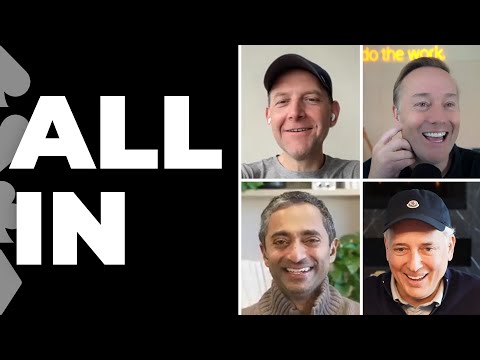
Jared Kushner: Israel-Hamas War, paths forward, macro picture, AI
Ask about All-In Podcast
Episode Description
(0:00) Bestie Intros: Sacks keeps receipts! (1:14) Jared Kushner joins the show: background, Trump's campaign validation (13:12) State of Israel vs Hamas, escalation risks (23:04) Historical context around Israel's relationship with the Arab world, understanding the modern Middle East (38:55) Failed solutions, Israel's response, paths to stability (1:04:54) GOP debate, establishment blind spots, pragmatic politics, tribal infighting (1:15:36) Improving macro picture, potential impact on 2024 election cycle (1:28:03) Russia-Ukraine (1:32:53) Big week in AI: OpenAI DevDay, xAI launches Grok, Kai-Fu Lee's announcement
Follow the besties: https://twitter.com/chamath https://linktr.ee/calacanis https://twitter.com/DavidSacks https://twitter.com/friedberg
Follow Jared: https://twitter.com/jaredkushner
Follow the pod: https://twitter.com/theallinpod https://linktr.ee/allinpodcast
Intro Music Credit: https://rb.gy/tppkzl https://twitter.com/yung_spielburg
Intro Video Credit: https://twitter.com/TheZachEffect
Referenced in the show: https://twitter.com/DavidSacks/status/1722342698110304752 https://twitter.com/DavidSacks/status/1722288226235498511 https://www.youtube.com/watch?v=In1MYEc0-10 https://fred.stlouisfed.org/series/WM2NS https://fred.stlouisfed.org/series/CORESTICKM159SFRBATL https://fred.stlouisfed.org/series/T10YIE https://fred.stlouisfed.org/series/MMMFFAQ027S https://www.google.com/finance/quote/ADYEY:OTCMKTS https://www.google.com/finance/quote/DASH:NASDAQ https://www.google.com/finance/quote/DDOG:NASDAQ https://twitter.com/sundeep/status/1722635065983897910 https://twitter.com/elonmusk/status/1721029443160772875 https://twitter.com/kaifulee/status/1721321096727994590 https://openai.com/blog/introducing-gpts https://openai.com/blog/new-models-and-developer-products-announced-at-devday https://twitter.com/chamath/status/1721234497482670438
Read the full transcriptHide the full transcript
- sex what essay were you writing last night till 3: in the morning oh I was blasting people on Twitter yesterday I
- was collecting scalps SC I keep these receipts of people who attack me on Ukraine and then like six
- months later you know they'll write a tweet admitting they were wrong I'll rub it in their face you have a little
- Google doc and you just go BK I just bookmark them you have like your Kill Bill list
- yeah you are so petty oh my God I love it I mean I love that about you some would say that's a good defense
- mechanism right this way yeah they got to know they're not going to take any free shots because if they do and then
- you know invariably I I'm proven correct then uh you're gonna clap back I'm gonna
- smack them very trumping isn't it yeah it's a very hard burden for you to carry just being right all the time I respect
- the way you do it with such Grace and magn let your ride Rainman David and in said we open sources to the
- fans and they've just gone [Music] crazy all right welcome back to the all in pod really excited to have a guest
- with us today Jared Kushner I'm sure everyone knows who he is we obviously talked about Jared's interview with Lex
- fredman on the Pod a couple of weeks ago and what happened chamat you DM Jared started chatting and said hey would you
- be interested in coming to talk with us yeah about these matters jar very you know kindly agreed to do it so we're
- really excited to uh have Jared join us today Jared welcome thank you for having
- me so I don't think you need much of an introduction obviously you were a senior
- adviser to uh president Trump from 2017 to 2021 and uh you worked on the US Mexico
- relationship as well as led the Middle East peace efforts which I think is going to make up the bulk of what we're
- excited to talk about today uh just really briefly since leaving um office you've been investing running a firm
- called Affinity Partners is that right um maybe you can share with us just a little bit about what you've been up to
- and then we'll you know kind of get into it here perfect Affinity Partners is a private Equity Firm that I started when
- we left doing growth investing private Equity investing globally we raised just over 3.1 billion uh doing a lot of
- Investments trying to uh bring Gulf money into Israel into the us trying to figure out how through uh Investments
- you could bring countries closer together people closer together uh looking at a lot of areas where there's
- uh structural transitions happening at large in the global economy whether it's near Shoring from offline to online uh
- you know software a lot of uh different interesting areas a lot in the the fintech space and financial services
- right now uh but you know enjoying it and the goal is really to bring the experience that we had from the
- previously being an investor and um then the time in government and then thinking
- through how you could use those macro learnings and connections and relationships uh and navigational skills
- to the investing side right so we're going to try and talk later in the show uh about macro markets a bit talk a
- little bit about some of the activity in AI this week we think it's all pretty pressant and hopefully we can all
- dialogue about that I think it'd be helpful when you and I talked just to get ready for the
- show today you mentioned that you had a very liberal upbringing in the Upper East Side New York and your perspective
- began to shift as you started to travel the country then you were in the Trump White House and have become very active
- since would love to hear a little bit about how your perspective shifted in the time you spent because you mentioned
- you started traveling the country and seeing things that you otherwise hadn't seen living in the Upper East Side would
- love to hear that part of your story before we kind of get into things if you wouldn't mind Sharon yeah sure so one
- thing about my life is that nothing has gone according to the plan I grew up in uh New Jersey uh really nice place in
- Livingston uh my father was an entrepreneur or in the real estate business banking Insurance did a lot of
- different things uh really brought up uh me and my siblings to be focused on business and it really for us was a uh
- good experience growing up uh obviously went to uh Harvard and then after that chose to go to uh law school and
- Business School uh where I was at NYU during that time my my father had a legal issue and I was forced to take
- over the business um and so I got into the real estate business and then after that uh bought a media company in New
- York and that's really where I got exposured to a lot of of what I would call New York Society um my wife and I
- uh we met got married and uh through that experience thought we had a very expanded worldview uh at our house in
- the upper side we' have dinner parties we'd have heads of Banks and hedge funds and technology companies and fashion and
- um and then it was just you know really nice life and then her father announced she was running for office and that was
- an interesting experience for us as Republican we didn't know too many Republicans um were you register
- Democrat prior uh I was registered Democrat going up uh my father was a big Democrat donor we were we'd have in our
- house whether it be you know Chuck Schumer Hillary Clinton I think my father gave uh Cory Booker his first
- campaign donation so I know Corey since I'm 15 years old uh so really grew up around Democrat politics uh all of our
- life but over time I I think during the Obama years I I changed my registration to an independent I didn't feel uh like
- the Democrat Party was fully representing my my viewpoint so I felt more independent minded and then um
- during the time with u my father-in-law when he was running uh for office uh he invited me to go with him to a rally in
- Springfield Illinois we flew out there I got off the plane and um you know we we
- pull up to an arena and the guy comes up to Trump and says uh congratulations sir
- you just broke the record for the arena for attendance uh and he says well well who had the who had the record before
- and he says well was Elton John 36 years earlier and he says Jared look I don't even have a guitar or a piano this is
- impressive you know so you know he gets up on stage and and um Without Really notes you know riffs for over an hour
- and it was interesting for me because I was watching you know CNN and the New York Times and all my friends the media
- basically were describing his rallies as almost like KKK conventions but I walked
- around the crowd nobody knew who I was then and what I saw was that these were just you know they were people were old
- young male female white minority and um and uh and it was just people who were hardworking Americans who who you know
- really felt like Trump was giving them a voice and what was interesting to me was
- a couple weeks earlier we'd been at uh the Rob Hood Foundation which is the big uh philanthropy in New York where a lot
- of the hedge fund managers uh support I remember the chairman of Robin Hood getting up and saying you know if we
- want to save uh you know the Next Generation we want to save uh the kids in the inner cities uh we have to uh we
- have to support Common Core that's the way that we can save people and I remember Trump gets up there and he says
- uh you know if we want to save education we have to end Common Core and send it to the states I'm saying wait I thought
- I thought commic Corp was this great thing and but why are all these people against it and so it really just kind of
- pequ my interest and made me realize that maybe my aperture was was way smaller um way more closed that than I
- thought it was and it really led me to to to seek out a lot of people who had differing points of view than the people
- I'd been around before I really opened my aperture explored a lot and over the years I really got the chance to meet
- with people from both sides so you know I have a lot of friends who are independent friends who are liberal
- friends who are very Republican and uh you know my personal view was I thought of myself more as a pragmatist
- fact-based and data driven and based on that I tried to pursue uh the different policies that I thought made the most
- sense uh in as unemotional a way as possible how did you figure out that that moment in Springfield could
- translate all throughout the country like was there a process that you guys went through to validate like hold on is
- this just a moment in time or is this just a specific area or what is how did you guys get to the ground truth of what
- the scalable marketable candidate look like because I'm sure that was part of the
- calculus in what you did because it I think the to your point maybe the media's perspective was hold on a second
- this this guy is riffing but it clearly went very quickly from riffing to a methodical plan and I don't think that
- that's ever really been talked about do you want to just tell us a little bit about that sure well I would say it was
- less planned and way more entrepreneurial and and I say entrepreneurial in in two different
- senses you know one is the campaign was one was run incredibly entrepreneurially
- people were told that if you work for Trump you'll never get a job in Washington again which is why he really
- wasn't able to hire a lot of people initially and why a lot of the responsibility for the campaign fell to
- people like myself who uh really just cared about him personally and wanted to make sure that he was able to do a
- competent job uh with the operations of a campaign that led to us doing a lot of
- things in an untraditional way but we actually were able to make the dollars go a lot further whether was building a
- data operation or how we targeted advertisers or how we um you know did our events we were able to just do it a
- much different way but from a viability of the candidate perspective I really give all the credit to him because what
- I saw with politicians is a lot of politicians will take polls and then moderate their perspectives uh this is
- somebody who without pollsters and without any political experience um really put forward a lot of points of
- view and and keep in mind in a Republican primary a lot of his viewpoints on trade were very
- heterodoxical they were they were not what was conventionally thought of and what I saw with Trump was that he was
- able to move the polls to him and that was a that was a talent and just a skill of persuasion uh and his willingness to
- kind of stick to the issues I mean at that point in time I remember seeing polls that illegal immigration was not
- like a top five issue when he started the campaign and by you know the middle the end of the campaign people were
- really seeing uh the craziness that was happening at the southern border and why
- that was uh critical to our national security and so um I think that for him he found a lot of his message and with
- him he was not a perfectly uh always on message candidate but what he did do was
- he was constantly evolving and learning and you know and would learn from the different things that happened and
- constantly evolving to uh find ways to to persist amazing like a startup finding a product Market fit yeah what's
- he like as a father-in-law I'm curious uh as a father-in-law he's been great you know that obviously brought us a lot
- closer together you know until that time our time was mostly either playing golf
- together or we'd be together at family events uh working together was uh was was a different element of our
- relationship but I think one of the benefits I had with him was that he knew I was always going to tell him the truth
- uh whether I agreed with him or not I also I think one of the things he liked about me was that I I was not obviously
- worked hard I gave him straight answers and I didn't aine on things where I didn't feel like I had an expertise so
- if you would ask me a question um and I didn't feel like I knew the answer I would say well this is not my expertise
- these are the people who I would recommend i' speak to to get perspective and let me bring you their their
- opinions and so I think he saw me as somebody who was who was competent obviously had his best interest at heart
- um again I wasn't accepting money for any of these jobs so it wasn't doing it for for financial gain um and I just
- started to really believe in a lot of the policies that he was pushing and wanted to help him maybe translate it
- from a a campaign speech to kind of technical policy and then see once he got the opportunity uh to help him
- implement it as well that's really cool why did you agree to do Lex and why are you doing the show today we were kind of
- surprised to see you on Lex and obviously like Le said it was a very different conversation than I think any
- of us would have expected having the only exposure to you being through you know some sort of media channels what's
- motivating you to kind of do this today before we get into it so Lex um again him my wife are friends and I I I really
- follow and and listen to what he does I I think in society today the the news uh
- it's kind of just one person's you know point of view and and they're they're they're picking and choosing and and
- editing what they put into it one way or the other but the medium of the podcast
- is something that uh I my personal consumption uh was growing with and and I felt like it was a place where you
- could have real conversations I think the people who are listening to podcasts are people who are looking to have a
- more nuanced uh perspective on something and and really want to you know try to understand something deeper and uh I
- respect Lex I all my private conversations with him I I really enjoyed um and I love that he was really
- trying to um find perspectives from people that maybe others didn't understand to try to bring greater
- understanding um across and so I agreed to do it after a while I was really really glad I did and uh based on the
- the great feedback I got uh there uh my sense is is that the podcast format is is something that's um you could have a
- real conversation you can go back and forth you could argue you could disagree um I think that that's where people
- really want to get their information from so I I turned down a lot of you know cable news or different uh
- interview requests um because I find that you can't have as nuanced a discussion and you know I wish things
- were as simple as you know the black and white are the political slogans that people use but the reality is things are
- a lot more nuanced so when shth reached out I followed you guys and I've listened to you for for some time I was
- um I was really happy to come do it awesome well thanks for doing it SX you want to kick us off on the Gaza conflict
- and framing up the present day sure based on what I've read it seems like Israel has now formed a perimeter around
- uh Gaza City they've sort of bisected Gaza between this North and uh South and they've been trying to bomb entry or
- exit points from the Hamas tunnel Network and it seems like their strategy is to kind of gradually close in on that
- tunnel Network and basically try and eliminate Hamas from from sort of this northern part of Gaza and then one
- assumes they'll move to the South and I guess one other element to add to it is that you know while Israel is doing that
- you're seeing protests both in the West and in the Arab or Muslim world you're starting to see statements condemning
- Israel by leaders of these other countries in the region I'd say the one by turkey by erdogan was notably harsh
- and threatening but you're starting to see again as Israel proceeds with this operation you're starting to see more
- and more condemnation from various parts of the International Community so let's
- start with that is you know how do you assess what's happening on the ground what do you think the prospects for
- Success are and how do you assess the risk that this sort of escalates horizontally in ways that are kind of
- hard to predict and could spiral out of control yeah so so there's a lot of different ways you can go with that but
- I'll start with kind of the first question which is um in the immediate aftermath of the attack my my biggest
- concern was that Israel was clearly caught off guard from an intelligence and Military perspective with the attack
- and the attacks were they shook a lot of people they were they were very very heinous Beyond
- um really comprehension it's it's crazy the more and more stuff that comes out and we were seeing a lot of it in real
- time thanks to you know the fact that right now with X and what what elon's done there to uh to not try to censor
- things in the way that it was happening before so we were all getting a lot of information real time and it was really
- pulling in a lot of people's heartstrings my big fear initially was that Israel would react uh emotionally
- as opposed to uh to to pragmatically and I think that uh the steps that they taken since then have been uh very wise
- I think the fact that they took their time and have been very methodical about getting their supply uh lines ready
- about working how to Garner as much international support I mean you have to remember these weren't just Israeli
- citizens that were killed these were American citizens they were German citizens they were Thai citizens uh they
- were UK citizens and and the hostages as well are not just Israeli citizens so I
- think that Israel took its time to get the military operation set I've seen them go slowly methodically I mean Gaza
- is a very very complicated place I mean we studied it for four years we we we we
- were very closely watching all the different incursions and we managed toas and and their uh their malicious
- activities uh very very closely uh to avoid situations like this and uh the place is booby trapped like like crazy
- and so I do think the fact that the Israelis have taken their time and been very methodical and have come up with a
- strategy has given me more hope mean every morning I I wake up and I look to see you know praying there hasn't been
- more casualties um in Israel and and the hope is that they continue to do it in the best way possible um so I think that
- the goal for them is really the elimination of Hamas I think that um you know the the big point that I really
- want to make in the Lex podcast which is why I went back uh to to really do the point was that um the people who are
- protesting um in favor of the Palestinians a lot of the Israelis and Palestinians want the same thing which
- is uh they want security for Israel and a better life for the Palestinians and I
- think what people have failed to really grasp um for for a long time is that Hamas has been the root cause of a lot
- of the the the bad lives for the Palestinians if you think about Gaza uh before this recent before October 7th I
- mean over half the population lived under the poverty line um you know people were were really trapped there
- and people would blame Israel for the blockade but what's also happened over the last 30 days is a lot of the worst
- fears that we had during the administration or things that Israel would be saying have totally been proven
- true I mean you've seen now them going to some of these School houses where there's you know there's 500 or or 50
- different you know rocket launchers um you know in the school houses the hospitals all the terrorists that
- they've captured that they're interrogating are saying well that's where the military headquarters are you
- know now we're learning about this um this tunnel Network which they're saying is hundreds of miles of of tunnels
- underground well that's why you know Israel wasn't allowing cement and a lot of these these materials in the cement
- that went in which was supposed to build houses for for the people of Gaza was then stolen by Hamas to to build these
- tunnels the uh the pipes that went into to fix the water were then taken and turned into to Rockets the the fuel was
- was was stolen and and not used for for for the hospitals or for people to have better lives it was stolen for them to
- operate their tunnel Network and then to fuel the Rockets so um It's a situation
- that that really does have to be dealt with again Israel you guys are I know poker players so uh so Israel definitely
- has the stronger you know hand to play here so I think time is on the one hand in their in their favor uh but on the
- other hand obviously you know the International Community has hisor Al been very uh anti-israel and
- anti-semitic in the way that they've approached a lot of these uh these skirmishes uh to date but I will say I
- think there's been more International support for Israel this time than I've ever seen um and I do think that that's
- a very important thing so that that's maybe General if there were some of the specific questions that you want to get
- to in there I can what about the risk of horizontal escalation let's just talk about that for a second because you do
- hear I think a growing chorus of countries who are denouncing Israel they're saying that that this is
- collective punishment that the bombing of Gaza is indiscriminate they want it to stop there's genocide genocide yeah
- I'm not saying I agree with that rhetoric but you you do hear it you know there's a effort at the UN to um to pass
- the ceasefire resolution so there's a lot of people who want the ceasefire and there's a lot of inter growing
- International pressure for that and then you've heard threats from you know again
- erdogan and turkey that if there's not a ceasefire at some point they're going to
- have to get involved they're going to have to act has said similar kinds of things
- although I think it's pretty clear they don't want to get involved they don't want this to escalate in a into a wider
- Regional War but they've sort of intimated that if the bombing continues that they might have to take action they
- might feel pressure to do that so I guess one question there is is time on Israel's side it does seem
- like again there's more pressure to stop the military operation over time as opposed to less yeah so so the
- answer is everyone's talking their book and that's what they should be doing they're talking to their populations the
- question is what people will actually do I would say that you know the hardest thing for us all is obviously you see
- civilians in Gaza who are being used as human Shields and the last thing that anyone wants is for more civilian deaths
- to occur uh it's funny this morning I was speaking to a friend uh in Israel who was telling me that yesterday there
- was a a major evacuation of of uh civilians in Gaza and uh a lot of people are surprised that the Israeli Defense
- Forces were basic putting themselves in between the Hamas militants and the gazen civilians to protect them and open
- up a corridor and again one thing that Israel's done I think a good job of is getting out a lot of the facts about how
- uh they've been warning the gazen civilians to flee asking them to go and U and what happened was Hamas was you
- know shooting them down with snipers and trying to prevent them from going because they wanted them to stay in
- place as human shields uh in in the schools and the hospitals where they were conducting their Terror activities
- and so what was interesting to me was um when my friend was telling me is speaking to a friend of his who was a
- soldier was that uh was that um is that a lot of the civilians are really thanking them for liberating them from
- from Hamas and for risking their lives to help them uh get out of Gaza and a lot of these people again they've been
- prisoners to Hamas more than anything else for a long time and they want to see themselves you know out of there so
- that they can you know perhaps have a better opportunity to live a better life and so um so I think that the current
- region I think the biggest immediate threat is is from Hezbollah the north I think that's been um I think Israel
- going to full ready alert uh was a really smart thing I think the us moving uh the battle carriers there I think was
- also good I think the uh the statements from uh from the US administration were strong upfront again whether people uh
- believe that they'll they'll they'll back up those statements is is another thing because they do have a little bit
- of a credibility deficit in the region based on what they've done over the last couple of years um but I think that's
- all been very helpful in kind of pushing um pushing Iran back and and and and sending a strong message to
- Hezbollah which is if you want to attack Israel don't do it when they're at full
- military Readiness Israel's a nuclear power and I think everyone is starting to realize that this has been Iran
- trying to manipulate things and as long as they think there's a threat that you're not going to go after one of
- their proxies but you may go after them that's been the best way of keeping uh deescalation I think with turkey and
- others I I've spent you know many hours with erdan uh personally talking about Gaza and I know that you know he has a
- big heart for the Palestinian people he hates uh to see their suffering and it's
- also good politics from him you know he's also from a Muslim Brotherhood uh you know leading party uh but I think
- you know in his heart of heart he does have to acknowledge that a lot of their plight is is is led to by bad governance
- um he may not want to admit it publicly but the reality is is the best way to improve the lives of the people of Gaza
- is to eliminate Hamas and put in place a structure where people can finally have
- the opportunity to to live uh more freely and and and make better lives for themselves Jared you you said something
- that I think is really interesting you said erdogan has a soft spot for the Palestinians can I just take that
- concept and just can you explain the historical context of Arabs the Arab world and their relationship with the
- Palestinians sort of because it's definitely had its es and flows over the Arc of history and so how do people
- think about it as just broadly speaking just in terms of like the big historical
- arcs that have kind of shaped this relationship between Arabs and and Palestinians specifically well a that's
- a question we could spend about three days talking about but I'll try to give you kind of a very quick uh version of
- it so I think that you know a lot of this goes back really to uh people say it goes back to a lot of times but I I
- think that the the we have to probably go back to and I'll try to do this very quick is is really in 1948 which was a
- complicated time it's post Holocaust post World War II um you know again the Middle East really in the early 1900s
- was a lot of was created by a lot of arbitrary lines drawn by foreigners and you had a situation where Israel uh is
- is the UN puts forth the partition plan Israel uh they're willing to recognize Israel as a state for the Jewish
- people and also give a state to the Palestinians uh the Arabs reject that and attack Israel and there's a whole
- War during that war um it was flared up really by uh General Nasser from Egypt who at the time was the leader of the
- Muslim world uh during that war um Israel was able to defy the odds and win and a lot of Palestinians were either
- forced from their homes or displac from their homes you know there's there's versions where they say the Arabs said
- leave your homes and then um you know when the war is over you're going to come back and take take everything uh
- some Arabs uh stayed in their homes and actually today they're Israeli citizens with full you know equal rights as as
- other Israelis um and so so that happened um then in 1967 uh that's when Egypt attacked again and during that war
- again Israel miraculously won and um and that was really kind of the the time where um Israel was able to expand their
- territory they took over the West Bank at the time which wasn't didn't belong to the Palestinians as much as it
- belonged to Jordan it was part of trans Jordan at the time and then they also gained control of the Gaza Strip which
- also uh was previously uh administered by Egypt although when Egypt was administering it they didn't take it as
- their territory they never granted citizenship to the people who were there so between 1948 and 1967 when The Six
- Day War occurred um most of the leaders in the Arab world enjoyed uh leaving this issue out it was a great way to
- stoke nationalism and to uh it was a very easy political issue for them to have to say well we need to do this and
- you know to to to fight for the Palestinian people so in a lot of ways there was a way to deflect from their
- shortcomings at home and to justify certain actions they were taking because they were fighting for this uh this
- group of people then it gets really interesting after The Six Day War so this was the second time that the Arab
- countries had failed to to destroy Israel which is what they had promised they would do so there's a young
- terrorist at the time named yaser Arafat and he was part of a party called fata and what he said is you know what all
- these Arab leaders they're lying to you they're failing you uh I'm going to be the one to start creating a Liberation
- and opportunity for the Palestinian people so he took on this mantle uh was able to use his fat group and and some
- pretty uh thuery ways to take over the Palestinian Liberation Organization which is way that he got some
- International claim and at the time he was doing that from Jordan so this about 1968 1969 uh they caus so much trouble
- in Jordan uh that uh King Hussein at the time who's King abdullah's father who really was a very very uh special um
- Diplomat and leader in the Middle East got so fed up with with arod I mean at the time he was causing trouble they it
- was it was steering people away people wouldn't invest there uh they wouldn't it was it was hurting tourism and then
- they took a little further and they tried to assassinate him which was probably the final straw so the
- Jordanian leader said get these people the hell out of my country um it was a big clash between the PLO um uh and and
- fata uh terrorists and then the Jordanian police and military and they were able to expel them and then the
- Palestinians went to Lebanon uh that's where yasar AR front was so they were there for about 12 years again they went
- back to their old ways of of of fermenting uh radicalism and finding ways to to cause trouble uh when Israel
- uh invaded Lebanon in 1982 uh then yaser arat fled again uh this time to Tunisia
- um in Tunisia they were living pretty well as a beachfront place they're in these beautiful Villas on the beach and
- they kind of became a little bit disconnected uh from the Palestinian people but there was a lot of resentment
- uh of the broader uh Arab world because they felt like again the Arab world didn't really they would say they were
- for the Palestinian people but never really stood up for them in the way that they felt like they deserved so it was
- it took until about 1988 that finally uh This is 40 years after 1948 the war of independence where uh the pl was finally
- able to get the Arab League to say and this is really because Jordan was just like done with this issue to say okay
- we're going to acknowledge that this land here should become a Palestinian state so the notion of a Palestinian
- State really didn't emerge till about uh 1987 1988 which is the same time that Hamas actually you know came about and
- they came about really from they were an a Sho of the Egyptian Muslim Brotherhood
- um and their whole thing was basically we're g to uh do full terrorism in order to uh prevent uh prevent any compromise
- or any deals with Israel so then you go to 1991 which is a very very important uh time for the Palestinians mostly
- because uh Saddam Hussein in Iraq and Kuwait um and that was very scary for a lot of the Arab leaders right they
- didn't want they did fear Saddam he was a he was seen as the radical Arafat uh and the Palestinian leadership back
- Saddam Hussein mostly because they knew that he was seen as the Revolutionary and popular with the more common man um
- and this pissed off every single Gulf leader because they basically said wait this guy if he's going to take over
- Kuwait he could come for Saudi Arabia he'd come for UAE so they were all very against that and at the time there's
- about over 200,000 Palestinians in Kuwait what happened at that time though was that that made the Palestinian
- leadership so weak because a lot of the Arab countries cut off the funding it was just done with them and that's
- really what led to the oso Accords so the oso Accords happened not because our fought necessarily you know all of a
- sudden said after you know 37 or 27 years of trying you know Terror and and pushing forward uh he basically ran out
- of other options and this was his only way to get some form of legitimacy so they dropped from their Charter uh the
- whole notion of destroying Israel and said let's try to create this area we could have governance and try this whole
- effort for a Palestinian state so that's really kind of this a a long short version of kind of how we got to then
- and then in the last I'd say 30 years the big change that I would say between then and today is that you have a lot
- you have a new Middle East form again a lot of the work we did in the Trump Administration was really to help what
- I'd call the new Middle East emerge where you have a lot of economic opportunities now happening in Saudi
- Arabia UAE Qatar uh there's been a massive mind shift where if you go kind of post Arab Spring a lot of these
- leaders are saying uh you know how do we create opportunity for our people when I
- got into my job in 2017 all the experts were saying to me the big divide in the Middle East is between the suis the the
- sunnis and the Shia and when I got there I said no no no the Divide is between leaders who want to give opportunity uh
- and betterment of life to their people and people who want to use religion or um or or whatever issue they want to
- hold on to from the past in order to deflect from their shortcomings and justify bad leadership so um so I think
- what's happened today is you have a lot of the gulf countries really wanting to see this issue uh get resolved which is
- different than you had in in Camp David in in in 2000 when Bill Clinton was uh getting close to a deal with yaser
- Arafat I think the Saudis and others at the time didn't want this issue to go away but now the issue is really no
- longer useful for the Arabs the only people it's useful to quite frankly is Iran and that's why they've been backing
- Hamas and Hezbollah and all these other fun factions in order to continue their project of instability so uh the way I
- kind of view this period right now is that the Middle East today is way stronger U than it's been in the past
- and this is what I would say the last gasp of Iran and those who have you know pushed for destabilization and kind of
- this whole um you know islamist jihadist project at the expense of kind of a collaborative uh Middle East which had
- which would then will create a lot of opportunity uh for the Next Generation to to Really Thrive Jared isn't there
- like at this point then like is it hard or easy to create an objective Target we we call individuals
- that Israel wants to Target Hamas but there's no card carrying members of Hamas you don't wear a jacket that says
- I'm a member of Hamas and walk around with an ID card and there are some folks who are
- sympathetic who believe that Hamas represents a resistance movement there are some folks who obviously
- feel terrorized uh and ruled over and there are some folks who support the cause but don't pull the trigger there
- are some folks who pull the trigger but don't want to support the cause but are being forced to by some uh reports how
- easy and how hard is it to really direct a military operation at such a fluid population that there it's very hard to
- ID and Target and as we've seen in years past there's always another group that seems to emerge you cut off one group
- you get rid of al-Qaeda Isis emerges and there's this almost like you know fluid
- transition of uh of this intention and particularly in this Gaza Community it's very difficult perhaps to distinguish
- between who's Hamas and who's not Hamas so how do you actually achieve the objective there and you know how does
- the military Target yeah so so that's probably the most important question that I think
- people have to um really be thinking about as we kind of enter this phase right so uh it's both how do you do this
- in the short term and then the long term and so you can't kill your way out of an
- ideology but there obviously are some bad leaders at the top who are culpable who um who who are military targets and
- I imagine that it's really you know knowing the capabilities of Israel and the mad it's just a matter of you know
- when and how as opposed to anything else but then you have a lot of mid-level and
- and and younger members of this group and I do think that a lot of these people are in this situation more
- circumstantially I think this is what they've been taught to believe I think this is uh really the place they were
- and this was the the system in Gaza where if you wanted to advance and live a better life then you really had to
- succumb to this tiered system so how deep the ideology is um people will debate that in different ways if you go
- back to 2016 in the campaign when we were dealing with Isis uh the talking point that everyone used was you have to
- defeat the territorial calate of Isis and then you have to win the long-term battle against extremism uh one of the
- things that president Trump did when he went to Saudi Arabia in 2017 uh the reason we went there was
- that the Middle East was basically on fire I mean if you had Isis had a califate the size of Ohio they were
- ruling over eight million people they were beheading uh journalists and and killing Christians uh Syria was in a
- civil war where 500,000 uh people were killed a lot of Muslims and you didn't see the same
- protest on college campuses when that was happening as uh you know Assad was gassing his own people uh Libya was
- destabilized Yemen was destabilized and Iran was on a Glide path to nuclear weapon having just been given $150
- billion in cash through the uh disastrous jcpoa uh deal that uh that car and Obama negotiated so it was a
- mess and so Trump went there and um and basically was was pretty tough with what
- he said and he said this isn't our problem this isn't your problem to solve our problem and we need to to root this
- ideology get it out of your your homes get it out of your mosques get it out of this Earth and uh the king of Saudi
- Arabia stood up at the time and said there's no glory in death and that was really important uh two two of the big
- uh deals that came out of that people talk about the big uh Investments did over $500 billion of Investments uh in
- arm sales with Saudi Arabia that created a lot of us jobs uh but the two agreements we made that didn't get a lot
- of coverage during that time was that we did a counter tariff Finance Center that
- we set up where we got all the gulf countries to really allow treasury to work closely with their Banks to stop a
- lot of the funding to the terrorist organizations and then these kind of borderline organizations and the second
- one was in Saudi Arabia which is the custodian of the two holy sites in in Islam meca Medina um they started a
- counter extremism Center where basically they were uh combating online um radicalization that was occurring and if
- you remember in the US in 2016 we had the San bernido shooting we had the Pulse Nightclub shooting and a lot of
- people being radicalized online uh one of the things that I'm very proud of from the Trump Administration is the
- work that we did uh to really help Saudi Arabia change their trajectory and what
- I realized quickly was that in the US we just did not have the capabilities to win the long-term ideological battle
- ourselves so um we could be mad at you know Saudi for some of the things that they've done in the past but they were
- the the most powerful partner we could have in order to uh try to uh combat the radicalization that was occurring both
- in terms of stopping the funding but also uh you know replacing the clerics who were doing the radicalization with
- clerics who were uh restoring Islam to a more peaceful and and more proper uh place so uh that was something that
- that's really occurred it's made a big difference I was just in Saudi Arabia a couple weeks ago at their big investment
- conference uh and what was really exciting to me was I was meeting with a lot of the younger Saudi entrepreneurs
- and I did a a conference in Bahrain to talk about the Palestinians uh in 2019 and one of the big challenges we had
- when we were putting that together is we were thinking about who are the role models for these young Palestinian kids
- and in the in the Muslim world you know they had some sports stars they had some
- Business Leaders uh but it wasn't really uh people who were necessarily um relatable to a lot of the younger
- generation in Saudi I was at an event with all these young Tech entrepreneur there who are building uh amazing
- companies there's a lot of unicorns there uh they're doing a lot of the you know the the companies that are dominant
- in the US and in Asia and now they're building them for the Middle East there and it's very very exciting and these
- really are the next generation of role models for a lot of these kids so U that's a long way of saying that you
- know obviously you have to do what you have to do from a military perspective and and the Hope obviously is that uh it
- can be as quick as possible and that as few civilians as possible uh are are are
- hurt by this um but the notion is that once that's once that's completed you need to then create a framework where
- people don't just have more despair uh because in an area where there's no hope and opportunity then obviously the
- radicalists and the jihadists that's really where they do their best recruiting and they flourish so uh so so
- once this occurs there needs to be a paradigm created where the next generation feels like it's better for
- them to get a job be part of the economy uh and where they can live a better life
- through capitalism uh than by going to to these jihadist groups but it's leadership targeting right now that's
- the objective effectively I mean that's what I'm hearing leadership and then degrading of
- capabilities right so because again what you've seen as well you've seen this with cartels in in in uh in South
- America and you've seen this with Terror organizations you know you you kill the
- top guy and and sometimes you cut the head off the snake and the snake dies and sometimes it just you know it
- scatters into a lot of little pieces and then you end up it ends up becoming more
- complicated not less but I think here obviously leadership but but significantly degrading uh the
- capabilities for anything in Gaza to uh to to threaten Israel and then actively Build A Better Way actively build a
- better solution that's the only way and by the way even today it's it's much more easy to visualize that than it was
- in 2019 when I was talking about this because you're seeing the economic project in Saudi Arabia you're seeing
- what they're doing in UAE I mean that the fact that Saudi shifted so much in five years should give you hope that
- it's really really possible and they've been pushing the rest of the countries to try to emulate and and compete with
- them which is also an amazing thing I'd love to get your reaction to to the difference in tone and messaging from
- Western governments versus what you're seeing sometimes on the ground with some of these protests and just how almost
- diametrically opposed the language and the rhetoric and the point of view is how is it that and sort of this is why I
- kind of asked you just for a little bit of a a history how is it that people aren't taking all of these views in how
- is it that there is this radicalization that may not be happening in the same level in the Middle East but is maybe
- happening actually in the west whether it's in our universities or other ones yeah so that's something like
- my friends in the Middle East a lot of them are laughing at the West because they're basically saying you know we we
- got all these islamist radical Muslim Brother people the hell out of our countries you don't see the same
- protests uh in those places that you see in the west and um and I think that in in in the west what's occurred is is
- people I saw this a lot when I dealt with the Europeans where people's understanding of the issue uh is more
- with their heart than it is with their head and obviously nobody wants to see any suffering um of any human beings but
- the reality is is that you know the the solutions that they've proposed for the last 75 years have all been uh just
- nonsensical and they they've more often than not perpetuated the problem then they've been solutions to the problem
- and you know I faced tons of criticism when I was you know in my role working on this issue and mostly because I I
- kind of looked at all the things that have been done in the past and keep mind being asked to to work on you know the
- Middle East it's like it's almost like a joke right it's it's the hardest problem
- set you can get in the world and I think we almost made it look too easy getting
- the results that we did and we left it very quiet and uh I think now people are starting to appreciate that it wasn't
- that easy and it's not um it's not a simple problem set to deal with and uh but I think that a lot of people um were
- were were kind of looking at um at what they thought was wrong but looking at the wrong root causes for how it got
- there I have a question for you and saxs I'd love to get your guys' opinion on this India dealt with a terrorist attack
- when M Mahan Singh was prime minister and basically it was an extremist Muslim group from Pakistan lakari TBA that came
- in and killed a lot of Indians but a lot of foreigners as well right attacked some of the major hotels in Bombay Etc
- and what happened was manahan sing didn't do anything and in hindsight what was written is you know they debated to
- do they debated do we go after this group do we show some proactive demonstration of force do
- we invade Pakistan ultimately they went on a more covert path to sort of dismantle that Terror Network and there
- was just a lot of international support that came around it can we steal man whether it would
- have been possible for Netanyahu to take that path or was it really not even reasonable just curious what you guys
- think about that do you want to go first uh no you should go first jar okay so um look anything's possible uh chth
- and I think that there's different ways look I think the big fears initially were that going into Gaza number one
- you'd be walking into a big trap and number two is you would be inviting a major escalation in the region the the
- third fear was obviously the degration of the Israeli economy when we did uh the Abraham Accord one of the big uh
- attractive uh things to a lot of these countries to be partners with Israel was their massively robust economy and what
- could happen if they go to war and it's a prolonged war is that economy can go off track I think GDP will take a big
- hit there in Q4 but obviously you know in Israel they do have a history of coming back right away but if this is a
- prolonged uh war effort uh there could be big hits and then you also think about in the age of you know Ai and
- software development losing you know a day of productivity is the equivalent of losing you know a week or a month and uh
- and they don't want to fall behind in what they're doing so there is an argument to be made for doing that but I
- do think that from Israel's perspective um I do think that they understand this threat I think that they
- want to eliminate this threat and I think their view is is uh we can't live like this anymore uh we we
- underestimated it before uh and and we will not let that happen again and I think also the psychology of of really
- the Jewish people is you know it's funny Once I was sitting with h with prime minister Netanyahu and one of the
- generals and uh and BB was basically saying like you know if if Iran gets too close this is what I'm going to do we're
- going to have to take matters to hands and the general basically said to me he said you know I get it you know you guys
- aren't going back to the ovens and I was just like wow you know it was it was a real acknowledgement of like the way
- that Israel operates with kind of no margin for error and I would always say when I would negotiate with the Israelis
- that you know sometimes you do a contract and there's like you know there's there's two issues at R 10 and
- like a couple issues at r five and like a whole bunch you know whole bag of issues that are like twos and threes and
- when I would negotiate with the Israelis like they would treat every issue like it was like a 10 you know what I mean in
- the sense that like they they just operate like there's no margin for error um and uh and I do think that obviously
- there was some complacency and and and the internal division you know led to them being caught off guard here but I
- think that uh they're going to do what they're going to do to make sure this this happens and I think there's also a
- way where Israel feels mentally like we have to show that we're strong or else people will will go after us and I think
- that that's what they've done and I will say you know the fact that Israel's gone
- from being completely divided to now uh fully United in this effort I mean even the people on the far left um in Israel
- who were all peace who were you know funding you know jobs with Palestinians and you know housing them in their homes
- I mean they're basically saying they want to go to war so the mentality there is very much we need to do what we need
- to do now to keep ourselves safe people are very very heartbroken for those who are who are passed they're they're
- they're praying very closely for the hostages um and uh but they've given a lot of latitude to their government to
- do what it needs to do to make sure this this is this is not U this does not occur again and I will say to like
- Israel also recognizes that I think now they have the world more on their side than they have in in uh in past
- conflicts and and I think their view is to um their view is to to to do it while
- they have that situation saak what do you think could Netanyahu have taken the the path of doing nothing no I don't
- think so I mean not given his domestic political situation I think the Israeli people demand a response and look one of
- the arguments that Israel would make is that if this happened to you the United States or you Russia or you China what
- would you do I mean I think we know we would turn Gaza into fuah or mosul Russia would turn it into gry so I think
- Israel is taking the response that I think most countries would take given their situation the thing I worry about
- is that Israel is not the United States I mean the United States because it's so
- powerful can act largely with impunity we don't have to worry as much about blowback and Israel does because at the
- end of the day they're a small country and a very hostile region and so I do worry about the potential for unintended
- consequences here one potential consequence is hor horizontal escalation does this war somehow spin out of
- control and it could lead to a much wider Regional war that would not be in Israel's interest the other is
- diplomatic isolation because I do think that Israel is taking a big hit right now in the information War the war of a
- public opinion and then finally do have a lot of Civilian casualties and and those civilians have brothers and
- sisters and cousins and so forth and that's going to lead to the next generation of terrorists and so even
- success in this operation against Hamas doesn't solve the long-term problem I mean it just kind of keeps it going so I
- think all of those things are potential problems but at the end of the day if Israel can have a successful military
- operation here that significantly degrades or destroys Hamas without this thing spiraling out of
- control that buys them time to find a political solution then maybe it will be worthwhile I mean I think a lot depends
- here on what the outcome ultimately is I think it's like a very tough thing to judge without knowing what the outcome
- is going to be the King of Jordan a couple of weeks ago gave a speech and uh in the
- speech he said there is no peace possible in the Middle East without the emergence of a Palestinian state with a
- two-state solution being the only path forward a Palestinian independent and sovereign state should be on June 4th
- 1967 lines with East Jerusalem as its capital and so that the cycles of killing whose ultimate victims are
- innocent civilians end is this the only path to stabilization Jared and is that where
- we're headed so that statement is is the same throwaway statement right that's the safest statement for anyone to say
- because that became the internet ational consensus so you know one thing that was
- super interesting to me when I was working on this was um I kind of said to my team once I was like where does the
- Palestinian claim for East Jerusalem as the capital come from and I had a guy on
- my team who is a a military guy who actually worked for John krey and I'd always have him in the room because he
- would represent the Palestinian perspective um we had a bunch of Orthodox Jews and and you know we tried
- to be impartial but you know we we did the best we could to have you know all perspectives represented and um and he
- came said I actually don't know then what's interesting is you know when when the West Bank was actually uh governed
- by Jordan the capital at the time was Aman and so it really wasn't until the uh the 1988 um uh launch of of this
- right for Palestinian state that they self declar that the capital should be East Jerusalem and so that was actually
- an interesting notion as well and I think that you know everyone knows that that's not going to be the case and I
- asked one of the leaders once why they say that and they said well it's a cliche and I said well maybe we need a
- new cliche and he says yeah that's that's a good idea let's come up with a nu cliche so I think whatever solution
- is going to occur has to be pragmatic right you you the reality is is that if if we're going to learn from Gaza
- there's a couple of lessons to learn right number one is you know Israel withdrew from Gaza in 2005 or 2006 uh
- they forcibly removed 50,000 Israeli settlers uh from Gaza um all those people they they left their their homes
- they left their businesses um thinking that would be peace they they transferred governance of Gaza to the
- Palestinians the Palestinians then had an election again it was uh you know the the PA at the time convinced the Bush
- Administration to allow for Hamas even though their Charter called for the destruction of Israel to participate in
- the election and they won in a democratic election since that time there's been no improvement in the
- economy uh it's become a a real security risk for Israel and so Israel withdrew and then let them govern themselves and
- now you have what's happened today be the case so I think the reality is is that you know if you look at the
- Historical um maps and the historical lines I mean there there's really no uh making a claim there there's no uh other
- example in history where somebody's lost three offensive Wars and then has been able to maintain their claim over a
- territory uh that they had before but I do think that there is an international consensus and I do even think in Israel
- there's a consensus to give the Palestinian people the ability to kind of uh have their own land and then also
- to govern themselves so um the word state is is a very loaded term because it it comes with a lot of definitions to
- different people but I think the constructs of what's achievable is um is in the West Bank or Gaza uh there can be
- no security threat to Israel and this is something that that they were insisting
- on before and I was sympathetic uh this was even before October 7th and if you go back and look at the work we did and
- what we put out we had a security regime that we designed with uh us intelligence
- and Military and and Israeli intelligence and Israeli military uh that we thought actually gave a lot of
- autonomy from police force perspective to the Palestinians allowed them to build their capabilities and and they
- kind of like earned their way into more and more security control which I thought was the right way to do that
- because you don't want to take a ton of risk there the other part of it though in any state is you need a functioning
- economy otherwise obviously you have a big grievance party the biggest problem the Palestinians have faced over the
- last called 25 years since since Oslo I guess almost 30 years now since Oslo is uh is just bad governance so the problem
- with the PA is is they were elected I think in 2005 and uh they haven't another election since so I think
- president boss is in the 16th 17th 18th year of like a four-year term um very not popular he's more popular in
- Washington and in you know the United Nations than he is you know in his own country um he's uh there it's a very
- corrupt system again a lot of the money's gone for uh for for the leadership their family for the top
- people but not to the it hasn't trickled down to the people and so there there's
- not a lot of trust on it uh you know I held a conference in Bahrain where I brought all the top inv ERS in the
- Middle East I brought Steve schwarzman from Blackstone came we had Randle Stevenson came from from AT&T and
- everyone came and said you know what we actually would love to help the Palestinian people we'd love to invest
- here uh and then they looked at the magnitude of it I mean it's three million people which is like a small
- state in the West Bank and two million in Gaza again it's like a small state in the US um and obviously to build things
- it's much cheaper I mean the GDP per capita there is about 3,000 per person so uh you know it's it's it's cheaper
- labor it's it's it's do it and it's connected right to Israel right which is like you know California not being
- connected to Silicon Valley so the prospects for Prosperity spillover are are massive uh being sandwiched between
- the rich Gulf and the the growing Israel so but the thing that's missing in for the Palestinians is very basic things
- right there's no fair Judiciary there's no rule of law the governance is terrible the institutions are incredibly
- opaque and what all these people were saying is we'd love to invest here but it's just not an investable place and so
- the thing that's been holding back the Palestinian people has not been Israel it's been their bad leadership and again
- you're seeing in other places in the Middle East that with the proper leadership Investments can come and
- those investments will actually lead to people living a much better life how does that leadership change in your view
- so the way that I would think about this is that if you're waiting for a solution
- to come to you you're not going to find it right if you say okay let's go back to the UN well they have a perfect track
- record of failure let's go back to the PA well they have a perfect track record of failure you're definitely not going
- to go back to a MOS so you need to find something different so I think you either need to create something new or
- you need to um look at what's working and put it together so some places that could do it mean the World Bank has a
- lot of good uh institutional knowledge they helped us work on the plan the World Bank and the IMF um you know some
- of the other Regional governments I mean Jordan their government is is pretty pretty capable I mean they're they're
- better at military than economy but I think they're they're starting to focus more on economy um as they realize that
- that that's necessary um if you look at the benefits of that area the Palestinian people are are are like a
- 99% literacy rate again through the taxpayer US taxpayer dollars and international donations we've paid for
- them to become uh very educated unfortunately I think we've poisoned uh their minds with a lot of what's been
- taught um in their curriculums um they have a pretty good health care System there again I think it could be improved
- because it's been done very kind of peacemeal versus holistic um and then in addition to that um they obviously have
- uh tremendous amount of tourism sites I mean you know Jewish Christian Muslim tourism sites so if they ever get their
- acts together I mean the the Boom in that area can be uh unbelievable and I think it could work very very well um
- there was one time where the Palestinian economy was working I think it was about
- 2007 there was a guy named Salam fad who was uh the first time somebody came in who was uh he was not corrupt uh things
- were happening uh you know wages were Rising uh projects were moving the money was actually getting to the people and
- he became so popular because he was such doing such a good job administering that
- uh that the president got rid of him that a boss got rid of him because he saw him as a threat to his power so you
- know what's happened is not different right you always have kind of a tyranny of the minority in some way uh with with
- with most forms of of government and so uh what happened was is as he was starting to gain popularity he became a
- threat to kind of the cronyism that occurred and so I think that the International Community if they're going
- to put money into this again to either rebuild number one it has to be conditions based again we've put tens of
- billions of dollars into this situation right I mean this this Refugee group has
- gotten more money uh over time than any refugee group in history by a factor of maybe a hundred right and then you know
- you you you've none of it's been conditions based and it has to be in in a set where people are trying to create
- outcomes I think one of the problems is a lot of the people working on this don't have business backgrounds they
- understand you know human rights or they understand politics but uh they don't understand capitalism and they don't
- understand what kind of framework you need in order to allow a society to thrive has treasury ever tried to trace
- these dollars or some other organization to just show where the theft happened and where these pools of money have gone
- to there's some intelligence on it that I can't go into but uh but I think most people don't want to know to be honest
- jamat I mean you could just look at it in a couple of ways like you know you look at um you know we would meet with
- prime minister Netanyahu in Washington and he would take a commercial LL flight to come meet us and he runs a military
- superpower an economic superpower uh in the region uh president abas would come visit us in Washington and he uh
- obviously represents a refugee group and he would fly in a $60 million Boeing Business Jet private jet to to
- Washington I mean I'd meet with him and we'd be sitting around and uh you know he'd put a cigarette in his mouth and
- then somebody would come over and they'd like the cigarette for him and I'd be like am I meeting with the head of a
- refugee group am I meeting with like a king you know it's just it it was a different situation and um but I think
- people just but he's the reasonable one right the alternative is Hamas and those
- guys I mean those are billionaire Hypocrites who live in Kar at the Four Seasons right yeah but but my sense is
- is you're you're going to get what you Demand right and I think that from the US's perspective right we give about $4
- billion do a year in foreign aid to the PA to unra to Jordan to Egypt and uh and
- we've we've tolerated you know status quo that's not acceptable and you know one of the difference again Trump had a
- lot of tension with the foreign policy you know establishment and it was over a lot of things right obviously he wanted
- to end the forever Wars he felt like we should get some return on the Investments we were making he felt like
- us Aid wasn't an entitlement but I think the biggest difference was they wanted to all maintain the world they wanted
- just to manage it and he wanted to change it and you know what we did by the by the time again this was one of
- the disagreements I had with the incoming Administration um is that when we turned over the Middle East to them
- again we I spoke earlier about what a mess U you know we kind of inherited when we started but we had five piece
- deals between Israel and and majority Muslim countries uh Iran was totally broke again under Obama uh when he left
- they were selling about 2.6 million barrels of oil a day under Trump when he left office they were selling 100,000
- barrels of oil a day they were out of foreign currency reserves they were dead broke uh now they're back up to three
- million barrels a day of of sales they've done over hundred billion dollars uh of oil Revenue uh since we
- left office the Palestinians you know one of the things we did uh after I think the first year is we cut the
- funding to UNR very controversial we saying oh this is for refugees we said it's not for refugees it's to build
- Terror tunnels and Rockets and they're saying no it's for schools and hospitals and we were saying those are the
- military bases and were saying you guys are crazy you're cruel and our whole thing and so when we left the PA was was
- basically broke um the Arabs had kind of lost interest in in that cause uh because they kind of saw that it was it
- was morally bankrupt and that uh every time we gave a boss the opportunity to do something better for his people he
- refused and and they kind of saw that you know we kind of we smoked him out a little bit and so we kind of took the
- issue and We Shrunk it tremendously and the final deal we did was between Qatar Saudi Arabia UAE Egypt and Barra and
- that was a critical uh deal to do because that was what really made it possible for uh Saudi and Israel to then
- do the deal and that was really on the table right when we left but it took too much time they allowed Iran to get too
- strong they started allowing Iran to get money they started funding the Palestinians and and unra again and uh
- and now you have a situation where it's just become you know a mess it could be fixed it definitely can be fixed if
- you're strong and if you're smart but if you're going to go back to kind of the old ideas uh you're going to get the old
- results you need new ideas you need to create the ideas and force them you can't just wait for them to occur and
- then go back to the old institutions the old people who have failed before who do
- you think should be Secretary of State in the next Administration I think Jared should he could do a pretty good job let
- me ask you about the two two-state solution let's just double click on this I mean my my view on this and I think by
- the standards of Israeli politics I'd be a liberal there is that the only solution the only way out of this is the
- two-state solution you you know we can't have a situation of indefinite permanent
- occupation of the Palestinian people at some point they developed a national Consciousness and if you have conditions
- of permanent occupation they're going to resist and you're going to have outbursts of
- terrorism at the same time if Israel just outright annexes these territories or continues on a program of call it
- creeping annexation where it keeps building settlements in the West Bank and you have a greater Israel that
- eventually Jews and Israel will not be the majority of the population I think if you look at kind of Greater Israel
- there's about 7.3 million Jews there's about 7.3 million Palestinian Arabs so if if the plan is a single greater
- Israel is either going to stop being a Jewish State because you know the Palestinians will vote for something
- different or it'll continue being the Jewish state but there's going to be some sort of two-tier system where a lot
- of Palestinians won't have the vote and So eventually a greater Israel have to choose between whether it wants to be
- Democratic or whether it wants to be Jewish and that seems like a very bad choice it seems like we want both those
- things to be true so again that kind of brings you back to a two-state solution as the only option here and yet it seems
- to me that the two-state solution has never been further away it seems like it's never been further away in terms of
- Israeli domestic politics and it's never been further away in terms of having uh
- a negotiating partner to negotiate something like this with so that would be sort of my pessimistic
- Outlook I mean I know you're pretty optimistic about the situation do you see it differently than that is that
- framing wrong somehow how how would you how would you see it so number one is I'm naturally optimistic and I I just
- find it's more fun to be optimistic than pessimistic but I'll say everything I'm
- saying in the context of the fact that this is a really really really really hard problem set right so um I'll try to
- say this um in the right order so number one is I I don't think there's any viability to a one state and I don't
- think that that's something that will ever occur um number two is um and I actually you know what's interesting one
- of the problems is a lot of the uh the Arabs and the Palestinians would actually prefer to be part of Israel
- than a Palestinian state so right before coid we released the Trump peace plan which uh which again you can you can
- still find online and U I think the political part of it was about 54 Pages the economic part and the political part
- was about 181 pages in detail um we at the time got the right-wing and the left wing again it was they were in the third
- election and we had uh prime minister Netanyahu and Benny Gans who's also an amazing um person came in and they they
- all endorsed it and so what I would find what I tell you is that semantics you know state has to do a lot with
- semantics so uh you can definitely give them a state the question is is you know
- you have to give Israel certain overriding security controls so that uh so that the state cannot be a threat to
- them and then you can let them kind of earn their way out of that with good behavior and and showing that it's a
- true partnership but what I will just tell you is that whatever you call it you give them a flag you can give them
- whatever you want unless there's a system where people can live a better life then the grievance will overtake uh
- will overtake whatever Independence they have and it will just become a problem again and so um so I do think a
- two-state solution is is possible again what you do with Gaza is very much you know TBD um but I do think especially in
- the West Bank there there's definitely possibility to do it and I think that from Israel they'd like to see that
- happen where uh they'd like the Palestinians to be able to govern themselves but it's it's a couple big
- ifs if it's not a security threat and if they can have a viable economy that's going to happen one of the big things
- that's happening now that I'm hearing about is that I think the number was like 250,000 Palestinians who had work
- visas from the West Bank to uh to go into Israel and now with the threat there's just such a great distrust that
- has that has occurred that those are now not being renewed so I think Israel is gonna have to bring in workers from
- other parts of the world but that was an amazing thing right you had Muslims and
- Jews you know working together you had uh you know Palestinians whose lives were better off because they were
- working with Israel so the vast majority of the Palestinians maybe not the vast I
- don't know it's people have different perspectives on this but I I I just believe that fundamentally human beings
- want to live a better life uh I don't think our natural state is is to hate each other or to be uh or to not be
- together again if you look at the Middle East for you know a thousand years before the second World War I mean Jews
- and Muslims and Christians they lived very peacefully together so you know what I was seeing with the Abraham
- Accords and what I was oping would occur would really be a reversion to the pre-World War II era where people were
- starting to live peacefully together but there's been a lot of hate that's been fermented and manipulated over over this
- time but the best way to start it is just you know take it one day at a time you know we used to say in government we
- get a hard problem you know used to say you know how do you eat an elephant you know one bite at a time and so just have
- to kind of outline where you want to get to put in place the right system and then just start you know step after step
- after step and then you get to a place and and maybe you're able to do something that becomes viable with time
- Jared did you see the um debates last night did you watch them uh no I did not SX did you watch
- them uh I didn't watch the whole thing I've seen Clips on social media do you have any takeaways I mean was it even
- worth watching yeah I thought I thought the the clips did a pretty good job of actually showing some of the punchier
- moments but the crazy thing is that the the mainstream media has completely erased PC's
- candidacy I don't even think it exists in the eyes of the mainstream media but if you look on on X all the posts were
- like he clearly won and he was basically throwing Fireballs everywhere but then if you go to you know CNN or Fox you
- don't even hear his name right so it's it's a real real difference the mainstream media coverage is what they
- want you to believe and social media is what actually happened it's what people actually believe and I think that if you
- look at social media what it shows is that V dominated the debate and he was throwing fireballs and he was slamming
- the neocons on the stage and showing that there's been I think an irreparable break between the neocon establishment
- Wing in the Republican party and the more populist Maga Wing So I think that's that's kind of what social media
- is showing and then you know if you listen to mainstream media they they to the extent they talk about vake it's
- said he had some sort of meltdown and he insult Ed Nikki Haley's daughter or whatever something like that about her
- Tik Tok usage yeah by the way all he said is that that they he was being berated for why he created a Tik Tok
- account and he's like I want to reach young people you know like your daughter who's on there and um and for that Nikki
- yeah that's what he said and Nikki Haley called him scum for that well no but she
- also she also pulled like the Will Smith line like get your my daughter's name out your mouth did she slap him no she
- didn't I think it's a pretty good point there's like 75 million Young Americans on Tik Tok if you want to reach them
- that's where you post your messages I have seen VES stuff on there I've seen RFK
- Junior's videos on there yeah like everyone uses Tik Tok now if you want to reach people that's his reality Nikki
- Haley doesn't I'm not sure I don't know that she has much of a social media following because I don't think her
- campaign inspires any real Grassroots I think her campaign is supported and propped up by the GOP establishment Wing
- I don't think there's any market for what she's selling among the Grassroots so social media is kind of pointless for
- her but if you actually want to reach people especially young people use social media well it was pretty intense
- when Vive said that the the head of the RNC should just be fired for all the losing and kind of went through every
- single election in the midterms and whatnot that they've lost since she became the head of the RNC and
- apparently on social media uh she mouthed something to the effect of this guy's an a-hole he's going to get a
- single set from us yeah R McDaniel who I know I mean I like ra but I mean has she done a good
- job sax look I it's hard for me to speak to the job she's actually done because I
- don't know the activities are actually involved in being RNC chair so but I mean the's point is look at the results
- so if we were on the board of a company that kept missing quarter after quarter and the CEO said no look at all the good
- things I'm doing we would probably still fire that CEO just because you're like how do things get worse right you just
- take the chance that you bring in a new CEO they're going to do better so the reality is our results in the Republican
- Party have been shitty lately now is that all R's fault no it may not be much of her fault at all but how do you do
- worse I think a big reason for the crappy results have been the abortion issue we've now had this issue on the ballot
- in at least six states most of which were red States a couple of them were purple States it's lost every time the
- anti-abortion or pro-life side has lost decisively every time and I think there's a lot of reasons to vote
- Republican I think Republicans have the advantage on the economy on border on anything related to to woke on um crime
- and homelessness these are all issues that should be big winners for Republicans but the public by I think
- probably a two-third majority does not want to ban abortion and as long as that issue is in the Forefront Republicans
- are going to lose and actually it was Anne Coulter who just said this um an cter had a really good blog post about
- this saying that the pro-life yeah I I retweeted it by the way she's very pro-life I mean she's a social
- conservative but she says that prif is is going to wipe out the Republican party they need to focus on
- non-political activities which is winning over hearts and minds they have to make the case to the country have to
- persuade more people because they're not in a position they're not popular enough
- to actually win elections you concur Jared you think the Republican part's going to change their position or need
- to change their position to win elections presidential election aside well ultimately if you don't win then
- you can't govern and you can't impact the change you want to do so I do think that uh people are definitely paying
- attention you know the results are the results I will say that you know one thing with with Trump e won you know
- with his operation we were able to overperform our polling I think here in these last times there's been
- underperformance of of polling and so that's something that obviously you have to look at which is uh very troubling
- but I'll also say that with you know what I found again you know I'm not really um as somebody who's newer to the
- Republican party what I found is that you know both parties are really I would say collections of of of tribes right
- you have different tribes that kind of make up the party but what I found in the Republican party was that there was
- a ton of infighting and finger pointing and Purity tests and um you know instead
- of saying like you know you know I'm happy you agree with me on on 70% or 80% it was basically saying well if you
- don't agree with me on 100% then then then you're a bad Republican and I think that uh that's a that's a culture that's
- going to lead to you um having very strong opinions but having no ability to AFF effectuate things I think that
- people have to you know say where do we agree on on different issues uh that uh where do we agree on issues how can we
- work together to do it but if you don't win then you're not going to be able to effectuate the things you want and even
- worse the other side's going to be effectuating the things they want and you look at where the world is today
- because of that there's a lot of intern seen fighting in the Republican party I think Trump's instincts on abortion
- actually have been very good I said this a couple of months ago there was kind of
- a brew HaHa on the right when Trump gave an interview in which he said that that
- actually what the santis had done in Florida with the six-week ban was a mistake and that he sort of up leveled
- the issue and just said I'm going to find a compromise that makes everybody happy and this created a lot of upset
- people on the right because they thought that Trump was kind of selling them out
- on the abortion issue and I made this case on Megan Kelly a couple months ago that I thought that what Trump was doing
- was pretty smart because he doesn't want to get pinned down on an issue that's going to hurt him in the general and I
- think part of the reason why he was being a little bit Cy on that issue is because he knows it would hurt him in
- the general and he's starting to think about that and I think the results that we just had the other day are strong
- Vindication of that and just let me say just more generally that whenever Trump has opposed Republican group think on an
- issue I think he's invariably been proven correct if you go all the way back to 2016 you know think about all the um
- heresies that he committed in the Republican Party he spoke out against the forever Wars against Bush's forever
- Wars I think he was right about that at the time the Republican Party either wasn't talking about immigration or
- didn't really seem to care he basically made uh the Border a huge issue I think he's proven right about that the issue
- of China and China trade was not a issue in the Republican party if anything it was sort of
- this this sort of unreconstructed free trade total free trade issue going back was pushing the TPP that year right
- exactly so Trump defied the Orthodoxy on that I think his prove incorrect Paul Ryan also wanted to ratchet back
- entitlements like Social Security Medicare and Trump thought that was suicidal for the GOP so he opposed that
- I think on all these issues whenever he has defied the Orthodoxy he's been proven correct and um you know I don't
- know if it's a conscious thing or it's just that he's got tremendous gut instincts as a politician be curious to
- get Jared's take on that like how much of this is sort of him working things out and how much of it is just his gut
- but I think this is why he's still the candidate to beat for the Republican nomination is at the end of the day for
- all of Trump's issues he's actually the best politician in the Republican party you know I would see the way that he
- would work on trade and again uh you know trade deals usually take five six years and and you know his attitude on
- on trade was that uh whenever there's a multilateral it's the the weaker countries all ganging up on the stronger
- party and so he says like I want to do them bilaterally so he withdrew from TPP uh which everyone went crazy and said it
- was a disaster well we ended up negotiating with Japan and Korea and everyone and we got basically 95% of the
- market access that was in TPP without giving up any of the things that would have absolutely decimated our Auto
- industry uh we renegotiated the the NAFTA which you know everyone said Obama said they would Bush said he wanted to
- fix it uh meanwhile Trump came in in a year and a half we renegotiated naftan it got over 80 votes in the Senate it
- was a bipartisan uh win and it it set the highest standards for labor protection it it did a lot of great
- things uh that I think make America way more competitive and hopefully will reduce our trade deficit so these were
- all things that he took on that people weren't willing to and again he said you know look if I'm wrong you know putting
- tariffs on these different countries I remember people coming into him saying uh saying if you put these tariffs on
- the whole world's going to explode the US economy is going to blow up and I remember sitting with him privately and
- he said to me you know Jared we had a year debate and we had some people who were more religious about this issue
- than anything else and he says you know Jared I've been saying this for 30 years
- I believe it uh I campaigned on it I won on it I have to see it like I have to see it through it you know what if it
- turns out it's a big disaster I could always take him off you know and so that was kind of like his way of thinking
- about it where he had his Instinct he follow his Instinct but he knew he could always back off and I think his
- flexibility and unpredictability were some of his greatest assets and I think also on on the border and immigration
- again it's an issue somebody you know grew up you know in New Jersey and then was living on the upper e side that I
- didn't a lot of residents for but now you're seeing my friends in New York now they're getting a taste of what it can
- do you know to to the country they're they're becoming you know big immigration Hawks like Trump the thing
- that the Republicans need to realize right now is that if you pick these topics that go down a rabbit hole you're
- going to be in a really tough spot in the general because the economy is also going to be in reasonable shape now if
- we were going to go into a November election where there were we were going to be in a recession that's very bad for
- Biden but sort of the tea leaves for whatever it's worth all the predictions all the predictive markets show that
- we're going to be in a reasonable place and so the Republicans get need to get very very focused sacks as you say on
- the real issues list here right because they're not going to have the benefit of
- the Tailwind of a bad economy to say President Biden has done a bad job necessarily and so the message will need
- to be even more precise and focused and so I think that that's going to be an important thing I I did a Tea Leaf
- reading on macro if you guys want it I have some charts just I'm just give you a little rundown of because I I went and
- you know look we used to talk about these things when I was when we were doing a lot of forecasting going into
- this cycle but so here's like a couple of really interesting observations so the first
- one is when you look at this M2 money supply look how much it's actually shrunk now why that's interesting to me
- me is that you have these two forces that are opposing each other one is we have these huge deficits so we're
- technically still frankly issuing a lot of money right but then on the other side we we have QT so when debt rolls
- off we're not reissuing it and the balance of that is still a really constructive thing where now you can see
- that you know M2 has materially started to shrink and I think that that's a really positive thing because now what
- that does it it combats inflation in a good way unfortunately for all of us it hurts
- Financial assets which is not so good I think we've all felt that pain but the reality is that that's been working so
- then Nick if you go to the second chart so what you see now is like we are in a really decent place with inflation and
- if you think about what's going to happen over the next six months it's mostly in the bag and meaning we talked
- about this before but there's a lag effect on a handful of components specifically rents which when you roll
- them into this inflation rate you're going to see it really really turn over very quickly right so we know that
- inflation is falling it's going to fall even more the second thing Nick the third
- chart here is you can see that now validated in these 10-year break events remember this was the chart we used to
- look at when we were like holy mackerel something's going to break in November of
- 21 I think we probably should have just sold everything we had in November 21 we
- didn't do it but the point is now we know and what you see here is the 10-year break evens are
- also telling us okay guys we're going to be in a pretty decent place and so I think the setup is
- basically the following there's less money in the system that's a positive Nick if you show the last chart
- there's more money on the sidelines and this is just a picture of I mean look at
- the amount of money in Money Market funds 6 trillion and growing so that's a really positive sign which is that money
- will need to find a home once Dr once no even just now because you're gonna you're going to be
- in a situation where and I'll get to this in a second but companies are now starting to perform because they've been
- able to rebaseline against very very lower expectations right and and money managers have to do their job in deploy
- capital and that's something we mentioned I think last week but this is now the beginning of the new fiscal year
- for the entire mutual fund complex so that's trillions of dollars that have to get deployed because even though you pay
- them a very small fee per year you're not paying them to hold cash you're paying them to make decisions and own
- assets and then as you said freedberg the last part of this is now you introduce rate cuts and that's a real
- accelerant now more than likely I think what that means is that markets are set up to to do pretty well Equity markets
- specifically and so I went and I said well how can we see some data that proves that this is happening and what's
- amazing is if you look at the performance of what I would call the most risk adjusted seeking companies so
- those are Tech businesses that have been absolutely hammered what you see in the
- last month is they have gone just nuclear aen up 30% in a matter of a week door Dash is up you know 25 30% in a
- matter of a week data dog up 30% in the matter of a week these are the businesses that were just completely
- decimated so what is all of this saying I think what what it's kind of saying is
- inflation is very much in the rearview mirror rates are going to get cut by the middle part of the year the economy
- looks like it's going to be a soft Landing that is actually very beneficial for the sitting
- president it's also good for equities it's good for us so it's really interesting actually I
- think we've had a fundamental kind of now change J do you think this will have an effect on the election cycle I think
- it definitely could but I do think a lot of people are still very concerned I know the
- the the the the inflation the the wages wage inflation is still about 4% I think
- that people are um are still just nervous about what could come I think there's been a lot of shocks and there's
- been a couple of times where it's felt that way um and I think that you know election years traditionally bring a lot
- more volatility to the market because there's unpredictability about what the policy will be going forward so I think
- that of people who have kind of been a little Whiplash from the the transition of over the last year to 18 months see
- that they're going into another cycle of uncertainty I do think that you know now
- you're actually getting paid to not do anything uh with your money in those money market accounts so there's less of
- a maybe less of a fomo to kind of go out and do something uh there so uh so I think that a lot of people are still G
- to be very much in kind of wait and see mode and obviously look for for special opportunities which I think will only
- further exacerbate uh a potential decline as well Jared last week we talked about real estate you used to be
- in the real estate business what do you have any thoughts on Commercial Real Estate and how
- good bad average things are so I still have a lot of exposure to commercial real estate through my family's company
- and uh we're mostly in the multif family space I think the office space right now
- is in for a massive uh change in the industry I think you're going to see a lot of the older buildings get uh get
- transitioned a lot of them are trading now for below uh land price which is which is pretty remarkable I think you
- have um you also have a transition in kind of what are the cities of growth right so you look at a place like San
- Francisco uh and there's a big debate over whether you know AI is going to save you know the office Market there or
- whether it's kind of like the Detroit of this Industrial Revolution and it's just
- never going to come back and then you're seeing a lot of these San Francisco companies move to New York and the New
- York people are saying oh there's too much crime and homelessness and they're saying compared to San Francisco this
- looks like a you know super it's it's a beautiful place and so you know New York
- is still doing I think okay but you're seeing a lot of plays throughout the country that that are but the
- fundamental with real estate is it's correlated to interest rates and so you know if interest rates you know right
- now I think the 10 years at like four and a half if it goes up to to six you're just going to see a repricing in
- real estate assets if it settles at at four and a half five then you'll you'll probably see more stability and what
- that will be but ultimately uh real estates become much more institutionalized over the last call it
- two decades and it's really a function of you know what are your your rent and expense growths and then what kind of
- what what can you borrow at and can you create you know a positive yield that's hopefully a good hedge against inflation
- so I I think net net it will be great asset class I mean it's probably one of the biggest asset classes in the world
- um I think right now though a lot of people are just holding back because they're not certain what the what the uh
- what the multiples or cap rates as they call them in real estate are going to be
- on a forward basis but they're really going to be a function of of what's the growth in the economy going to be and
- then also uh what the forward interest rates will be that's fair I think that everything's
- challenged in real estate I mean the demand size challenged because you've had the whole work from home Co
- disruption and a lot of cities haven't fully come back I think New York's come back at this point but like San
- Francisco definitely hasn't I think New York is something like 95% of workers are back in the office I think in San
- Francisco it's only like 45% so you've got demand issues then you've got financing issues you know um refinancing
- is much more expensive because interest rates are higher and then you've got these cap rate issues where no one knows
- what the long-term valuations are going to be so everything's a mess and by the way that that gets compounded by the
- fact that now banks that have office exposure are pulling back their lending so you have a combination of you know uh
- cost of borrowing being higher and then the availability availability of liquidity going lower and that's could
- further compound a lot of these refinances but a lot of what the people I know in the industry are telling me is
- that they're able just to work with existing lenders and just do some kind of uh extension and and you know just
- kind of live to fight for another day to get through the cycle and I will say in
- New York that the the rental rates for residential I think are at historic highs and and actually what what my
- family seen in their portfolio is that their properties in Jersey City which is basically like the six burrow of New
- York are just absolutely on fire because it's basically you know you go to New York now you go to a CVS everything's
- locked up you can't buy anything it doesn't feel necessarily like the safest city you go to Jersey City they actually
- have like you know Law and Order and rule of law and so um so you still take a train to New York and that's actually
- been a place that's done incredibly well so you always have Micro markets and you
- have different trends that that work and don't work but uh but I wouldn't bet against New York it's still amazing City
- and one thing about New York is every time I'm there I I always talk with some of the cops and I basically ask them I
- say if you had a mayor that said uh go be cops go Be Cops nobody's gonna you know hold you back you know get out of
- the car do you do we got you back how long would it take you to clean this place up and the answer I get is usually
- anywhere from like three months to six months so like we could have this place fixed so clearly they have to let us be
- cops again and um and so I am hopeful that you know eventually there'll be the political will to just you know let New
- York be what is it has the potential poal to be it's such an amazing Dynamic place it's such a good point I mean it
- really is is just a matter of political will yeah if you hire more cops and let them do their job that will stop the
- crime or certainly the incentive for Crime right now people think they can get away with this stuff and they don't
- get prosecuted when they get caught the jails are like a revolving door yeah they have plenty of cops they just have
- to let them do their jobs and they need prosecutors who will Who will do their jobs as well I I worked at Manan
- District Attorney's office when I was at myu law for the summer I mean you have amazing people there and if they are
- allowed to kind of follow the procedures and just just do the job in the way it's
- been done before uh you can make that City very very safe very quickly we we actually have a cop shortage in San
- Francisco as well it's not just a matter of not letting them do their job we actually have a massive shortage the
- city needs to hire a lot more they allowed uh a pretty high rate of attrition in the role I don't think
- there's a lot of people who want to be cops in San Francisco it's a pretty tough job and they'll get a lot of
- support so yeah we actually have a shortage here and that's a big problem yeah but it's very solvable as you say I
- mean just hire more train them let them do their jobs Jared how much do you think um Federal deficits and the
- federal debt matters going to this election cycle is it going to be a top topic or is it not really going to
- matter and then more importantly how consequential is it in reality I think in reality it's it's massively
- consequential um I think in the election cycle I think both parties are going to
- probably try to avoid talking about it because I think that you know everyone knows you know what I find in politics
- is when some things are really big issue people try not to talk about it that much and um are gonna have to get cut
- right the hope is is that you know um once you get through the election things can be done to to to have to deal with
- it but it's definitely an issue that needs to be dealt with what do you think that is Raising
- ra raising revenue or cutting expenses or both growth growth is the answer everyone always gives that's that's the
- political Cop Out answer growth 6% economic GDP growth how about we freeze spending until till the denominator can
- grow big enough to reduce the I mean balance budget amendment Etc but but speaking of GDB growth I mean do you
- guys want to cover Tech stories at AI this week real quick before we WRA I mean it's really can I get can I just uh
- I got I can't resist getting Jared on the record about uh the Russia Ukraine war oh so I mean this is a war that I
- thought was very easily avoidable you have a one minute budget one minute budget one minute that's all I need
- starting the shot clock to's gonna ring the gavl I'm gonna take a break go you got 60 seconds well I think U I think
- David's happy to have somebody on who agrees with him on on on most of what he's been saying uh so yeah we we worked
- with uh with Ukraine and we worked well with Russia uh during our four years uh i' like to point out to people that uh
- when we were in kind of our worst moments in coid the the second country that sent us plain load of supplies and
- ventilators when New York looked like it was you know on the verge of going under
- was Russia and that was because we were offering them the possibility of of working together we armed Ukraine but we
- also told Ukraine you know don't even think about raising NATO um as a membership as as a way to go I think
- what happened was is the Biden Administration uh you know had conversations with Ukraine about joining
- NATO Russia basically pushed their their military to the front line to say we are
- never going to let this happen if you go through uh kind of the geography and the
- history you understand why um you know Russia you know we'll never let that occur and I think it was right after you
- know the embarrassment of what happened with our withdrawal in Afghanistan where
- they thought that we had a weak America that was going to come and do much to it
- so um I think it was all very very avoidable I think that you know from what I read and again I wasn't involved
- in these conversations it did feel like there were some off-ramps uh initially but I do think that from our perspective
- I think the number one interest has always been how do we avoid a nuclear war I don't think that that's uh that's
- something we we want to see happen and I do think that um I do think that hopefully they'll be able to find some
- kind of resolution to uh to to not have that be a problem and I will say too that that's impacting the middle least I
- mean right now what's happening with uh with Israel and with uh with the Palestinians and Iran is basically a
- proxy war for Russia I mean if the America decided tomorrow let's change and support the Palestinians then Russia
- would come and be for Israel I mean there's not a lot of ideology for them in that but I think Russia and China
- want to see the US stretched and distracted so that we're we're less focused on kind of the areas where we're
- more directly uh in um in in conflict with them and so I think that that's a very major thing and I will say too like
- I I think that you know I I don't believe that that countries have permanent allies or permanent enemies
- you know I during my time in government we deal with the Germans and the Japanese who uh were vicious in World
- War II and we'd be against the Chinese and we'd be against the Russians who were basically our our allies in World
- War II and so um I don't think countries really have friends I think countries have have interests and I think that uh
- with with most countries you have areas of overlapping interest and I think that
- uh you can find those even with countries where you're in opposition for so you know one of the the the operating
- principles I I brought uh to all the different foreign policy problem sets I was given was don't condemn tomorrow to
- be like yesterday because you think it has to be and so I would always look at something I'd try to pull whatever
- optimism I could find and then say you know what's the best case scenario from a first principal's perspective I'd
- start there and then I'd work through all the problems uh that you had to try to get there so um so so David I think
- you've been uh way more right on Ukraine than than others and uh and I do think there's been a tremendous amount that's
- been mismanaged by uh by the US and and by the world in that in that scenario and I think it's unfortunate too because
- I think a lot of uh people have been killed in that war and I I do think that obviously the invasion of Ukraine was
- was was a terrible thing it should never have happened uh but I do think there's
- a lot of um acts by leaders that could have been done in order to either prevent it or or minimize it and and I
- still think that that's the job of of leaders in the world is to try to do the hard things and try to do the things to
- to make the world a less volatile and dangerous place you think it's coming to an end
- it's definitely lost its prominence it does seem militarily um again I'm I'm sitting here in Miami you know reading
- you know you know X and and newspapers and talking to folks so I mean I'm not going to Pine like I'm a general on the
- front lines but um but it does seem like it's kind of reached the point where it's not much is going to change
- militarily and uh and and you know again like every day that goes on there's just
- more life that's being lost and again I said the same thing with Israel that I'd
- say here I mean Russia and Ukraine both have unbelievably brilliant people if you take all these these young men and
- you take them off the battle lines and put them back into you know their jobs of of creating things I just think that
- that that's just a much better thing for the world so uh my hope is that you know
- the leaders involved try to find a way to get to a resolution uh again you know I think that you know both sides have
- maybe over promised their people what what victory looks like but that's the job of negotiation right you need to you
- know you need to find an off-ramp for everyone and get them to a place where we can you know start focusing on how to
- make tomorrow better instead of grievances from the past do you guys see that sunny sunny tweeted this thing he
- had dinner last night with Farhan who the VP of engineering at Shopify did you see his tweet can you
- find it he said that Shopify has written more than a million lines of code with co-pilot already oh
- wow I was like what yeah I mean I don't exactly know how there's your there's your GDP growth Jared well that's
- definitely growth I wonder whether it'll be it'll be GD I mean I think I think it will I
- think a lot of product productivity gains are going to drive the economy forward historically I was just talking
- with someone this past week about over the last couple of decades we've seen a massive shift on GDP growth being driven
- largely by labor the labor force growing and labor participation and increasingly
- in the last couple of years there's been this tremendous shift that all GDP growth has predominantly driven by
- productivity gains and productivity gains you know economically net their way through the uh the system and you
- see the the total GDP grow this is the whole argument for AI particularly at A Moment Like This that if you're having a
- declining population you're having declining labor participation people want to work fewer
- hours if you want to keep growing the economy in order to sustain the debt and the services that you provide through uh
- government infrastructure you have to grow the economy and you have to increase productivity it's the only Way
- Forward I mean like you could have one it's not like you're going to fire Engineers you're just going to have one
- engineer do five times as much da you just solved the whole budget deficit and a debt issue you found the answer it's
- Pro productivity driven by by the AI advancements which by the way there is a lot of tremendous productivity gains
- that will occur because of this I always give people the example of the tractor like when the tractor came around it's
- not like you know people were like Hey we're going to make less food now or you know what happened was we were able to
- farm 10 times as much and you know total output increased and when total output increased there was an
- abundance of surplus of food of calories that fed people population grew the overall economy grew there's no point in
- history that we've had a productivity gain through technology that didn't ultimately grow the economy like it's
- never well ever gone the other way in 1900 I think about 50% of workers in America Were Somehow involved in
- agriculture and by don't Yeah by 2000 it was down to like 2% so it's not like we
- had a 40% unemployment rate all lab figured out a way to do new and productive things and that led to more
- wealth that being said it did cause a lot of social disruption and I think certain job classes went away it had to
- get replaced by others that had to be invented if you think about a world where there's a
- million little companies or 50 million companies or 500 million companies that exist because they're one in two person
- teams that can build stuff that seems pretty reasonable and logical as the outcome there's a lot of sort of
- like Financial engineering that kind of goes away in that world right I think the job of the
- venture capitalist changes really profoundly I think there's a reasonable case to make that it doesn't exist it's
- more of an automated system of capital against objectives right and that you want to be making many many many small
- ,000 $500,000 bets and then you get to this much larger scale where then you once you get
- someplace you can go and get the $200 million checks I don't I don't know how else all of this gets supported
- financially well so there were there were a couple big news stories this week one was Elon launched grock which is a
- uh chat GPT call it competitor it took them about under his xai business unit took him about eight months to train
- grock one which is the model uh and by many measures is as performative as GPT 3 and a half GPT 4 at the same no no
- grock zero it took three months to train grock zero he's still training grock one
- sorry three months to train grock zero yeah Kaiu Lee you guys know Kaiu yeah he was at Google he was at microsof search
- yeah and he is um in China and built uh his business starting eight months ago and in those eight months uh
- he's now delivered a 34 billion parameter model that he's completely open source that he shows by again some
- performative metrics outperforms llama 2 and again doing it from China speaks I think really clearly and importantly to
- the point we talked about last week about if the US tries to overregulation move and again this was
- done in 8 months and then it's almost like the timing was perfect CU in the same week open aai responds with
- developer day they didn't necessarily respond but they had developer day on the books for a long time and at
- developer day open AI released a number of really powerful tools for developers that allow them to build really powerful
- applications and infrastructure on top of open ai's platform so they uh released apis for Dolly 3
- four cents to generate an image using the dolly 3 API they launched a tool to create your own GPT which can actually
- leverage proprietary data so from within your own database you're in your your own data Lake you can build a a GPT that
- you can then integrate into applications and GPT 4 Turbo with two versions that had you know pretty powerful pricing
- improvements all of this um being said it's a it's a big leap forward in what feels like a lowcost low friction
- multimodal developer friendly set of tools from open AI that allows them to move away from having the quote best
- model to now having what feels like much more of a platform business that as more
- um applications and more developers start to utilize open AI toolkit and services a real uh ecosystem starts to
- develop and that creates a sustainable business mode rather than just the technical mode that open AI started with
- so I think the big point is that we're seeing the technical Gap narrow between the best and the average or the worst
- and the median in model development we're also now seeing that the Evolution for a lot of these businesses is through
- open AI trying to build you know applications on top of a platform and build a business mode and so there's a
- real shift underway but net net I think what the Market's forcing everyone to do
- is really compete and build these incredible capabilities that are really going to launch a number of new business
- models new Innovations I the question is are we building apps for the IOS app store or are we
- building web pages for the open internet and I think open ai's hope is that it's
- apps for the App Store because it's proprietary and they own it they could take a share I think the reality is it's
- going to end up as the open web and again I think it's mostly because everybody else just
- can't afford to let one company run away with it and so you know whether it's llama or mistol or even grock when Elon
- opens ources it it's going to allow people to have access to these tools basically for
- free the problem that I think it creates is you know we had a you know when I first came to the United States my the
- the company that I worked at AOL they were the ones that believed in a fundamentally closed internet right and
- you had this service and you went into the Walled Garden of AOL and then the pendulum swung over the last 20 years
- and we opened it up at Facebook and at other places and now we have this fundamentally open architecture the
- problem now is these models will not get better unless you have fine-tuning that
- happens by yourself or these reinforcement learning loops that come from data that you
- control and you can see it with Gro Zero part of what makes grock really successful is that Elon and only Elon
- can give access to the xire hose to Gro now that's a ginormous repos repository of proprietary data that they're going
- to be able to train on so then the question is well obviously then Facebook will want to train their models on
- Instagram and their models on WhatsApp Google will want to train Gemini on Gmail none of those companies will want
- to make that available to any other model and so the unfortunate byproduct of a more of of foundational models that
- are more pervasive is going to be that the internet gets a little bit more closed in the short term and we're going
- to have to really figure out what the implications of that are so I think what that means economically is there's just
- going to be a lot more small companies and a lot fewer of these ginormous outcomes and
- that's on balance probably better for you know Innovation and the economy probably yeah data is the advantage not
- the model itself you have to you have to own some data asset that is unique so that you can train these models and then
- you have to close it off so nobody else can have access to it and that has to be
- an explicit business decision because it would be foolish for you to not do that
- sax did you take anything away from this week's announcements with Kaiu Elon and
- open AI developer day grock is interesting as an AI because it has a sense of humor I mean that's what's kind
- of interesting about the user experience is it tries to be funny it has a sense of irony um it's also willing to be more
- Politically Incorrect and I think one of the concerns about cat GPT early on was
- that it was programmed to be woke and that it wasn't giving people you know truthful answers about a lot of things
- that the censorship was being built in to the to the answers and there was a lot of examples very early on where it
- seemed like there was some sort of trust and safety layer that had been built on
- top of the AI and sometimes it would intervene and not give you the true answer that came from the AI it would
- give you kind of some madeup boiler plate and so having something like grock around will at a minimum keep open AI
- honest and keep you know keep chat GPT honest because if it's willing to give you
- truthful answers about things that you can compare to the chat GPT answer then we're going to know when these like
- so-called trust and safety interventions are are happening so I think that's kind
- of interesting separately the open AI developer day shows that that company if you want to call it that I don't know if
- it's a company or Foundation or what but it's a complicated legal entity uh I mean what say those are details are yeah
- those are details um I mean they are really um Trucking along at full speed I mean it is pretty impressive what
- they're shipping yeah the and even if the underlying language models get somewhat commoditized it does seem like
- they're building a very robust developer ecosystem so you could analogize it to something like stripe where credit card
- payments are pretty much a commodity but everyone uses a stripe because their Dev
- tools are so good and then they're able to get to a bunch of scale Network effects because again their developer
- platform is so good so I do think that that's the advantage of open AI may not be the model itself although I think I
- think their model is actually pretty good but it's is it that much better than llama 2 probably not but the the
- developer platform is getting really good and I that's a really interesting analogy because if you play that out and
- you say is AI like payments well what does a payments landscape look like in terms of
- companies that have real Enterprise Value there are I guess three or four big ones and then there's a bunch of
- longtail ones in specific geographies because there're these random rules in a country and you build something to be
- very specific to it and you have value in that market or in that use case and maybe there's a maybe there's an analogy
- there and how this Market develops in that sense there's four or five big foundational models and then there's a
- bunch of small vertical use applications that you use depending on what the task
- is well the time and the cost to build new foundational model seems to be shrinking at a pretty fast clip so by
- the way all of this happened on h100s yeah and a bunch of these happened on a100 so we're still one generation of
- silicon behind so to your point this thing is going to be like people will be training models in weeks yeah so let's
- go ahead and track all the world's models and have a federal regulatory body overseeing all of this
- well I have a guy from the UK on an H1B so I'm still filling out the TPS report because he I told him don't touch the
- model and he did yeah jar you follow all this yeah yeah definitely following high level from my
- perspective I I think it's it's great especially with what you mentioned about Kaiu Lee it just confirms what we've
- what we've thought which is that America is definitely leading in this and I think that it's just important to to
- note that they're leading be really because of the private sector and the fact that the private sector has been
- allowed to do what they do and you as we start to think about the regulatory Frameworks I mean you could think of a
- open AI as a as a company or a foundation or even as a nation state with with kind of the amount of power
- that these things will have the ability to to harness once they're they're fully
- scaled and I I just think it's it's it's going to be very interesting to see I think the more uh compe competition you
- have here I think the better uh will be very very good but I do think you want the most powerful um uh models the most
- powerful platforms to be in the hands of people who are going to try to apply it
- for all the right uh all the right things for society so I think that there's a lot of positive applications
- there's a lot of negative applications that can come from this um and my hope is that the regulatory Frameworks that
- are developed uh won't stifle Innovation at the expense of allowing others to get
- ahead of us who will probably use them in um in ways that we would not want to see them used right can I fly a couple
- of features that open AI announced that I think are interesting yeah yeah as long as you don't repeat what I said
- because you weren't paying attention but yeah go for well did you mention the well if I got this wrong we'll delete it
- but did you mention the 128k context window no he did not I did not I did not I think it's kind of a big deal what
- that means is you can have a prompt that has pages of text in it yes I'll tell you like several months ago I was trying
- to figure out like is there a way where I could just put all of my blog posts in
- a prompt for chat GPT and have it turn into a book for example and I was I was kind of like a problem I just started
- working on it was actually very complicated try and solve that also like also Vector DBS were a totally useless
- intermed like that abstraction didn't need to exist that's all gone now too they're doing those guys are firing on
- all cylinders it's really it's really impressive to see yeah the other thing is multimodal I mean so they're really
- stressing the idea of combining text with photos I guess videos will eventually come later um
- Text to Speech but again having multiple kinds of inputs and outputs for the AI I
- think it's kind and proprietary where you can plug in your own proprietary data source I mean it's just a game
- changer for a lot of Enterprise customers I think those developers are going to go nuts I heard a lot of
- positive feedback from developer I know who attended and sounds like it was very
- positively received okay well this has been great Jared thank you so much for joining us
- today it was really great to spend time together this is the point in the show where you tell David saaks that you love
- him and uh he says right back at you guys I want to say stick in 153 episodes but finally there's a person that I can
- say I'm now the second best looking guy on this pod so Jared thank you for coming on
- oh you guys are the best I'm going to come back more often that if you'll have I get treated better here than I do in
- my home so it's good so so do we that's what expect so much yeah try we hang out
- together but thank you guys for having me on and and really thank you for all the different um you know important
- conversations you have and again I've met a lot of people who listen to you guys over the time and uh they all find
- that you guys give them a lot of good input into a lot of the issues that are impacting our our daily life so thank
- you for the opportunity to be with here today thanks for being here yeah thanks for being here thank you very much
- let your winners ride Rainman David said we open source it to the fans and they've just gone crazy with it love
- queen [Music] of Besties are that's my dog taking your driveway man oh man myit we should all just get a room and just
- have one big huge orgy cuz they're all this useless it's like this like sexual tension that they just need to release
- [Music] somehow we need to get [Music] mer
Brief Summary
Jared Kushner discusses his political evolution, the Israel-Gaza conflict, and the impact of AI advancements on society.
Key points
- Jared Kushner's Political Journey. Kushner reflects on his shift from a liberal upbringing to working in the Trump administration.
- The Complexity of Politics. Kushner discusses the nuanced nature of political conversations in today's media landscape.
- Civilians as Human Shields. Civilians in Gaza are reportedly being used as human shields by Hamas, complicating military operations.
- The Complexity of Targeting Hamas. The challenge of identifying and targeting Hamas members within a civilian population is discussed.
- The Complexity of Middle East Solutions. Historical solutions have often failed, highlighting the need for a pragmatic approach moving forward.
- Investments in Palestine. Despite potential, investors hesitate due to poor governance and lack of rule of law.
Episode highlights
- Jared Kushner's Political JourneyKushner reflects on his shift from a liberal upbringing to working in the Trump administration.“Nothing has gone according to the plan.”3:50Nov 10, 2023
- The Complexity of PoliticsKushner discusses the nuanced nature of political conversations in today's media landscape.“The reality is things are a lot more nuanced.”13:03Nov 10, 2023
- Civilians as Human ShieldsCivilians in Gaza are reportedly being used as human shields by Hamas, complicating military operations.“Civilians in Gaza who are being used as human Shields.”20:06Nov 10, 2023
- The Complexity of Targeting HamasThe challenge of identifying and targeting Hamas members within a civilian population is discussed.“It's very hard to ID and Target.”32:19Nov 10, 2023
- The Complexity of Middle East SolutionsHistorical solutions have often failed, highlighting the need for a pragmatic approach moving forward.“The solutions proposed for the last 75 years have perpetuated the problem.”40:09Nov 10, 2023
- Investments in PalestineDespite potential, investors hesitate due to poor governance and lack of rule of law.“They'd love to invest here, but it's just not an investable place.”52:50Nov 10, 2023
- The Two-State Solution DebateA deep dive into the complexities and challenges of achieving a two-state solution.“The only way out of this is the two-state solution.”59:52Nov 10, 2023
- RNC Leadership Under FireCritics argue the RNC's recent performance warrants a change in leadership.“How do things get worse?”1:08:25Nov 10, 2023