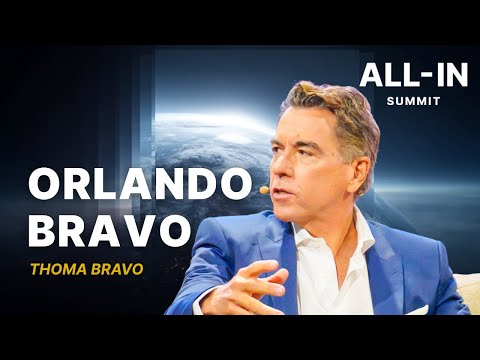
Nico Rosberg on the Booming Business of F1 | All-In Live from Miami
Ask about All-In Podcast
Episode Description
(0:00) The Besties welcome Nico Rosberg! (0:27) Nico's history with F1, what makes a great driver (6:24) The business of F1 (10:05) Teammate rivalries, why "Drive to Survive" works, future growth (16:48) Post-F1 career, best angel investments, becoming a VC (22:16) Partner shoutouts: Thanks to OKX, Circle, Polymarket, Solana, BVNK, and Google Cloud!
Check out OKX: https://www.okx.com Check out Circle: https://www.circle.com
Follow Nico: https://x.com/nicorosberg
Follow the besties: https://x.com/chamath https://x.com/Jason https://x.com/DavidSacks https://x.com/friedberg
Follow on X: https://x.com/theallinpod
Follow on Instagram: https://www.instagram.com/theallinpod
Follow on TikTok: https://www.tiktok.com/@theallinpod
Follow on LinkedIn: https://www.linkedin.com/company/allinpod
Intro Music Credit: https://rb.gy/tppkzl https://x.com/yung_spielburg
Intro Video Credit: https://x.com/TheZachEffect
Read the full transcriptHide the full transcript
- [Music] former F1 driver champion in 2016. He's getting into the venture business.
- Please welcome Nico. They started the season with 20 drivers and they would end the season with only 18 of them
- left. Wow. What was the craziest you've ever been involved in? Well, my my rival was my teammates. So,
- unfortunately, it really becomes like an enemy in a way. What were your first few
- deals? 11 laps, for example. Holy Good for you. This used to be an extremely dangerous
- sport. You had people dying every year in these tiny little cars with no roll cages, etc. But over time, it's become
- incredibly safe. The number of people dying went from, you know, a couple dozen a year in the ' 50s, '60s, '7s,
- and now it's gotten incredibly safe. How scary is it to drive in those cars? And
- how do you get over that fear of death? First of all, hello everybody. That's a pretty That's a pretty intense start to
- the to the conversation. I just show Good job interviewing Jacob. World team world best. I I I got to get right to
- it. It's like set the mood. How are you still alive? How are you? Why haven't you died yet,
- Nico? I looked at that car. Justify yourself. Why is there no canopy on it? Why are your head exposed? It's so crazy
- what you're doing or what you did. So, no, you're absolutely right. And I know um better than most people also because
- my father actually was a Formula 1 racer. Yeah. And he was racing champion. And a champion. I didn't want to say but
- yes, he was also a world champion. But you you were sorry I asked you backstage. You're one of only two
- fatherson world champions of all time. That's true. Pretty incredible. Which is very special. So I mean your dad's out
- there racing. You're at home with mom I assume. This has got to be terrifying to
- watch your dad do this. So at in his day they started the season with 20 drivers
- and they would end the season with only 18 of them left. So it was a 10% chance more or less that you wouldn't make it
- through the season which is just that's crazy. Wow. I mean what then if you do an 8-year career like what are your
- odds? Like that's not looking very good. So there to your point. Yeah. Yeah. It was a death every 100,000 miles. Now
- it's a death every 67 million miles. I was very lucky because by the time I came in they had carbon fiber chassis.
- Um they had roll they have a roll hoop now you know and this this protection this halo around your head which
- recently saved a couple of lives in the last 5 years cuz Maxappen who's now the the the four-time world champion at the
- moment. He landed on Lewis Hamilton's head in Italy with the full car and it was this halo that saved Lewis
- Hamilton's life. So, we're very very lucky how the sport has progressed um with the safety. How did you start
- drive? How old were you? Because um I didn't realize yesterday I go into the suite that we have and they say this kid
- is 18 years old as a driver. I had no idea that kids that young were driving. How old were you when you started and at
- what point did you start to become competitive? So, it's a bit like with with every sport that you have to start
- very very young. I started I was six, started go-karting I was six and then racing 10 years old. Now they start
- racing at year at when they're 8 years old. So Antonelli, who was on pole position yesterday, the 18year-old, uh
- he started racing he was eight. He was in my go-karting team when he was 12. So I know him very very well and he is a
- generational talent, but it's very early for him cuz he's only 18. And he he took
- over the car of the greatest of all time. Lewis Hamilton left Ferrari, left Mercedes to go to Ferrari. and Antonelli
- took this car from Lewis Hamilton. That is insane pressure. Answer this question
- if you could. You said generation. I'll try I'll try my best. So if we had to design some kind of a model you could
- you define the features that he had when he was six, seven or eight years old that could have
- predicted how good it was? Like is it the Metaclorian? Like so is it the Well, Anakin Skywalker was really good. I
- don't know. Nico specialist on Star Wars lore and anyway the metacloran to find the do you
- think that you could design something where people kids could come and take some kind of test you look at your
- reflexes or your you know your eye twitch speed or the way your brain works and is there a pattern do you think that
- is genetically predisposes some people to just be exceptional? So we've not come to that
- point yet that we actually go through such tests. But I think there are a couple of things that would that would
- kind of satisfy that and one is your speed of processing because in a race car you're going at 220 mph and you have
- so many inputs flying at you and not only visual also sensual. Yeah. Everything and also sound um with the
- engine and everything and you have to process that so rapidly. How did you train for that? Um I even had a uh a
- computer program which I developed just for myself actually where I would have all these different inputs. So uh audio,
- touch, tactile had like a thing around here um and and even then visual on the computer and I would be catching these
- inputs like and trying to break my record and the faster I would go the faster the program would go. Um so I was
- trying to develop these kind of things that to train my brain to move faster and react. reaction time is the key
- skill set of a driver. It's one of the ones. Is it also being courageous and like something with your amydala where
- like you don't have fear? There's that certainly. Yeah. Although I would say that I am actually someone who's quite
- fearful. Um and but when you're in it, you kind of also get used to things. Yeah. And you start to feel quite safe
- in the car nowadays. Um because I'm not a crazy adrenaline junkie unlike most other drivers actually out there like
- someone you find that they are adrenaline junkies. Yeah like someone like first tappen is fearless like
- completely um or even Hamilton you know they're proper quite nutcases. Um so the
- paths are a little different for everyone. Yeah, there's different characters to the personality type.
- There is a then of course there's hand eye coordination. So to your point, Chamath, for young kids, probably
- there's a high chance that you put a tennis racket in their hand, they'll also be pretty good, very very quickly.
- And it's a similar set of skills. Can we shift and talk a little bit about the business of Formula 1. I mean, we were
- talking backstage before the show a little bit and you shared some of the anecdotes about some of the valuations
- and what's happened over the last decade, decade and a half. maybe you can, you know, just kind of paint a
- picture for us on how this has evolved as kind of a business and where things sit today, where they're where they're
- headed and what's driven that. Yeah. So, um I'm a venture capitalist myself and that's why I'm very interested in the
- business side of uh of sport and F1 has gone through such an incredible inflection and there's a couple of
- factors that have come into play. They brought in budget caps for the teams. So the teams were spending just on sha on
- their car development like north of 200 million a year and now it's like limited
- to 130 million a year just for the chassis itself not excluding engine drivers and top personnel. $130 million
- on how many cars is that like for a well there's 10 teams. Yeah. No, but is the 13 cars? Two race cars per year. Per
- year. But that's just the chassis. You then have the engine which is another 70 million. You then have the top driver
- who takes 50 million a year or 100. No, 100. No, that was the verse stopen rumor
- to go. Yeah. Plus marketing plus plus you get to maybe 70 80. Yeah. So fielding a team is how much? Fielding a
- team is around uh you get close to 300 million. Wow. Yeah. But you're saying that the budget cap allowed everything
- to kind of So the budget cap brought in this cap for developing the chassis to 130. Um then suddenly Netflix also came
- in and Netflix has just made the sport so much more popular. It's unbelievable. Really changed the land.
- Just in the US you've gone from in a couple last couple of like six years 20 million fans to like 50 million fans.
- It's more than doubled only in the US alone. What do you think Netflix did? Right. So Netflix the owners of F1 are
- Liberty. Yeah. Which is a US right. It's a US-based uh company and they did very
- well. They opened up social media. The new generation of drivers are really social media savvy and are are like the
- fan base is 40% women in America. How many women here today are F1 fans? Loads. There we go. Okay. Not too bad.
- Um, are all the drivers as good-looking as you or No. No. I don't want to go into
- that kind of Don't be to yourself in Miami. So, the audience blew up. The audience is has blown up. And you asked
- me what did they get right? So, what did they get right? The Netflix show, for those of you who have seen it,
- it's like a reality TV show. It's not just a sports documentary like, hey, this guy won here, but they go, they
- managed to capture these personas behind the scenes and you really get to see the
- human beings behind the sport and that's very special. and they tried to replicate it in other sports like I
- think golf and tennis and it didn't work out as well because I think they got a little bit lucky also that here quite a
- few characters allowed them and completely opened up and allowed Netflix to capture the real intense
- behind-the-scenes moment and it's just fascinating to follow. Yeah. Um, so that's what we're before if you come in
- as an outsider, I had this experience like what team are you, you know, who you support like I'm not really sure,
- but once you get to know the personalities, you have a vested interest, you have a history, there's
- something that you can contextualize. Let me just end on the on the business part. Yes. Um, so teams like 10 years
- ago, F1 teams were like worth $150 million. Yeah. And they would lose 50 million a year. And now the top teams go
- for five to six billion dollars 10 years later. It's like eye watering. It's incredible. Each other on the when
- you're driving the race, you try to like Yeah. bump into each other, you know. 100%. It's part of the game. Yeah. You
- have to unfortunately. Explain cuz I'm a neoight. I don't understand it. And I I
- see like once in a while these NASCAR guys pull over, they get out, they throw their helmets at each other, you know,
- they get really upset. They seem like but they seem like hillbillies. You guys seem like a bunch of Europeans
- and like you guys seem like you're fancy, like a little more elegant. What What do you guys do? Do you guys like
- spray with Cleico on each other or something? Like how do you guys mess with each other? Nico didn't watch. So
- the the word we had one guy pushed it was first stop and pushed the other guy and he got like one week of community
- service. So uh that was a that was as far as it went. That's as far as the physical but when you're in the car.
- Yeah. It's fierce. It's fierce. So take us through like what was the craziest you've ever been involved in
- altercationwise? Well, my my rival was my teammate. My rival was Louis Lewis Hamilton at the time. We were both
- racing for Mercedes. Any Lewis Hamilton fans here today? A little bit. Okay. Send me here. Good. Actually, Nico, can
- you talk about that in that period? He's so dominant, but the car is so dominant
- and then you win. What is it like where you're teammates with your biggest competitor? Like what is that dynamic
- like? That psychological dynamic? It's Are you friends? Are you guys friends or So with Lewis Hamilton, we were actually
- best friends when we were 14 years old. We grew up racing together in the same team. Best friends, but when you get to
- F1, it's just so intense and so much is at stake. And if it's just the two of you racing for race wins every single
- time, it you can't stand him. You hate him. Yeah. It goes into hating. Yeah. Hate. I can see the content. Do you talk
- during the week or you don't even really interact? No, you don't interact much. So, unfortunately, it really becomes an
- like an enemy in a way, you know, and internally in your own team. Yeah. It's a horrible dynamic cuz also even your
- the rest of the team then need to start to be neutral. They can't take any sides. So, even when you win, it's not
- like everybody's like leaning in with you. It's really a tough situation. So it's like two people in the same project
- who can't stand each other. Freedberg yet they keep but you keep working together. How much of that um fed your
- decision to retire literally days after you won the That was a little I think that caught some people off guard. Can
- you just tell us what happened? I was in my prime and I won that championship which for me was my dream come true and
- it was extremely intense. Thank you. It was extremely Thanks, Mom. I got one I got one clap from my mom sitting in the
- very big fan. Way to go, mom. Um, yeah, it was extremely intense and for me it just felt like the right
- moment to I had a young daughter at home. She was one year old. Family um just felt like the right moment. I was
- in one piece to your comment it being dangerous and I just decided rationally you know I never wanted to exit on the
- way down. That's something I definitely wanted to avoid. I wanted to exit at the
- top and that was my moment and and I decided to pull the trigger. Has there been a good ROI for the car companies
- that that have invested in F1 in that all this money that they spend other than the notoriety? Are they inventing
- things that we all use and see and interact with day-to-day in our own daily driving experience or not really?
- So, you probably will be driving an AMG at some point. I had an AMG at one point. There you go. Um, and there is
- tech from the F1 team in there now. Okay. From the for the hybrid from Mercedes. Yes.
- Hybrid and yeah, every every car car company will be benefiting. But the return on investment is also in terms of
- marketing. Mercedes there's a calculated return on investment which is 2 billion
- for their brand annually and they don't actually invest money anymore because the team is profitable now and highly
- profitable like these teams make 200 $300 million in profit every year. So they now have $6 billion valuations. Is
- have we kind of peaked from your point of view? Is the market and the valuation curve still being climbed? There's still
- a lot of uh there's still a lot of upside at the moment because this growth has just happened in the last 5 years.
- Yeah. And there's still I mean even America there's still loads of growth potential. More races. There's
- licensing. The sport hasn't really even tapped into that yet. Do you think there's something about sports that are
- kind of more tuned to the way our brains now operate in a social media world, like a fast-paced world? Like, you know,
- golf became Liv. I mean, Liv really kind of changed the the face of golf. There's
- now baseball's obviously dead. I mean, MLB has been on the decline for years in the United States. Not saying anything
- negative about baseball. I'm just saying that the viewership is going down. No, no, no, no. You're you're But there's
- also these conversations about basketball, the NBA. I'll tell you this crazy anecdote. I I was a co-owner of
- the Warriors. I sold two years ago. A friend of mine, friend of ours is in the market for a sports team and he went to
- Europe to look at a bunch of soccer teams and then we were all having dinner and his bankers produced this study that
- showed exactly this problem which is young people their attention span is shrinking. As it shrinks there are
- certain sports they just cannot watch anymore. And it's totally correlated the negative viewership in baseball, the
- increase in the use of clips. So people are willing to watch baseball clips. They will not watch a baseball game to
- save their life. People will watch basketball clips. They won't watch basketball. The NBA's moving to clips.
- Yeah. And so it's this weird construction, but in some ways F1 is very set up for this already naturally,
- right? Do people don't really watch the whole sport as much as they want to watch clips. I'm guessing
- it's not that hour. How long is this race on sight? It's not that long. It's never
- been and it's not that long. I mean that's the thing about but you guys also have a lot of a lot of data telemetry
- like you can feed that kind of anxious mind and there's no breaks it just goes I'm not I'm not sure if you have a point
- there unfortunately but um but pretty diplomat I was just trying to move the conversation no what I can say is that
- our sport has like the highest engagement rates across all sports even comparing to NBA and everything um but
- why is that I think there's just a huge hype at the moment and maybe yes maybe okay Maybe a little bit. It is
- fast-pacing. There's there's incredible action scenes like thrilling action. There's huge crashes. Did you not want
- to get in the business given your knowledge and your experience? You didn't want to be in the because you you
- now have transitioned into venture capital. How did you make that decision versus working in the business of
- Formula 1? Oh, great question. Um because um yeah, that's a good qu. So, in Formula 1, what jobs would have been
- left for me now after driving would be for example running a team. But running a team is 24/7. Like you need full
- commitment. You need to move to the UK. All the teams are in the UK. It's a full
- life dedication. And I've been I've done that. Been there, done that. Now I want
- more freedom in my life to define my my calendar and everything and be at home more. And so that job for example would
- not be a possibility and not something I want to do. And then beyond that, yeah,
- you can be a driver manager, but even there you need full commitment. So tell tell us about this transition then to
- tech and investing and venture and what was that journey and what attracted you to that? I was always inspired by people
- like Elon Musk who obviously you talking about uh before and those achievements that you have this idea and then you
- achieve something which has impacts like millions of lives. I just found that fascinating. Um so I I always just
- wanted to pursue that path. So I started investing as an angel investor and now a
- second. Oh take it easy. Angel investing. What are you doing after the show? Did
- you ever read the book Angel? It's a phenomenal book in 12 languages. Yeah, I'll sign a copy book called Angel. It's
- 84 pages long. What were your first few deals? Uh 11 Labs, for example. Um Oh, good for you. Yeah, that's uh that's
- gone really well. Um how did you find that? Yeah. How did that How did that come about? I mean, I'm really putting
- an effort into this community as well. I'm spending a lot of time in in Silicon Valley meeting everybody and and also
- connecting to the European corporate landscape. So I'm bringing customers, revenues, connecting, building bridges
- cuz there's a unique angle that I can bring, you know, thanks to my sports past. So I've just built my way into it
- and built a reputation and then and then you start getting the opportunities. What themes, Nico, have you invested in
- that today you would not invest knowing what you know today? Not the ones that are Yeah, that's um the the flying
- taxis, the vitals, for example. Um yeah, Germany was leading the way on those. You have Joby, for example, Joby
- Aviation, which is probably currently best positioned in the US. Um but Germany was leading the way with two two
- horses in the race and and both of them have run into trouble. One is bankrupt, one was both bankrupt, I think. Um, so
- that's something that then in hindsight you of course if you had uh read the book, you would have known hardware is
- hard, right? I would have avoided that. You should have gotten that chapter. Get
- a highlighter out. Hardware is hard. Hardware is even harder now with the tariffs. I'm hearing now like I have a
- um I invested also in a cyber escooter here in New York called Infinite Machine and now with the tariffs because the
- supply chain is so concentrated on in in China um it's it's just it's a complete
- mess. Yeah. Nico, what about the political landscape in Europe? There was a pretty important election in Germany.
- It seemed to kind of go down the middle. What goes of Europe? What's happening in
- Europe? The investability of Europe, the ability to do business in Europe. What do European industrial businesses do?
- There's a ton of skill. There's a ton of cash. When you talk to those folks, what
- do you tell them? I know you're very, very bearish on Europe. You wouldn't put a dollar there, but uh is that correct?
- Well, no, for sweaters and wine, he puts much more than a dollar. That's true. It's pretty prolific. It's a really good
- question. I actually think industrials chargers, right? Yes. Industrials, I would industrials, I think there's
- tremendous skill. Yeah. outside of industrials I think it's hard. Yeah. So we have the we have the problems with
- regulatory frameworks being way too cumbersome. Um we have the geographic fragmentation in Europe which is very
- different to the US. Um politically it's it's really I mean quite in a bad place
- at the moment and so yeah I understand but at the same time as you said talent density is insane. The universities are
- some of the best in the world. So that's where our hope is in the next generation
- that's coming now. Stick to the Nordics. And the Nordics are very powerful. Yes.
- But Spotify a little bit. There's a lot of hope still. Yeah. Hey, what's your daily
- driver? Daily driver is a Porsche. A Porsche. And then when you're with your with your with your daughter, I don't
- know how old she is, but you ever like pull some tricks and like does she like, "Hey, Dad." No. She shouts, "Drive
- slowly, daddy." Really? I'm not I'm not allowed to drive fast with her. No. terrified, which is fine. Which is fine.
- You you don't want her to get into the family business. No, no, no. What? Okay. What are some investments that you're
- really excited by? Beyond uh 11 Labs, um there would be Applied Intuition, another one. Oh, great business where
- I'm uh where I'm in. That's a really really interesting company. It's a company that supplies software primarily
- to all the legacy car manufacturers that have not managed this transition to being software first like Tesla has
- shown the way. Um and this It's like scale AI for automotive in some ways, right? For part of the business. Yeah.
- Nico, you're going to fit right in. Have you learned to play poker yet? I'm a good poker player. You're a good poker
- player. We'll see you on Thursday. Excuse me. Hold on, Nico. Now you dec. Thanks for coming out. Thanks to
- our new bestie, Nico Rosberg, for joining us in Miami for F1. And thanks to you, the audience, for tuning in. If
- you want to come to our next event, it's the All-In Summit in Los Angeles, fourth
- year for All-In Summit. Go to all-in.com/events to apply. A very special thanks to our new partner, OKX,
- the new money app. OKX was the sponsor of the McLaren F1 team, which won the race in Miami. Thanks to Haidider and
- his team, an amazing partner and an amazing team. We really enjoyed spending time with you. And OKX launched their
- new crypto exchange here in the US. If you love All-In, go check them out. And a special thanks to our friends at
- Circle. They're the team behind USDC. Yes, your favorite stable coin in the world. USDC is a fully backed digital
- dollar redeemable one for one for USD. It's built for speed, safety, and scale. They just announced the Circle Payments
- Network. This is enterprisegrade infrastructure that bridges the gap between the digital economy and outdated
- financial reality. Go check out USDC for all your stable coin needs. And special
- thanks to my friends including Shane over at Poly Market, Google Cloud, Salana, and BVNK. We couldn't have done
- it without y'all. Thank you so much. Let your winners ride. Rainman said, "We open sourced it to the
- fans and they've just gone crazy with it." Queen of [Music] Besties are gone. That is my dog taking a notice in your
- driveway. Oh man, my habitasher will meet me up. We should all just get a room and just
- have one big huge orgy cuz they're all just useless. It's like this like sexual tension that we just need to release
- somehow. Wet your feet. Be your feet. What? We need to get Mercury's [Music] back. I'm going all in.
Brief Summary
Nico Rosberg discusses F1 safety, business growth, and his venture capital journey.
Key points
- Nico's Rivalry with Lewis Hamilton. Nico shares the intense dynamics of being teammates with his biggest competitor.
- The Evolution of F1 Safety. Nico discusses how F1 has transformed from a dangerous sport to a much safer one.
- Nico's Decision to Retire. After winning the championship, Nico explains why he chose to retire at the peak of his career.
- Investing in Hardware. Nico discusses the challenges of investing in hardware, emphasizing that 'hardware is hard.'
- Political Landscape in Europe. A discussion on the investability of Europe amidst political challenges.
- Exciting Investments. Nico shares his enthusiasm for Applied Intuition, a company aiding legacy car manufacturers.
Episode highlights
- Nico's Rivalry with Lewis HamiltonNico shares the intense dynamics of being teammates with his biggest competitor.“It really becomes like an enemy in a way.”0:18May 29, 2025
- The Evolution of F1 SafetyNico discusses how F1 has transformed from a dangerous sport to a much safer one.“It was a death every 100,000 miles. Now it's a death every 67 million miles.”2:13May 29, 2025
- Nico's Decision to RetireAfter winning the championship, Nico explains why he chose to retire at the peak of his career.“I wanted to exit at the top and that was my moment.”13:18May 29, 2025
- Investing in HardwareNico discusses the challenges of investing in hardware, emphasizing that 'hardware is hard.'“Hardware is hard, right?”19:23May 29, 2025
- Political Landscape in EuropeA discussion on the investability of Europe amidst political challenges.“You wouldn't put a dollar there, but uh is that correct?”20:10May 29, 2025
- Exciting InvestmentsNico shares his enthusiasm for Applied Intuition, a company aiding legacy car manufacturers.“That's a really interesting company.”21:42May 29, 2025