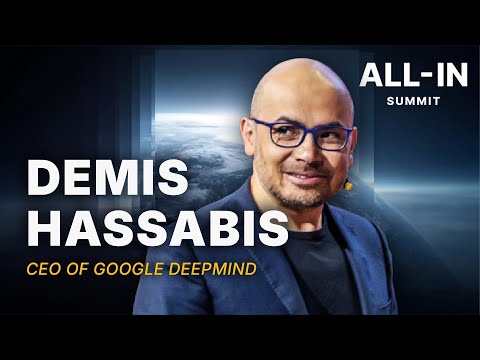
Sergey Brin | All-In Summit 2024
Ask about All-In Podcast
Episode Description
(0:00) David Friedberg intros Sergey Brin (1:41) What Sergey is working on at Google (5:45) Is Google chasing a "God Model"? (8:49) Thoughts on the massive AI chip buildout (12:54) Future of human-AI interaction (14:58) Changing Google's conservative product culture (18:21) Is the "Race to AGI" overblown?
Follow the besties: https://x.com/chamath https://x.com/Jason https://x.com/DavidSacks https://x.com/friedberg
Follow on X: https://x.com/theallinpod
Follow on Instagram: https://www.instagram.com/theallinpod
Follow on TikTok: https://www.tiktok.com/@theallinpod
Follow on LinkedIn: https://www.linkedin.com/company/allinpod
Intro Music Credit: https://rb.gy/tppkzl https://x.com/yung_spielburg
Intro Video Credit: https://x.com/TheZachEffect
Read the full transcriptHide the full transcript
- they wondered if there was a better way to find information on the web on September 15th 1997 they registered
- Google as a website one of the greatest entrepreneurs of our times someone who really wanted to think outside the box
- if that sounds like it's impossible let's try it he took a backseat in recent years to other Google leaders
- Brin is now back helping Google's efforts in artificial intelligence I feel lucky uh that I fell into doing
- something um that I feel really matter you know getting people [Music] [Applause]
- [Music] [Applause] information no introduction needed welcome I I just agreed to this last
- minute as you know I don't know where you pulled up that clip so fast you guys team is amazing kind of amazing this is
- kind of amazing yeah I thought Serge Ser just well he asked to come check out the conference and I
- was like definitely like come hang out I didn't actually understand to be perfectly honest I thought you guys just
- kind of had a podcast and like a little get together or something but yeah this kind of mind-blowing congratulations
- thank you well I'm glad you came out I'm feeling a little bit shy but yeah wow but thanks for agreeing to chat for a
- little bit we're going to talk for a little bit so this was not on the schedule um but uh I thought it'd be
- great to talk to you given where you sit in the world as AI is on the brink of and is actively changing the world
- obviously um you know you founded Google with Larry in 1998 and um you know recently it's been reported that you've
- kind of spent a lot more time at Google working on AI I thought maybe and and a lot of Industry analysts and pundits
- have been kind of arguing that llms and conversational AI tools are kind of an ex Potential Threat to Google search
- that's that's one of the and I think a lot of those people don't build businesses or they have competitive
- Investments but you know we'll leave that to the side um but there's this big kind of narrative on what's going to
- happen to Google and and where's Google sitting with AI and I know you're spending a lot of time on it so thanks
- for coming to talk about it how much time are you spending at Google what are you working on yeah um honestly like
- pretty much every day I mean like I'm missing today which is you know one of the one of the reasons I was a little
- reluctant but I'm glad I came um but I think as a computer scientist I've never seen anything as
- exciting as all of the AI progress that's happened the last few years thanks um no but it's it's kind of
- mindblowing when I went to grad school in the 9s you know AI was like kind of like a footnote in the curriculum almost
- like you like oh maybe you have to do this one little test on AI we tried all these different things they don't really
- work that's it that's all you need to know um and then somehow miraculously all these people who are working on
- neural Nets which was one of the big discarded uh approaches to AI in like the' 60s 7s and so forth um just started
- to make progress a little bit more compute a little more data a few clever algorithms um and the thing that's
- happened in this last decade or so is just amazing as a computer scientist like every month um you know well all of
- you I'm sure use all of the AI tools out there but like every month there's like
- a new amazing capability and I'm like probably you know doubly wowed as everybody else is that computers can do
- this um and so yeah for me I really got back into the technical work um because I just
- don't want to miss out on this um as a computer scientist is an extension of search or a rewriting of how people
- retrieve information I mean I just think that the AI touches so many different elements of
- day-to-day life and sure search is one of them uh but it kind of covers everything um for example programming
- itself right like the way that I think about it is very different now like you know
- writing code from scratch feels really hard compared to just asking the AI to do it right um yeah sorry um so what do
- you do then um actually I've written a little bit of code myself just for Just for kicks just for fun uh and then
- sometimes I've had the AI write the code for me um uh which was which was fun um
- I mean just one example I wanted to see how good our AI models were at Sudoku so I had the AI model itself write a
- bunch of code that would automatically generate Sudoku puzzles and then feed them to the AI itself and then score it
- and so forth right um but it could just write that code and I was like talking to the engineers about it and you know
- whatever we had some debate back and forth like I came back half an hour later it's done and they they were kind
- of impressed because they don't honestly use the AI tools for their own coding as
- much as I think they ought to right um so that's interesting example because maybe there's a model that does Sudoku
- really well maybe there's a model that like answers information questions for me about facts on the in the world maybe
- there's an AI model that designs houses um a lot of people are working towards these ginormous general purpose llms is
- that where the world goes some people I think refer I don't know who wrote this recently said there's a God model like
- there's going to be a god model and that's why everyone's investing so much is if you can build the god model
- you're done you got AGI whatever terms you want to use there's this one thing to rule them all or is the reality of AI
- that there are lots of smaller models that do application specific things maybe work together like in an agent
- system like what's the what what what is the evolution of model development and the how models are ultimately used to do
- all these cool things um yeah I mean I think like if you looked 10 15 years ago there were different AI techniques that
- were used for different problems altogether like uh you know the chess playing AI was very different than image
- generation which was you know very different um than like recently the graph neural net at Google that like
- outperformed every physics forecasting model I don't know if you know this but you guys publish this pretty aesome
- embarassed I but it was like a totally different Arch it was a different system it was trained differently and it ended
- up in that particular so there historically there have been different systems and even recently um like the
- international math Olympiad that we participated in we got um silver metal as an AI actually one point away from
- gold um but we actually had three different AI models in there there was one very uh formal theorem proving model
- that actually did basically the best there was one uh specific to Geometry problems believe it or not that was just
- a special kind of AI uh and then there was a general purpose language model um but uh since then we've tried to take
- the learnings from that that was just a couple months ago uh and triy to infuse some of the sort of knowledge and
- ability from the formal prover into our general language models um that's still working progress but I do think the
- trend is to have a more unified model I don't know if I'd call a god model uh but to have certainly sort of shared
- architectures and and ultimately even shared models um right so if that's true you
- need a lot of compute to train and develop that model that big model uh yeah yeah I mean you definitely
- need a lot of compute I I think like I've I've read some articles out there that just like
- extrapolate they're like you know it's like 100 megawatt and a gwatt and 10 gwatt and 100 gwatt and I don't know if
- I'm quite a believer in you know that level of extrapolation um partly because also the algorithmic improvements that
- have come over the course of the last few years uh maybe are actually even outpacing the increased compute that's
- put into these models so is it irrational the buildout that's happening everyone talking about
- the Nvidia Revenue the Nvidia profit the Nvidia market cap supporting all of what
- people call the hyperscalers and the growth of the infrastructure needed to build these very large scale models
- using the techniques of today is this irrational or is it rational because if it works it's so big that it doesn't
- matter how much you well first of all I'm not like an economist or like a market Watcher the way that you guys
- very carefully um watch companies so I just want to disclaim my abilities in the space um I think that I know uh for
- us we're kind of building out compute as quickly as we can and we just have a huge amount of demand I mean for example
- our Cloud customers just want a huge amount of tpus gpus you name it um you know we just can't we have to turn down
- customers uh because we just don't have the compute available uh and we use it internally to train our own models to
- serve our own models and so forth so I guess I think there are very good reasons that companies are currently
- building out comput at a fast pace um I just don't know that I would look at the
- training Trends and extrapolate three orders of magnitude ahe just blindly from where we are today but the
- Enterprise demand is there out there you know I mean they they want to do lots of
- other things for example running inference on all these AI models applying them to all these um new
- applications um yeah there doesn't seem to be uh a limit right now and where have you seen the greatest
- success surprising success in the application of models whether it's in robotics or biology what are you like
- seeing that you're like wow this is really working and where are things going to be more challenging and take
- longer than I think some people might be expecting um yeah I mean uh now that you
- mentioned those well I I would say in biology you know we've had Alpha fold for quite a while um and I'm not
- personally a biologist but when I talk to biologists out there like everybody uses it and it's more recent uh variants
- um uh and that is I guess a different kind of AI but like I said I do think all these things tend to
- converge um you know robotics for the most part I see in this sort of wow stage like wow you could
- make a robot do that with just you know this general purpose language model or just a little bit of fine tuning this
- way or that and it's like amazing uh but maybe not for the most part yet at the level
- of robustness that would make it like day-to-day useful but you see a line of sight to
- it um yeah yeah I mean it would be it's I don't see any particular Google the robotics business and then spun it out
- or sold it we've had like had aot five or six robotics businesses they just weren't the timing wasn't right yeah um
- yeah unfortunately I don't know I guess yeah I think that was just a little too early to be perfectly honest I mean
- there was like Boston Dynamics um what was called um start stamp I don't even remember all the ones we had anyway
- we've had like five or six embarrassingly yeah um but they're very cool um and they very
- impressive um it yeah it just feels kind of silly having done all of that work uh and seeing now how capable these
- General language models are that include for example vision and image and they multimodal and they can understand the
- scene and everything and not having had that at the time uh yeah it just feels like you were sort of on a treadmill
- that wasn't going to get anywhere without the modern AI technology you spend a lot of time on core technology
- do you also spend a lot of time on product visioning where things going and what like the human computer interaction
- modalities are going to be in the future in a world of AI everywhere like what's
- our life going to be like I mean I guess there's water cooler chitchat about things like
- that um sh care to share any I um trying to think of things that aren't embarrassing um struggling but uh
- friends I I guess it's like just really hard to you know just forecast like you know
- to think five years out because you know based on the base technical capability of the AI is what enables the
- applications um and then sometimes you know somebody will just whip up a little demo that you just didn't think
- about um and it'll be kind of mind-blowing yeah um uh and uh and of course then from demo to actually making it real in
- production so forth takes time um I don't know if you've played with like uh the Astra model but it's just sort of
- live video and audio and you can chat with the AI about what's going on in your environment you'll give me access
- right uh yeah I'll get well once I have access um I mean I'm I'm sort of sometimes the slowest to get some of
- these things um but it's um yeah there's like a moment of wow uh and you're like oh my God this is
- amazing and then you're like okay well it does a correctly like 90% of the time but am I really like is that then worth
- it if 10% of the time it's kind to make a mistake or taking too long or whatever and then you have to work work
- work work work work work to get to Perfect all those things make it responsive make it available whatever
- and then you actually end up with something kind of amazing I heard a story that you went in you were on site I
- should have mentioned this to you before you came on stage see if you were cool about talking about here we are um and
- there like a bunch of Engineers showed you that you could like use AI to write code and it was like well we haven't
- pushed it in Gemini yet um because we want to make sure it doesn't make mistakes and there was this like
- hesitation culturally at Google to do that and you were like no if it writes code push it and you really and a lot of
- people have told me this story because they said and um or you know I've heard this that it was really important to
- hear that from you the founder in being really clear that Google's conservatism you know can't rule the day today and we
- need to kind of see Google push the envelope is that accurate is that kind of huh how you've spent some time or I
- don't remember the specific in just to be honest but uh but I'm not surprised um I mean I guess that's the
- question for me is like as Google's gotten so big there's more to lose I think there's like this um yeah I
- think there's a little bit of fearful I mean language models to begin with like we invented them basically with a
- Transformer paper that was um whatever six eight years ago something like that um and uh oh no one by the way is back
- at Google now which is awesome Cong um and um yeah we were we were too timid uh to deploy them um and you know for a lot
- of good reasons like whatever they some make mist mistakes they say embarrassing
- things whatever you know um they're you know sometimes they're just like kind of
- embarrassing how dumb they are even today's like latest and greatest things like make really stupid mistakes people
- would never make um and at the same time like they're incredibly powerful and they can help you do things you
- never would have done and um you know like I've like programmed really complicated things with my kid like
- they'll just program it because they just ask the AI using all these really complicated apis and all kinds of things
- that would take like a month to like learn so I just think that that capability is
- Magic and uh you need to be willing to have some embarrassments uh and take some risks
- and um and I think we've gotten better at that and well you guys have probably seen some more
- embarrassments um but you're comfor I have super voting you're still like I mean you're comfortable with the
- embarrassments at this St it's so to do this like I mean not not particular on the basis of my stock but I I um but as
- a you know I mean but am I comfortable um I mean I guess I just think of it is this something magical we're giving the
- world yeah and I think as long as we communicate it properly like saying like look this thing is amazing
- and we'll periodically get stuff really wrong uh then I think we should put it out there and let people experiment and
- see what new ways they find to use it um I just don't think this is the technology you want to just kind of keep
- close to the chest and hidden until it's like perfect do you think that there's so
- many places that AI can affect the world and so much value to be created that it's not really a race between Google
- and meta and Amazon like people frame these things as kind of a race is there just so much value to be created that
- you're working on a lot of different opportunities and it's not really about who builds the the model that score the
- llm that scores the best that there's so much more to it I mean how do you kind of think
- about um the world out there and Google's place in it I mean I I think it's very
- helpful to have competition in the sense that all these guys are vying and um we
- just we were number one for on olysis for a couple weeks by the way uh just now and I think we're last time I
- checked we're still beat the Top Model there's just some El stuff so you do care yeah yeah not
- saying not but um uh and uh um and I you know we've come a long way since um you
- know a couple whatever years ago um chat GPT launched or and we were quite a ways
- behind uh I'm really pleased with all the progress we made so we definitely pay attention I mean I think it's great
- that there are all these AI companies out there be it uh US Open AI anthropic um you name it there's um mistol it's
- it's a I mean it's a big fast moving field but I guess your question is yeah I mean I think there's tremendous
- value uh to humanity and I I think if you think back uh you know like when I was in
- college let's say and there wasn't really a proper internet or like web the way that we know it today like the
- amount of effort it would take to get basic information the amount of effort it would take to communicate with people
- you know before cell phones and things um like we've gained so much capability uh ac across the world uh but
- the sort of the new AI is another big capability uh and pretty much everybody in the
- world can get access to it in one form or another these days and I think it's super exciting it's awesome uh sorry we
- have so such limited time Sergey thank you so much for joining us please join me in thanking Sergey thank
- [Applause] you thanks yeah
Brief Summary
Sergey Brin discusses Google's AI advancements, challenges, and the future of technology in this insightful episode.
Key points
- The Birth of Google. On September 15, 1997, Google was registered as a website, marking the start of a tech revolution.
- AI's Impact on Daily Life. AI is transforming how we retrieve information and interact with technology.
- The God Model Debate. There's a discussion about whether a single 'God model' will dominate AI or if smaller models will prevail.
- AI in Biology and Robotics. AI applications are thriving in biology with tools like AlphaFold, while robotics is still evolving.
- Embracing AI's Imperfections. Acknowledging that AI can make mistakes, but its potential is worth the risks.
Episode highlights
- AI's Impact on Daily LifeAI is transforming how we retrieve information and interact with technology.“AI touches so many different elements of day-to-day life.”4:12Sep 10, 2024
- The God Model DebateThere's a discussion about whether a single 'God model' will dominate AI or if smaller models will prevail.“There's going to be a god model, and that's why everyone's investing so much.”5:55Sep 10, 2024
- AI in Biology and RoboticsAI applications are thriving in biology with tools like AlphaFold, while robotics is still evolving.“In biology, everybody uses AlphaFold.”10:56Sep 10, 2024
- Embracing AI's ImperfectionsAcknowledging that AI can make mistakes, but its potential is worth the risks.“You need to be willing to have some embarrassments and take some risks.”17:21Sep 10, 2024