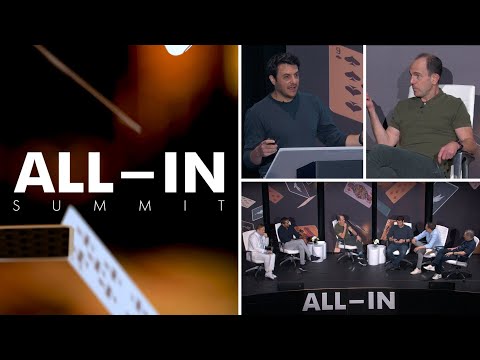
The College Crisis: Heads of Dartmouth & Berkeley Debate the Decline of US Universities
Ask about All-In Podcast
Episode Description
(0:00) Introducing Dartmouth President Sian Beilock and Berkeley Chancellor Rich Lyons (1:14) The student loan burden (8:03) DEI at US universities (13:56) Administrative bloat (16:12) Trump vs the Ivy League, viewpoint diversity (21:56) Impact of K-12 education declining (25:13) Will AI learning kill higher education? (29:14) Rising unemployment among recent graduates (31:35) Role of endowments
Thanks to our partners for making this happen!
Solana - Solana is the high performance network powering internet capital markets, payments, and crypto applications. Connect with investors, crypto founders, and entrepreneurs at Solana’s global flagship event during Abu Dhabi Finance Week & F1: solana.com/breakpoint. https://solana.com/
OKX - The new way to build your crypto portfolio and use it in daily life. We call it the new money app. https://www.okx.com/
Google Cloud - The next generation of unicorns is building on Google Cloud's industry-leading, fully integrated AI stack: infrastructure, platform, models, agents, and data. https://cloud.google.com/
IREN - IREN AI Cloud, powered by NVIDIA GPUs, provides the scale, performance, and reliability to accelerate your AI journey. https://iren.com/
Oracle - Step into the future of enterprise productivity at Oracle AI Experience Live. https://www.oracle.com/
Circle - The America-based company behind USDC — a fully-reserved, enterprise-grade stablecoin at the core of the emerging internet financial system. https://www.circle.com/
BVNK - Building stablecoin-powered financial infrastructure that helps businesses send, store, and spend value instantly, anywhere in the world. https://www.bvnk.com/
Polymarket: https://www.polymarket.com/
Athletic Brewing: https://www.athleticbrewing.com/
Follow Sian: https://x.com/sianbeilock
Follow Rich: https://x.com/richlyons
Follow the besties: https://x.com/chamath https://x.com/Jason https://x.com/DavidSacks https://x.com/friedberg
Follow on X: https://x.com/theallinpod
Follow on Instagram: https://www.instagram.com/theallinpod
Follow on TikTok: https://www.tiktok.com/@theallinpod
Follow on LinkedIn: https://www.linkedin.com/company/allinpod
Intro Music Credit: https://rb.gy/tppkzl https://x.com/yung_spielburg
Intro Video Credit: https://x.com/TheZachEffect
Read the full transcriptHide the full transcript
- [Music] I was just sitting here contemplating about like how I'm going to pay back all my student loans.
- I've applied to over 300 jobs. I don't have a job. Student loan debt just reached an all-time high $1.48 trillion as of June
- of this year. A historic drop in US college enrollment. We exist to educate, to teach you how to think, not what to think.
- We'd better be thinking about big transitions or transformations, if I can use the word, because um there's a lot
- of new competition coming into our market. Ladies and gentlemen, please welcome Berkeley Chancellor Rich Lions and Dartmouth President Seon Bo.
- [Applause] Hello, sir. Thank you for joining us. Hi. Thank you so much. Appreciate it. Hi. Hi. Nice to see you.
- Good to see you. Hi. Good to see you. Hi. Thanks for being here. Nice to meet you in person. Nice to see you. Yes.
- Go Bears. Go Bears. Go Bears. All right. All right. All right. Big Green, let's not forget you, Big
- Green. Okay. So, um, what an interesting time to lead a university in America. So many things to talk about, but I wanted to start with uh the premise that
- student loan debt seems to be a challenge on the young population, the emerging working population today. At the same time, government research funding seems to be getting cut back and
- there seems to be questions about the administrative overhead fees that are getting paid. What is the business model
- of the university today? The revenue and the expenses and what does it look like going forward from your point of view
- and how are you planning for that? Let's just start with that broad picture about the business model and how it's changing.
- There's a lot to that question. I'll I'll start and will certainly have lots to contribute. um you know that when we at the top level if we think about you know how do we sustainably provide the
- fundamental and translational research that we're so good at that we're built for the education really transformative
- educational experiences that many of you have had in these great universities um
- so you know one way to think about that is on the research side if there is less federal funding coming in over time and
- I think that's that's a good bet uh can we partner more with with industry are there other sources? Is there way to gear philanthropy even more toward the kinds of research that we need to make
- sure we're doing? So, so we are thinking about what that bundle that funding model looks like on the research side
- and on the education side as well. You mentioned debt and and an issue that that's become. I think what you would
- find whether at Dartmouth or at Berkeley that if you're coming to one of these institutions from a lower income family,
- uh you're probably paying no tuition and many of them are leaving with very little debt. So, um, to say there's all
- these higher education institutions and then to talk about averages, I think you you would be surprised at how much
- support lower income students are getting. Yeah. And I would just add to that that I don't think education is
- one-sizefits-all. And at a place like Dartmouth, which is I would talk about it as a different kind of ivy, it is
- cheaper to go to Dartmouth if you're lower or middle income now than it was 10 years ago. And that's because of the
- philanthropy that we receive from amazing alums and families. And that is what we want to do. We want to make institutions a place where anyone can go regardless of background. Bring the best
- and brightest together and send them off without a huge debt burden. We package without loans. A third of our students
- go for free and they come out on average making more than they would otherwise if they hadn't gone to a school like
- Dartmouth. But I think it comes down to the institutions having some responsibility for pushing out students
- and making sure that they're not serving them in education that then they can't find jobs in. And so as we think about
- loan burdens and others, I do believe the institutions have a responsibility to their students. And I think we have
- to do a lot more in talking about ROI than we do right now. So just ask one follow up to that. Does
- that mean that we have too many universities in the United States and they charge too much generally? So you
- guys are leading two of the top institutions in the United States. Are all of the second tier, the third tier,
- the fourth tier that are providing perhaps negative ROI on the cost of their education, do they need to kind of
- get shut down or reformed or what's the future of that? I think if you aren't thinking about the ROI and that is part of what you're
- delivering, it's a fair question to ask. And I also think that we've pushed too many people to think that college is the
- end all beall. There are different ways to be successful in this country. I certainly think there's a place for an
- amazing elite education like Dartmouth if we are teaching students how to think and not what to think. But the idea that
- everyone needs to go to a 4-year college or university, I think that's outdated. Let me ask you about uh different
- degrees and loans and the risk that you take. I mean, $70,000 a year tuition, but you're not on the hook for it. students who take these loans are on the hook for it and their brains are not
- fully developed. Would you I can confirm this. Okay. Well, the neuroscience data suggests that your friend text isn't developed. Boys a little bit later than girls, by
- the way. Yeah, you can't I did okay. Um I went to forom. I did okay. Um the point I'm
- trying to make here is shouldn't you the university be on the hook for these loans? And shouldn't you be responsible
- for the outcomes for these students? And would you be uh in support of having the
- loans and the amount of the loans match the desiraability of the degree and its ability to monetize in the you know postgraduation
- or said differently would you guys underwrite the loans? Yeah, look I think we do at Dartmouth because we don't our students are
- packaged without loans. They don't take out loans and in fact for a student uh in a middle inome family lower and
- middle- inome family it's about 5,000 a year to go to Dartmouth. So we do underwrite in that way. Now you asked
- the question about other institutions where students are coming out with high debt and low ROI. I think it is fair to
- ask what share of responsibility the institution should take and I do think that that's part of the reforms that we
- need to think about in higher ed writ low. So you're in favor of it. I'm in favor of the institutions having some responsibility but and at Dartmouth we
- take that responsibility very seriously. Do you think they should take responsibility? Should you take responsibility for the outcomes? Well,
- well, the word responsibility. So, I'm I'm an economist. Is is is a responsibility the liab the financial
- liability at the end of the day or as people have been saying, look, if if we are not providing an economic pathway
- for our students on average at Berkeley, you're talking about Berkeley now or or Dartmouth um you know that that people
- will stop coming and they will stop taking loans. So, that market mechanism is working pretty well as it is and and
- we are producing really wonderful outcomes. I think the earlier question about what about the you more than
- thousand 1,000 higher ed institutions in this country and I think there is pressure on the whole system but um we
- we are certainly making sure we have a brand new program called social sciences career readiness internship program and so we are launching lots of new things to make sure that we are providing that
- kind of support. I'd push back and say I don't think the market's working exceptionally well because I think students are coming out overburdened
- with loans without the kind of job prospects that we have responsibility. What would happen what would happen if
- we ended the federal student loan program? Yeah. I mean I think it's a interesting thing to think about. I what I don't
- want to do is throw the baby out with the bathwater and that there are student loan programs that are really helpful to
- some students in terms of being able to go to the school they want and to get the education they want. Is uh is DEI
- the bathwater? I let me let me ask you guys actually a question. What is the correlation between DEI and scholarship? Is there one?
- I don't think having a diversity of thought and thinking about merit are mutually exclusive. I think that's a false dichotomy. Okay.
- We were the first Ivy League to bring the SAT back uh at Dartmouth and many of our peers followed. And the reason is we
- looked at the data and what we sh found was that it was a great equalizer in finding students from lower income
- backgrounds and higher income backgrounds who are succeeding in something that's less actually susceptible to financial input like
- letters of wreck and what you did for the summer and a better way for us to find lower income students who are
- excelling where they are but maybe don't have the prep or the background. So I I think it's a false that they're mutual.
- There was no impact to the quality of the actual scholarship, what the professors taught, the language that was
- used, all this concept of like microaggressions, all this stuff that got in the way of teaching math and
- science. Do you don't think that happened? No, I think that we have to focus on our core subjects and merit. But I think the
- idea that I believe in diversity. I think we should have a diversity of people at the d the table from lived
- from lived experience to political ideology. I think we have better outcomes if we can sit together and push
- at each other and I have conservative views on my campus and more liberal views on my campus and I have students who come from veteran families and
- students who come from the middle of the country and students who come from the coast. Bringing people together with different perspectives allowing them to
- push at each other you get the best outcomes. And do you notice that the schools veered away from that or
- did we spend any period of time I'm just curious veering away from what you just said or no? Yeah. Is there nothing to see here or is
- everything of course no I mean I think I'd be the first one to tell you that I think higher education has a responsibility to
- reform from within. What is the reform that what happened? I think we lost sight of what our mission was. We're educational
- institutions. We're not political institutions. We're not social advocacy organizations. How did it happen? Thank you. How did it
- happen? And just to say when we lose sight of that mission, people don't trust what we produce, whether it's the students or
- the knowledge. How did it happen? You know, there there's a lot of theories for what exactly went wrong. I
- think having strong leadership and being clear about what your values are is a really important point part of this. I
- spent much of my academic career at the University of Chicago and I think that's a place that was very clear about the
- fact that institutional neutrality is the way to get the best outcomes that it's we don't shout down speakers that
- we don't set up encampments that declare a space for one ideology those are all things we've been pushing at Dartmouth and we are excited about where we are going and the outcomes but
- we have work to do Rich how should I same at Berkeley same at How we doing at Berkeley, Rich? Uh, hey, no, beware the caricature problem because Berkeley undergraduates
- produce more funded new businesses than the undergraduates at any other universities. We lift more people
- further up the economic ladder than any other university in the country. And so,
- so, so the caricature problem is very real here. Berkeley, I have been saying very publicly that we need to I'm agreeing with what she just said that we need to move in the direction of view of
- of institutional neutrality. I'm talking about viewpoint diversity all the time. Do we have some getting better to do?
- You better believe we do. We were thinking we were so tolerant. I think we weren't very tolerant of viewpoint
- diversity. And we're we have a new course called Openness to opposing views. It got launched this summer.
- 5,000 people have signed up for it. We have something called the Berkeley Liberty Initiative. It is exploding on
- campus. Do we have people on all sides of the spectrum? We sure do, but people keep pointing to one side of the
- spectrum. It's like, look what's going on at today's Berkeley. Um, how should Chimamath or I explain to our Asian daughters or sons if they
- don't make it into one of these schools because you have to um admit somebody for
- diversity who got lower grades and a lower SAT score. How do we explain that? We don't admit in that way. We're
- looking for school students with great scores, great grades, and who have grit and ambition
- and allow us to bring a class together where people can push and get make better ideas for the it's sorry it's it's been the
- law since 1996 in the state of California. We can't use race or gender or affirmative action. It's literally
- illegal. We get audited for this all the time. So, if that's what you meant by your question, we don't do it. And it's part of the California master plan for
- higher education that a third of our incoming class every year are community college transfers. They're grittier,
- they're older, they're more firstgen. If that's the diversity you're worried about, then I have a different talking
- broader not just to your universities, but to what we've seen at other universities. Perhaps Harvard would fall
- into this category or others. And you know, we do think about that. What are we explaining to our kids in terms of
- or maybe the general question what Jason is trying to say is what message does that give the broader American student
- and the broader American parent about what is actually happening in higher ed when a a case like that gets litigated
- to the Supreme Court. Yeah. Look, again, in a place of viewpoint diversity, you can have
- different views on affirmative action and we have different views of that on our campus. Our goal and as we've always
- done at Dartmouth is we're looking for the best and brightest students and that's not only just a test score or a
- grade because that doesn't tell the whole story but we're certainly bringing students together based on all of the
- things they do and we're not picking students to fit any sort of quota or system and the University of California has
- effectively been aligned with that decision since 1997. Tell us about the growth of
- administrators versus professors. There's another sort of common maybe it's a accurate statement or a
- misconception that um many of these elite institutions in America have been overroought by administrators and they
- get in the way. They gum up the system. They have all these ideas. They turn out to be idiots. Ideas are idiotic. Um
- that's a theory. Um have you seen that play out at your two fine institutions or nothing to see
- there either? Do you want to go first? I I will start um we for years and we have further to go but we have been talking about bureaucratic burden. We
- actually have an initiative and we just call it bureaucratic burden and there is too much of it at Berkeley. Berkeley is
- a very very large organization with lots and lots of people. So as we think about how do we make some of the hard
- decisions for for making things faster um and we've been working very very hard at that. clock speed of the world uh is
- is is going up so fast and the clock speed of these institutions pace for change that gap is widening and we need
- to get better at getting better. So I promise you with AI and many other things, it's like well academic advising, how is that going to change
- with a AI? It'll change a lot. We're going to always need human academic adviserss in my view, but that world is
- going to change a lot. How do you navigate what's on campus? Last point is, you know, when you talk about the
- mental health of our students, I think if you went back to when you and I were undergrads at our universities, the idea
- that the university would would help people with me like scaled mental health services, they they weren't there. they
- are there now. So you could say you shouldn't be doing that but the expectations of what we are providing
- have risen quite a bit. Yeah. And I'll say that I think it's a totally fair question and we always need
- to be thinking about moving our resources more towards the academic enterprise. I mean Dartmouth is a place where you're in a classroom with a
- faculty member and six to 20 students. It's a very special thing that doesn't happen at all institutions. But we also
- have a lot more compliance that we have to deal with that's come in from government over the years that we have to staff up to to deal with. And I like
- the idea of rethinking that relationship in a way that allows us all to do our work better.
- Let's talk about for one second um what President Trump has done with his um settlements with Colombia and the proposed ongoing thing with Harvard. There's going to be some settlement.
- just walk us through what the implications of that are and the cascade effect and the waterfall as it trickles
- through the you know to other institutions and whether you guys will have to be party to something or what
- that means. Look, I believe in the fierce independence of our educational institutions and I worry that if we are
- swaying in one direction or another based on who is in office, then we don't have the trust of the American people. And I think we failed in some ways to show that we could self-regulate and do
- that ourselves. But the goal in my mind is get to get back to a place where it's clear that universities don't aren't
- political organizations, aren't taking a position that we are focused on bringing the best and brightest to go out and
- contribute to our democracy and we can do that ourselves. Rich. Yeah. And I I think that you know if you
- look at trust and confidence and when it started to diminish across all kinds of institutions but including higher ed you
- know that that predated by quite a bit the the election which was less than a year ago. So I don't want to confound
- things where they really shouldn't be confounded. Why have we been losing trust and confidence to grossly
- oversimplify its cost its career and its culture and we could go into each of those and talk about it. the cost thing came up, you know, are the career opportunities there? And by culture, it's sort of have things got too
- progressive or not tolerant enough of viewpoint diversity? Those are all reasonable things to talk about. But um
- so I think I think part of the questions that are being asked in under this administration and even before that,
- many of them it's like, yeah, we need to be more reflective. I I just said I think there's too little viewpoint diversity.
- Let's go to let's go to culture. David, you know, you had a um a great career at
- Stanford and that was during the politically correct era and then we saw safe spaces trigger words and students
- feeling they were being harmed by words. I'm curious what your thoughts are on culture on campus from your perspective
- having lived through it because this does seem to reemerge every couple of decades.
- Well, political correctness never ended. It just got renamed. I mean, I think they renamed it woke. There may have
- been some other things in between. Um, you know, Peter Teal and I wrote an article for Stanford magazine back in, I
- think it was 1995, so 30 years ago, called the case against affirmative action. And it was basically making the
- case for completely color-blind admissions, having it be strictly based on merit and not taking race into consideration. And obviously that
- argument did not prevail and win the day because we had the Supreme Court case a couple of years ago that basically said
- that I think it was at least Harvard, I don't want to speak for every college, but basically was still engaging in racial discrimination. And so I think
- you know that article or that argument it clearly was losing in practice for 30 years until the Supreme Court reached that decision. Um, so I think this is why there's a lot of skepticism on these
- issues and I think you have a wave of presidents and I think leadership matters coming to the forefront and talking about what we need to do in this space. At my inauguration two years ago
- I just finished my second year and I'm the third longest serving Ivy president right now. Um, just a side note, there's
- been a bit of turnover a little bit. So, tell us like did you watch the Claudine Gay testimony and what did you think
- when you were watching that train wreck happen? Yeah. What was going on in the group chat
- while it was hurdling? Yeah, the Ivy group chat. Ivy group was brick wall. Look, I mean,
- I think we have a responsibility to be different kinds of campuses. And the testimony, I think, was an outcome of being a campus that wasn't protecting
- the people, wasn't inclusive, and wasn't calling balls and strikes when we need to. And we've been very clear at
- Dartmouth that we value free expression, but your free expression can't rob others, which means no shouting speakers down and no taking over parts of space and declaring it for one ideology.
- That's not free expression. It's just John Stewart Mill's philosophy of spheres of influence just don't
- intersect with others. But let me sorry, let me just ask one. No, I just want to follow. Rich, isn't the like best part of Berkeley shouting
- over the speakers? [Laughter] I'm trying to get through traffic over there sometimes and you've got a
- thousand students on the freeway. It's like kind of the tradition. There's a difference between
- protest protest protest is fine speech. I think that's a really important distinction and it's really important for leaders to be clear. Protest is fine. I have protests outside my office
- all the time. I have students chalking messages. That's fine. But the problem is is when one person's free speech
- takes precedence over another. And nobody's disagreeing with that. The Heckler's veto is something we talk a
- lot about. We are coming down on people. It's not appropriate. Right? So people are outspoken. People are you know
- that's part of Berkeley's tradition. I will often say to people free speech university hundreds of ways and places
- to express your free speech rights and no more tents and no more blocking say their gate. So it's sort of like look we
- we need parameters that help this to be as constructive as possible. But the John Stewart Mill Marketplace for for
- ideas, we're trying to keep it as open as we can. And and that is something I'm just going to I worry about the idea for
- our faculty and our community. The idea that we're going into a world where there are acceptable questions and
- unacceptable questions. That's a bad problem. That's 1984. But going upstream, and I just want to
- go upstream with you guys for a second. Where's this coming from? And what's going on in K through2?
- Yeah. I think we don't talk about K through2 enough. I think we really have to go back. Our students are landing on
- our campus without having civics, without having practice engaging in difficult conversations. I mean, I think
- we really have to move backwards and not just think about the university setting because we're getting them much later.
- And for the we train all of our students at Dartmouth go through Dartmouth dialogues to learn how to have
- conversations with people you disagree with. I believe it's like a muscle. You have to train it through practice. Are they showing up basically just
- unprepared? A lot of them through COVID didn't have these skills. And we've seen this in different ways where you at one
- point when we were in school, if you had a fight with someone, you'd have it face to face. Then it went to text messaging. Now it goes to you leaving a long
- voicemail on someone's a voice memo and then not even engaging. And if anyone who has teenagers out there, when I tell
- my 14-year-old to pick up the phone and call someone, what are you talking about? You know, we have to get those
- muscles back. And a university setting, a college setting is the place to do it. We're not just about knowledge transfer.
- We're about forming the identities of our to Freeberg's point though, I just want to ask the point of question. I think it came out today, but uh high schoolers
- are graduating woefully unprepared. It's not just the skills of debate. This is fundamental math, science, English, they
- can't read, they can't add, they can't write. What what is happening in our primary
- and secondary high school education system? What is broken there that's delivering these kids to you? so
- academically unprepared. I I I I understand emotionally, but let's just first address the first one. Why? I think they're they're both. And I
- mean, I'm not an expert in K through 12. I don't have all the answers there, but I'll say that one thing is that we're
- not getting rid of income gaps in in achievement in K through 12. Students come into kindergarten at very different
- levels depending on their parents income and they leave at those same levels. If we were doing something important and
- successful in terms of education in the US, we would see differences and changes there. And I think we have a lot of work
- to do to think through a K- through2 system that's not serving the entire Is there any lowhanging fruit there? Is it like having the ability to have more
- tutors, extending the school day to 5:00 p.m. having summer sessions? If you could as an, you know, educator and and
- somebody who works in this field, is there any lowhanging fruit that we could say, "Hey, President Trump, we need a,
- you know, 25 billion more dollars a year to do this." Yeah, I mean, it's a it's a great
- question. I would say one thing is making sure that we're putting good teachers in the classroom.
- School unions are a problem. What does good mean? Competent and able to teach at different
- grade levels and the ability to measure their outcome. Hold students accountable and push them
- forward. And my research before I became uh a college president, I study performance under stress and anxiety. So, it's been helpful the last few years. But one of my findings is around
- teachers uh especially in lower grades being really uh unprepared in terms of math competency and transferring that on to to young students. The teachers themselves don't know how
- to add. Well, I think there's a very No, I mean I think it but what's interesting is there's there's probably
- a very good teacher emerging which is AI. How are you guys thinking about whether higher education should even
- exist and what the role of higher education and classrooms and teachers and textbooks are in a world where I
- have a personal tutor available to me to walk me through the knowledge transfer at my own pace to think critically? AI
- seems to have the potential to play so much of the role of what higher education and even K- through2 education
- has played historically. Are you guys calculating for your strategic planning with AI and what does it do?
- Absolutely. Well, I'll start I'll start with that. Um, so my daughter just graduated 3 months ago. I have two kids.
- She just finished college and I'm astonished by how much she has developed and I think most parents would have a similar experience. And I think if you stripped out sort of the knowledge, the
- part that you could easily access with AI, she would still astonish me in how much she has developed. that's a residential university and all the interactions and all the things and the
- challenges and and and the the the overcoming them. And so, you know, the the idea people were predicting with with massive open online courses the death of universities 15 years ago. And
- I really think that when you start realizing that's what makes it so darn transformative and at least any AI I've
- seen so far is not getting close to what we're able to do. I think these uniquely
- human skills, there is such an important part of a residential community that allows that to come together. Um, I'm a
- big uh proponent of of how we think about integrating AI into what we're doing. Dartmouth actually was the
- birthplace of the term artificial intelligence in a 1956 summer conference where people got together and talked. We
- developed basic. We were uh the first institution to put it in all the math classes. I thinking with technology is so important, but there is a human
- element of developing young people 17 to 25 that universities really can excel at. And I think that's one of the reasons that the culture issue and the idea that we're teaching students what
- to think instead of how to think I think has hit such a an important point is because this is exactly what we should be doing. We should be thinking teaching those kind of critical skills that allow
- students not to be in a safe space but a brave space where they learn how to be uncomfortable and interact with others.
- Fair enough. But I I predict AI will play an important role and I predict that the teachers unions are going to fight tooth and nail from seeing AI show up and it's going to challenge our
- ability to kind of provide this advantage for our students. And meanwhile in other countries around the world particularly looking across the
- Pacific things are going to be very different than they are here. What is the conversation with the teachers
- unions who are so politically connected who can be so troublesome and we saw this recently with the long shoreman's
- strike that happened where they didn't want to have automation that would provide faster lower cost unloading and
- loading of the docks and so on. it made it really hard. What's going to happen with respect to the teachers unions and
- their ability to kind of move through this accelerating transformation that's going to be underway?
- Well, I'll I'll start. I think categories of labor across the economy are going to be under threat. Um, so
- it's it's easy to start with thinking about organized labor, but not organized labor is going to be terrifically under stress. And I think that a a lot of people are going to be pushing back on
- on what's what's about to happen. So I I think that's that's the larger frame. It's really how jobs across white collar. In fact, I think a lot more
- unrepresented jobs are going to disappear as a result of AI than represented jobs over the
- next 10 years. Um we don't know. But I I I think o overframing in terms of representation, at least for me, is missing really the core issue here.
- There's been a lot of talk um about recent graduates having a hard time uh finding jobs and that for at least male
- students, the degree versus non-deree in terms of unemployment has now shown no difference. It used to be if you had a degree, you had roughly double the chance of getting a job. Are you seeing
- that in the ground? I know you have elite institutions, but are you starting to see that even at your incredible
- universities and are you concerned? Yeah, I mean I think again we have to talk about what the future of work is.
- We haven't seen that at Dartmouth. Our students are succeeding in getting jobs, but again we're not just teaching
- students how to code. Everyone who gets an engineering degree also takes classes across the sciences, across humanities.
- We're teaching them how to think across difference and in in many ways which I think are these uniquely human skills I
- hope that will be important for being a leader. What's on that small list of uniquely human skills or attributes that you most
- want to get into those students? I really do believe that the ability to listen and have a conversation and speak face to face and have eye contact to have empathy to understand that even if
- I don't agree with you, you are a human. we have these things together and we're working towards some sort of positive
- democracy I would say is at the top of the list. We've been working with that with the two Davids. In fact, we've been working with that.
- It's a muscle. I think you can build it over time. They're getting there. Yeah. Look, there's there's no question
- I was talking to to an alum and somebody who's close uh very senior and and I said, "What what should be in our
- strategic plan?" And he said, "Keeping humanity relevant." If that's not a big deal, I I don't know what is. And as we think about the sorts of skills that we're going to need in our students, I
- think, you know, a sense of agency is is something that pops to mind for me. It's like a sense of agency. I kind of I I
- can act on the world. I'm not act purely acted upon and and it's partly my responsibility and that so goes so far
- beyond the way we think about education at least traditionally as mostly knowledge transmission. And and I think
- we can do that in our classrooms. we have some curriculum that they do perceive themselves as victims
- at times. Let me um let me maybe shift it for the last question uh and end maybe where we
- started to end. One of the things that has happened is that with the cost of of higher ed, there's been the emergence and the importance of endowments. And as these endowments have emerged, there's
- been a perception and then those things have been laid bare that there are side doors and back doors and all kinds of
- different ways in which to get into schools. The Varsity Blues thing is like a perfect example of just the manipulation
- of the system that just again to your point, people lose trust. um what role do endowments play? How much influence do they exert when it's good? Um when
- they can't fund a budget, what happens? Uh just walk us through that cycle where there's a perception that they could be
- doing more. Harvard's got a $55 billion endowment. Um but just walk us through that for each
- of your institutions, how reliant you guys are on this and and the impact it makes on you being able to be totally
- meritocratic. Yeah, I mean I will say very clearly that we are looking for the best and
- brightest students. Our endowment is a way that allows us to fund students regardless of their ability to pay and
- our financial aid we from our endowment hundreds of millions of dollars each year to support students so that they
- come out without loans and they're ready to go and that is because people believe in the institution. So it is a way an
- important way that private citizens give back to support what they're doing. And I think it is an extremely important to
- what we do. It also funds our research. There's a lot of talk about indirect costs and what those actually mean. We
- lose money on every research dollar we bring in. We spend our endowment to create the buildings, to create all of
- the compliance. You can't make discoveries in the middle of Main Street. You've got to do that in a scientific enterprise where we are
- putting the skin in the game. And I think it's great that people are giving back to be able to do that. But it
- doesn't drive our decisions. What I think of it is is a support to do the good work we need to do. Yeah. And if I may just add a little
- bit, I know we're out of time, but I think, you know, our endowment per student is is far far lower. And like
- can it's it's going into scholarships for our students and the accessibility. It's like what's the effective cost of
- these educations even with our lower lower prices. And also on the research end, right, we've got something called
- the innovative genomics institute. A lot of that was philanthropic capital that came in and went into an endowment and
- crisper comes out of it and some other things that are changing the world, right? So so it's really important that
- we have that kind of funding both on the education and research side and and I just say that there's multiple
- inputs into the system. I think the endowment is important. I think having a really robust partnership with
- government that makes sense is really important for the American innovations and discoveries that we're doing. And
- then for people who can pay the tuition, paying tuition is another aspect of that. But all of those come in to to try
- and create what we're trying to create. Before we wrap, we've um pointed out a lot of problems and challenges and left
- you guys in a kind of defense state. I I want to just give each of you an opportunity to talk about what you're excited about at the university that
- you're leading. Uh maybe just take a minute. What what gives you kind of optimism? What are you encouraged by? What are you looking forward to
- accomplishing? Uh as we kind of uh finish up the segment. Well, thanks. I'll start. You know, true
- of Dartmouth as it is for Berkeley. Uh we view these things, we hope you do, too, as some of society's most valuable
- assets. To what use shall we put them over the next decade? That's sort of what we've been entrusted with, right?
- And so if you said on the education front um for example economic mobility right what would it look like to double down on economic mobility when a third of our our students are already transfer
- students from from junior from from community colleges it's sort of like wow could we get even better at that I think
- we can and we can do better at that right and as we think about the research it's like what are these fundamental
- seismic shifts you're thinking about the biology revolution or the AI revolution or or planetary and human health I mean
- these are things that you I believe we all need these institutions to be contributing to massively and that's
- part of what's going into these strategic plans. So um I think you should be rooting for us.
- We are rooting for you. Yeah. And I would say a few things. One uh Dartmouth has uh the most rural academic medical center in the country.
- We serve a huge population of people not connected to the institution. And I'm excited about how we double down and make health systems better. I think
- that's such an important part of what we do as universities. And the second thing I'll say is that I am very excited about
- our students. Just one other thing that Dartmouth is doing that is so impressive. We have one of the only
- bipartisan studentrun political unions in the country co-chared by the Dartmouth Conservatives and the
- Dartmouth Democrats. And those students are changing the culture at institutions. Last year we had a debate
- between Kellyanne Conway and Donna Brazil. We had uh Cornell West and Robbie George. They're dealing with DEI,
- immigration. They are talking about the issues and putting it out there and they're creating a culture where it's
- cool to have conversations and be uncomfortable instead of shout each other down. We should be excited about
- that because they are the next leaders of our free world. Awesome. Thank you both. You took on
- tough roles. We appreciate you being here today. Thank you. Thanks for coming. Thank you. Thank you so much. That was awesome. Appreciate it.
Brief Summary
Berkeley Chancellor Rich Lions and Dartmouth President Seon Bo discuss student debt, university funding, and the need for educational reform.
Key points
- Student Loan Crisis. Student loan debt has reached a staggering $1.48 trillion, impacting young Americans.
- The Role of Universities. Leaders discuss the changing business model of universities amid rising costs and competition.
- Diversity in Admissions. Debate over the fairness of admissions processes and the impact of diversity policies.
- Political Correctness and Free Speech. Discussion on the balance between free expression and maintaining an inclusive campus.
- The Importance of Free Speech. Free speech is vital, but it shouldn't overshadow others' rights.
- Training Students for Conversations. Universities must prepare students for difficult conversations and civic engagement.
Episode highlights
- The Role of UniversitiesLeaders discuss the changing business model of universities amid rising costs and competition.“What is the business model of the university today?”1:39Sep 16, 2025
- Diversity in AdmissionsDebate over the fairness of admissions processes and the impact of diversity policies.“We don't admit in that way; we look for great scores and ambition.”12:17Sep 16, 2025
- Political Correctness and Free SpeechDiscussion on the balance between free expression and maintaining an inclusive campus.“Protest is fine, but free speech can't rob others.”20:54Sep 16, 2025
- The Importance of Free SpeechFree speech is vital, but it shouldn't overshadow others' rights.“Protest is fine. But one person's free speech takes precedence over another.”21:04Sep 16, 2025
- Training Students for ConversationsUniversities must prepare students for difficult conversations and civic engagement.“We're about forming the identities of our students, not just knowledge transfer.”22:57Sep 16, 2025
- Challenges in K-12 EducationStudents are entering college unprepared, raising concerns about K-12 education.“What is broken there that's delivering these kids to you?”23:25Sep 16, 2025
- The Role of AI in EducationAI could transform education, but it raises questions about the future of teaching.“How are you guys thinking about whether higher education should even exist?”25:18Sep 16, 2025
- Endowments and MeritocracyEndowments play a crucial role in funding education and supporting students.“Our endowment is a way that allows us to fund students regardless of their ability to pay.”32:35Sep 16, 2025